southern balsampear Care (Momordica balsamina)

Also known as: Balsam Apple, African Cucumber, Balsam Peer, Balsamina, Bursting Beauty
southern balsampear

About southern balsampear

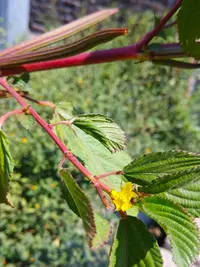
Southern balsampear (Momordica balsamina) is a warm-season climbing vine in the cucumber family, valued for its decorative foliage and unusual warty fruits. It often scrambles over fences or supports, using tendrils to cling, and produces small yellow flowers followed by orange-red, splitting fruits. Native to tropical Africa but naturalized in many warm regions, it can behave as a self-seeding annual or short-lived perennial depending on climate. The plant grows quickly in full sun, with moderate moisture and well-drained soil, but can spread where conditions suit it. Gardeners who care for southern balsampear should monitor its growth so it does not become weedy in favorable areas.

Main Plant Requirements

Care Difficulty

Moderate Care

Light Preference

Full Sun

Water Requirements

Moderate Water

Temperature Preference

Tropical / Frost Sensitive

Hardiness Zone

10–11

Soil Texture

Sandy, Loamy, Organic-rich

Soil pH

Acidic (5.5–6.5), Slightly acidic (6.5–7.0)

Soil Drainage

Well-drained

Fertilization

Light (every 4–6 weeks)

Get Personalized Care Plan

Scan your plant to receive care tips personalized for your specific plant

Available on iOS and Android

How to Care for the southern balsampear

This fast-growing vine needs abundant sun to flower and fruit well outdoors.

  • Provide 6–8 hours of direct sun daily; morning and midday sun are ideal, with light afternoon shade in very hot regions.
  • Tolerates light partial shade (3–4 hours direct sun), but southern balsampear will produce fewer flowers and fruits in lower light.
  • In summer, protect from reflected heat off walls or pavement to avoid leaf scorch; in cooler seasons, choose the sunniest, least shaded position available.

This species prefers consistently moist but not waterlogged soil during active growth.

  • Water when the top 3–5 cm of soil feel dry, soaking the root zone deeply, then allow excess water to drain away fully.
  • Use well-drained, loamy soil to reduce root-rot risk; yellowing, limp leaves and sour-smelling soil suggest overwatering, while wilting and crispy leaf edges indicate underwatering.
  • In hot summer, watering may be needed several times per week; in cooler or rainy periods, extend intervals and rely more on soil feel than on a fixed schedule for Momordica balsamina.

This warm-season climber thrives in stable, frost-free conditions.

  • Aim for 70–85°F (21–29°C) during the growing season for strongest vine growth and flowering.
  • Growth slows below 60°F (16°C) and plant tissue can be damaged near 40°F (4°C); hard frost will usually kill the vine to the ground.
  • In hot spells above 95°F (35°C), provide mulch and light afternoon shade to reduce heat stress and protect flowers from dropping.

This species grows best in moderate to slightly humid air and usually does not need special humidity management outdoors.

  • Aim for 40–60% humidity; typical outdoor summer conditions in most regions are adequate.
  • Plants tolerate short dry spells in the air but prolonged very dry winds can slow growth and reduce flowering.
  • If grown in a very dry, hot spot, shelter from strong drying winds or group plants near other vegetation to slightly raise local humidity.

This climbing annual prefers loose, well-draining, nutrient-rich soil for vigorous growth and flowering.

  • Choose a light loam or sandy loam with plenty of organic matter to support roots of Momordica balsamina while preventing waterlogging.
  • Mix native soil with 20–40% compost plus coarse sand or perlite to improve both fertility and drainage.
  • Aim for slightly acidic to neutral pH, around 6.0–7.0, which supports nutrient uptake and healthy root function.
  • Avoid heavy clay, compacted ground, or spots where water stands after rain, as oxygen-poor conditions encourage root diseases.

This species is suitable for container growing when the pot supports its vining, vigorous habit.

  • Use a deep container at least 25–30 cm wide so the root system can support tall climbing stems without stress.
  • Choose a heavier material like terracotta or thick-walled plastic to reduce tipping risk as vines and fruit increase top weight.
  • Position the pot where a trellis, fence, or other firm support is directly accessible, so stems do not drag over the container rim and destabilize it.

This fast-growing annual vine benefits from light, targeted feeding during its warm-season growth.

  • Use a balanced liquid fertilizer (such as 10-10-10) diluted to 1/2 strength every 3–4 weeks while vines are actively growing.
  • Alternatively, apply a thin layer of mature compost around the root zone at planting and midseason.
  • Discontinue feeding as temperatures cool and growth slows, since southern balsampear naturally declines at season’s end.
  • Avoid heavy or frequent fertilization, which encourages weak, overly lush growth and fewer flowers.

Pruning helps manage the vigorous growth of Momordica balsamina and supports flowering and fruiting.

  • Trim back overly long or tangled vines in late spring or early summer to keep the plant within bounds.
  • Remove dead, diseased, or storm-damaged stems promptly using clean, sharp pruning shears.
  • Thin crowded shoots to improve light and airflow through the canopy, which supports healthier foliage.
  • Pinch soft tips on young vines to encourage branching and a fuller, more compact framework.

This vine is most often grown as a seasonal outdoor plant, so transplanting timing matters more than container size changes.

  • Start seeds in small pots indoors, then transplant outdoors after all frost risk has passed and soil is warm.
  • Transplant when roots lightly fill the container or cells but before they circle heavily and growth slows.
  • Choose a sunny, well-drained site and plant at the same depth as in the pot, firming soil gently around roots.
  • Water thoroughly after transplanting and provide light shade or wind protection for 2–3 days to reduce transplant shock.

New Momordica balsamina plants are most commonly raised from seed each growing season.

  • Collect ripe, orange fruits and extract seeds, discarding any that are damaged or moldy.
  • Sow seeds in spring in warm, well-drained seed mix, covering them about 1–1.5 cm deep.
  • Maintain 70–80°F, steady moisture, and good light; germination usually occurs within 1–3 weeks.
  • Harden off seedlings gradually outdoors before planting into the garden or larger containers.

In most climates this species behaves as a frost-sensitive annual and does not need complex winter care.

  • Plant dies back with the first hard frost; remove vines and dispose of any diseased material.
  • In mild, frost-free areas, a light mulch over the root zone helps stabilize soil moisture and temperature.
  • Container plants in cooler regions can be moved indoors to a bright, cool space to extend their life briefly.

Care Tips

Provide sturdy trellis

Install a strong vertical support such as a wire mesh or string trellis before planting so vines can climb cleanly, fruits hang freely, and air circulates around foliage to reduce fungal problems.

Mulch root zone

Apply a 3–5 cm layer of straw or shredded bark around the base, keeping it a few cm away from the stem, to moderate soil temperature, reduce evaporation, and limit splash that can spread soil-borne disease.

Rotate planting site

Change the planting bed each year and avoid spots previously used for cucumbers, melons, or squash to lower the risk of shared pests and diseases building up in the soil when growing southern balsampear.

Early pest scouting

Check the undersides of leaves and young shoots 1–2 times per week for aphids, mites, and leaf miners, and remove small infestations by hand or with a firm water spray before populations become established.

Timed harvesting practice

Harvest fruits while they are still firm and before they split open, checking plants every 2–3 days, which encourages continued flowering and prevents unwanted self-seeding in the bed.

Common Pests and Diseases

Cucurbit aphids

These insects cluster on young shoots, tendrils, and the undersides of leaves, sucking sap and causing curling, yellowing, and sticky honeydew that can lead to sooty mold growth.

Solution

Prune heavily infested tips, then wash vines with a strong but controlled stream of water to dislodge colonies; follow with applications of insecticidal soap or neem oil every 5–7 days, ensuring full coverage of leaf undersides until populations drop and new growth appears clean.

Melon fruit fly

This pest lays eggs in young fruits, and the hatching maggots tunnel through the flesh, causing soft, water-soaked patches, premature fruit drop, and rapid decay.

Solution

Promptly remove and destroy any infested or fallen fruits, use fine mesh netting or bagging around developing fruits, and place pheromone or protein-bait traps around the planting area to reduce adult fly numbers during the fruiting period.

Powdery mildew

This disease produces a white, powdery coating on leaves, which can lead to yellowing, leaf distortion, and reduced flowering and fruit set in warm, dry conditions with high humidity around the foliage.

Solution

Increase spacing and airflow along the vine, avoid overhead watering, remove badly affected leaves, and apply a labeled sulfur, potassium bicarbonate, or neem-based fungicide at the first sign of white patches, repeating as directed to protect new growth.

Angular leaf spot

This disease causes water-soaked, angular lesions limited by leaf veins, which later turn brown, tear, and may ooze bacterial droplets in humid conditions, leading to defoliation and reduced vigor.

Solution

Remove and dispose of infected leaves, avoid handling wet foliage, water at soil level, and rotate away from cucurbit beds for at least 2–3 years; in outdoor plantings, copper-based bactericides can help limit spread when applied early and combined with good sanitation.

Spider mites

These pests thrive in hot, dry conditions and cause fine stippling, bronzing, and delicate webbing on the undersides of leaves, leading to reduced photosynthesis and leaf drop if populations are high.

Solution

Spray vines thoroughly with water to knock mites off and raise humidity, then use insecticidal soap or horticultural oil directed to the undersides of leaves every 3–5 days for several cycles, and remove heavily damaged foliage to support healthier regrowth and overall Momordica balsamina plant care.

Interesting Facts

Explosive seed dispersal

The ripe fruits build up internal pressure as the pericarp dries, then split suddenly and twist back, flinging seeds away from the parent vine to reduce competition and spread the species efficiently.

Climbing drought survivor

This species uses slender tendrils to climb supporting vegetation in dry savanna and disturbed habitats, and its tough, shallow root system allows it to persist through seasonal drought once established.

Distinctive fruit development

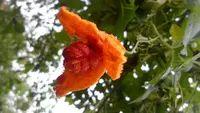
Its warty, elongated green fruits turn bright orange-red when ripe, and the seeds become coated in a sticky, red aril that attracts animals which help disperse the seeds.

Botan icon

Did you know?

In parts of southern Africa, this species has naturalized so strongly in disturbed and overgrazed areas that it is sometimes considered a weed, yet it continues to be maintained in traditional home gardens as a bitter leafy vegetable and for Momordica balsamina plant care knowledge passed between generations.

FAQs about southern balsampear

This species is a twining vine that climbs rather than forming a self-supporting shrub. It uses tendrils to attach to nearby structures or plants and can sprawl if no vertical support is available.

Grow Healthy Plants with Botan Care

Keep your plants happy and healthy with plant identification, disease detection, and easy care guidance.

Botan plant care app — identify plants on mobile

Explore More Plants