Provide climbing support
Install a sturdy trellis, wire mesh, or pergola before planting so the vine can attach early, and loosely tie young shoots with soft garden ties to guide their direction without constricting the stems.

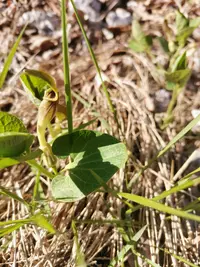
Aristolochia pallida is a perennial climbing vine known for its slender stems and unusual, pale tubular flowers. It belongs to the birthwort family and often twines through shrubs or other supports.
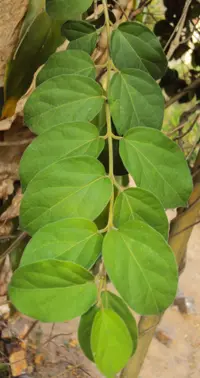
In nature it is found in dry, rocky habitats around the Mediterranean region, where it grows in well-drained, often calcareous soils. The foliage is typically small to medium-sized, with green, sometimes heart-shaped leaves that create a light, airy cover.
This species prefers sun to light shade, moderate moisture, and soil that does not stay waterlogged. With suitable drainage and support, caring for Aristolochia pallida is manageable for growers who already have some experience with climbing plants.

Care Difficulty
Moderate Care

Light Preference
Partial Sun

Water Requirements
Moderate Water

Temperature Preference
Warm Climate

Hardiness Zone
8–10

Soil Texture
Sandy, Loamy, Rocky

Soil pH
Slightly acidic (6.5–7.0), Neutral (7.0)

Soil Drainage
Well-drained

Fertilization
Minimal (feed rarely)
Scan your plant to receive care tips personalized for your specific plant
Available on iOS and Android
This twining perennial prefers bright conditions but is adapted to some natural shade in its native range.
This vine prefers evenly moist but not waterlogged soil during active growth.
This species grows best in mild to warm conditions and is sensitive to hard frost.
This species manages well in typical home humidity but reacts to very dry air over time.
This vine prefers loose, moderately fertile, well-drained soil that never stays waterlogged.
This species can be grown in containers when given stable support and free-draining conditions.
This vine grows well in moderately fertile soil and benefits from light feeding during active growth.
Pruning helps manage size and maintain a healthy framework for this twining vine.
This species is usually grown in the ground, with transplanting focused on young plants before they become deeply rooted.
Propagation is mostly done by seeds or softwood cuttings taken from healthy parent plants.
Mature plants are fairly cold tolerant in suitable climates and usually need only modest winter attention.

Plant Health Check
Not sure what's wrong with your plant? Check your plant's health inside the app.
Aristolochia pallida has pale yellow, tube-shaped flowers that emit a faint scent and trap small flies temporarily, ensuring that they pick up or deposit pollen before escaping. This trap mechanism is a classic example of deceptive pollination in the birthwort family.
This species is naturally found on rocky slopes and limestone outcrops in the central and eastern Mediterranean region, including parts of Italy and the Balkans. It often grows in dry, open scrub and grassland, where thin, alkaline soils would challenge many other broadleaf plants.
Unlike some larger, climbing relatives, this species tends to remain a low, scrambling or slightly twining plant. Its growth habit allows it to weave through surrounding vegetation and rock crevices without forming tall, woody vines.
This species mainly attracts small flies and gnats that are drawn into the tubular flowers. It is not a major nectar plant for butterflies or bees, although they may occasionally visit nearby when conditions are suitable.
Keep your plants happy and healthy with plant identification, disease detection, and easy care guidance.