Sequential sowing
Sow small batches every 2–3 weeks in warm weather so harvests stay tender and continuous instead of becoming tough and fibrous all at once.

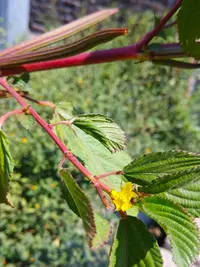
Nalta jute, Corchorus olitorius, is a fast-growing annual leafy vegetable and fiber plant from tropical Africa and Asia. It is widely used in cooking and traditional medicine. The plant usually forms slender, upright stems with simple, lance-shaped leaves and small yellow flowers, followed by narrow seed pods. It is typically grown outdoors in warm seasons and can reach a substantial height in just a few months. Corchorus olitorius prefers warm temperatures, full sun, and evenly moist, well-drained soil, which makes it relatively straightforward to manage in suitable climates. Understanding how to care for nalta jute helps gardeners harvest both tender leaves and fiber efficiently.

Care Difficulty
Moderate Care

Light Preference
Full Sun

Water Requirements
Regular Water

Temperature Preference
Tropical / Frost Sensitive

Hardiness Zone
10–12

Soil Texture
Sandy, Loamy, Organic-rich

Soil pH
Acidic (5.5–6.5), Slightly acidic (6.5–7.0)

Soil Drainage
Moist but well-drained

Fertilization
Moderate (every 2–4 weeks)
Scan your plant to receive care tips personalized for your specific plant
Available on iOS and Android
This warm-season leafy vegetable thrives in strong light for fast, tender growth.
This fast-growing annual needs steady soil moisture without staying soggy.
This species performs best in warm, frost-free conditions throughout the growing season.
This leafy annual tolerates a wide humidity range but grows best with moderate moisture in the air.
This species prefers moist, fertile, well-structured soil that drains steadily without staying waterlogged.
This plant adapts well to container growing when given enough depth and consistent moisture management.
This fast-growing leafy annual benefits from moderate, balanced feeding to support tender leaf production.
Targeted pruning keeps Corchorus olitorius compact, productive, and easier to harvest.
This species is usually grown as a seasonal crop, so transplanting young plants correctly matters more than long-term repotting.
Corchorus olitorius is most commonly propagated from seed for reliable, uniform stands.
This warm-season annual has poor frost tolerance and usually does not overwinter in temperate climates.

Plant Health Check
Not sure what's wrong with your plant? Check your plant's health inside the app.
This species is one of the two main commercial jute plants, valued both for its strong bast fibers used in sacks and ropes and for its tender leaves used as a leafy vegetable in many parts of Africa and Asia.
Its leaves contain abundant mucilage, a water-binding plant polysaccharide that gives cooked dishes a characteristic slippery texture similar to okra.
The plant thrives in hot, humid lowland climates and flowers as a short-day plant, initiating flowering when day length becomes shorter, which strongly influences where and when it can be grown commercially.

In parts of the eastern Mediterranean, North Africa, and the Middle East, the cooked leaves of this species are the defining ingredient of the traditional dish molokhia, which has been cultivated and eaten in the region for centuries and is culturally tied to regional culinary identity.
Leaves and young shoots are edible and widely used as a leafy vegetable in soups and stews. They develop a slightly mucilaginous, or slippery, texture when cooked and are valued for fiber, vitamins, and minerals.
Keep your plants happy and healthy with plant identification, disease detection, and easy care guidance.