common calabash tree Care (Crescentia cujete)

Also known as: Calabash Tree
common calabash tree

About common calabash tree

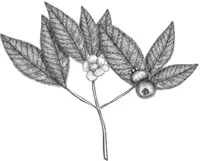
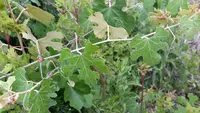
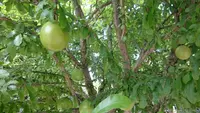
The common calabash tree, Crescentia cujete, is a small to medium evergreen tree known for its large, round, woody fruits that resemble green gourds. It often has a spreading, irregular crown with short branches and small, glossy leaves. Flowers and fruits can grow directly from the trunk and older branches, a feature called cauliflory.

This species is native to tropical regions of the Americas and is now widely cultivated in warm climates. It is generally sun-loving and prefers well-drained soil, but young plants need consistent moisture to establish. For anyone looking to care for common calabash tree, its main challenges are sensitivity to cold and the need for a reliably warm growing season.

Main Plant Requirements

Care Difficulty

Moderate Care

Light Preference

Full Sun

Water Requirements

Moderate Water

Temperature Preference

Tropical / Frost Sensitive

Hardiness Zone

10–12

Soil Texture

Sandy, Loamy, Organic-rich

Soil pH

Slightly acidic (6.5–7.0), Neutral (7.0)

Soil Drainage

Well-drained

Fertilization

Minimal (feed rarely)

Get Personalized Care Plan

Scan your plant to receive care tips personalized for your specific plant

Available on iOS and Android

How to Care for the common calabash tree

Crescentia cujete thrives in strong, warm-climate sun but benefits from some protection during the hottest hours.

  • Provide 6–8 hours of direct sun daily, ideally with morning sun and light afternoon shade in hot regions, especially for young trees.
  • The common calabash tree tolerates light partial shade, but prolonged shade reduces flowering and fruit set and leads to leggy, weak growth.
  • In summer, avoid extreme reflected heat from walls or pavement; in cooler seasons ensure an open, unshaded position to maximize light exposure.

This species prefers evenly moist, well-drained soil and reacts quickly to prolonged drought or saturation.

  • Let the top 3–5 cm of soil dry between waterings; use deep, slow watering so moisture reaches the root zone instead of frequent shallow splashes.
  • In hot, dry weather, watch for dull, slightly drooping leaves as a signal to water; in cooler or rainy periods, extend intervals to prevent soggy soil.
  • Crescentia cujete shows overwatering by yellowing leaves and soft new growth; improve drainage and reduce frequency if water pools or soil stays wet for more than 2–3 days.

This tropical tree prefers consistently warm conditions and is very sensitive to cold and frost.

  • Optimal growth occurs at 70–90°F (21–32°C); growth slows noticeably below 65°F (18°C), especially in cooler, windy sites.
  • The tree is damaged near 32°F (0°C) and can suffer leaf and twig dieback from even light frost; young plants are more vulnerable than established trees.
  • Heat tolerance is good up to about 100°F (38°C) if soil moisture is adequate; during cooler months in marginal climates, choose the warmest, most sheltered microclimate available.

This tropical species prefers moderately humid air but copes with typical indoor levels if not extremely dry.

  • Aim for 50–70% humidity, especially for young foliage and actively growing trees.
  • Dry air can cause leaf tip browning and marginal scorch, while very low humidity may lead to leaf drop.
  • Increase humidity with a nearby humidifier or grouped plants, rather than misting, which adds little lasting moisture.

Crescentia cujete prefers a well-aerated, fast-draining mineral-based substrate that does not stay wet for long.

  • Use a sandy or loamy mix such as 50% coarse sand, 30% loam, and 20% compost to balance drainage and nutrients.
  • Ensure water drains freely; add perlite or fine gravel if the mix feels heavy or compacts after watering.
  • Maintain slightly acidic to neutral pH around 6.0–7.0; avoid strongly acidic or alkaline substrates that restrict nutrient uptake.
  • Do not use dense, peat-heavy or clay-rich mixes that hold water around the roots and promote rot.

This species can be grown in containers when managed as a pruned, small tree or patio specimen.

  • Choose a deep, wide pot to accommodate the developing taproot and prevent the plant from becoming root-bound too quickly.
  • Use a heavy, stable container material, such as ceramic or concrete, to counterbalance the tree’s woody canopy and future fruit weight.
  • Raise the pot slightly on feet or blocks so drainage holes clear the ground and excess water exits rapidly after irrigation.

This tropical tree benefits from moderate feeding in containers or nutrient-poor soils, while mature in-ground specimens often need little input.

  • Use a balanced NPK granular or slow-release fertilizer, or well-rotted compost, for Crescentia cujete in spring.
  • Feed every 6–8 weeks during the warm growing season when active growth is visible.
  • Apply at 50–75% of label strength to avoid salt buildup and root burn.
  • Stop feeding in late fall and during winter dormancy, especially in cooler or low-light conditions.

Thoughtful pruning helps manage size, canopy shape, and flowering on Crescentia cujete.

  • Carry out main pruning at the end of the dry or cool season, just before strong growth resumes.
  • Remove dead, diseased, crossing, or inward-growing branches to improve light and air movement.
  • Thin congested inner wood to encourage sturdy framework branches and better fruit display.
  • Use clean, sharp bypass pruners or a pruning saw, making smooth cuts just outside the branch collar.

This species is usually field-grown, but young plants in containers or nursery bags respond well to careful transplanting.

  • Look for roots circling the pot drainage holes, soil drying very fast, or slowed growth as signs it is time to move Crescentia cujete.
  • Plan transplanting for warm, stable weather in late spring or early summer, typically every 2–3 years for container-grown trees.
  • Shift into a slightly larger container or ground hole with well-drained soil and similar depth to the original root collar.
  • Water thoroughly before and after transplanting, keep roots shaded, and reduce canopy by light tip-pruning to lessen transplant shock.

Propagation is usually done by seeds or semi-hardwood cuttings, depending on climate and resources.

  • Sow fresh seeds in late spring in a warm, bright location, maintaining 75–85°F and evenly moist but well-drained substrate.
  • Scarify the hard seed coat lightly with sandpaper and soak for 12–24 hours to improve germination.
  • Root semi-hardwood cuttings taken in early summer under high humidity, using a free-draining mix and optional rooting hormone.
  • Provide bright, indirect light and bottom warmth if possible, avoiding waterlogging while roots establish.

This tropical tree is frost-sensitive and needs protection in regions with cool or freezing winters.

  • In-ground plants tolerate only very light, brief chills; sustained frost can damage foliage and young wood.
  • Apply a 5–8 cm mulch layer around the root zone in late fall, keeping material away from the trunk.
  • Wrap young trunks with breathable frost cloth during predicted cold snaps to limit tissue damage.
  • Move container-grown plants indoors or into a heated greenhouse when temperatures approach 40°F.

Care Tips

Train Low Framework

In the first 2–3 years, select 3–4 strong scaffold branches 50–80 cm above ground and prune away competing shoots to create a low, open framework that can support the heavy gourds without branch breakage.

Support Heavy Fruits

As fruits enlarge, cradle each gourd in a wide fabric sling tied to sturdy branches or a trellis to prevent limb snapping and improve fruit shape and safety around walkways.

Manage Root Competition

Keep a clear, mulched zone at least 60–90 cm from the trunk, removing turf and shallow-rooted groundcovers so the tree roots have better access to water and nutrients.

Salt And Wind Protection

In coastal or exposed sites, install a temporary windbreak net or plant on the leeward side of a building to reduce leaf scorch and mechanical damage from strong, salty winds.

Sanitize For Borer Control

Promptly prune out and destroy any dead or borer-damaged twigs, then disinfect tools with 70% isopropyl alcohol between cuts to lower the risk of wood-boring insects and fungal entry when caring for common calabash tree.

Common Pests and Diseases

Fruit borer larvae

This pest tunnels inside the hard gourds, causing internal feeding damage, premature fruit drop, and deformed or scarred shells. Symptoms include small entry holes, frass (sawdust-like droppings), and light or hollow-feeling fruits.

Solution

Remove and destroy all damaged or fallen fruits to break the life cycle, and collect visible larvae by hand where possible. Use fine mesh bags or netting around developing gourds, encourage natural predators such as birds and parasitic wasps, and, in outdoor plantings, apply a targeted Bacillus thuringiensis (Bt) spray to young larvae according to label directions.

Leaf-chewing caterpillars

These insects feed on the foliage, leaving irregular holes, missing leaf sections, and sometimes complete defoliation of young shoots. This damage can slow growth and reduce flowering and fruit set.

Solution

Hand-pick caterpillars in the early morning or evening and prune heavily infested shoots. For larger trees, use Bt-based biological sprays directed to the undersides of leaves and maintain good plant vigor so new foliage replaces damaged leaves quickly.

Scale insects

This pest appears as small, fixed bumps on twigs, young branches, and sometimes leaves, often accompanied by sticky honeydew and sooty mold. Heavy infestations weaken the tree and reduce flowering and fruit quality.

Solution

Prune and discard heavily infested twigs, then wash accessible branches with a solution of mild soap and water to dislodge insects. For persistent problems on outdoor trees, use repeated applications of horticultural oil during mild weather, thoroughly coating stems and the undersides of leaves to suffocate the scale; this approach aligns well with Crescentia cujete plant care in warm climates.

Sooty mold

This disease is a black, powdery or velvety fungal growth that develops on leaves and fruits where honeydew from sap-feeding insects has accumulated. Symptoms include dull, blackened foliage that may photosynthesize less efficiently and become more susceptible to stress.

Solution

Control underlying honeydew-producing insects such as scale or aphids, then gently wash affected leaves and fruits with water to remove the mold. Improve air circulation through light pruning and avoid overhead watering that keeps foliage wet for long periods.

Leaf spot

This disease causes small to medium brown or dark spots on leaves, sometimes with yellow halos or minor leaf drop during humid, warm periods. Symptoms include a scattered pattern of spots that may merge on older foliage.

Solution

Collect and discard fallen leaves to reduce fungal spores, and avoid frequent overhead irrigation that wets the foliage. If the problem is recurrent and severe outdoors, apply a copper- or chlorothalonil-based fungicide labeled for ornamental trees during the wet season, following label directions and focusing on thorough coverage of the canopy.

Interesting Facts

Woody trunk gourds

The tree develops large, spherical fruits with a hard, woody shell that form directly on the trunk and main branches, a growth pattern known as cauliflory. These shells are botanically berries but function much like a gourd once dried.

Night-pollinated flowers

Its greenish, bell-shaped flowers open mainly in the evening and emit a stronger scent at night. In its native range, they are primarily pollinated by bats attracted to this nocturnal flowering pattern.

Traditional vessel material

Dried and hollowed shells of the fruit have been widely used across tropical America to make bowls, cups, rattles, and containers. Their durability and smooth interior surface make them suitable for everyday household and ceremonial objects.

Botan icon

Did you know?

Archaeological and historical evidence shows that Indigenous cultures in the Caribbean and Central and South America have used the dried fruit shells of this species as containers and musical instruments for many centuries, making it one of the earliest domesticated non-food tree resources in the region.

FAQs about common calabash tree

Yes, this species grows reliably from fresh seed. Clean and sow seeds soon after removing from ripe fruit, use warm conditions, and expect germination in several weeks. Seed propagation is the usual method for growing common calabash tree.

Grow Healthy Plants with Botan Care

Keep your plants happy and healthy with plant identification, disease detection, and easy care guidance.


Botan plant care app — identify plants on mobile

Explore More Plants