Graft For Vigor
Use grafted nursery trees on disease-resistant rootstocks rather than seed-grown plants, as these establish faster, crop earlier, and offer better long-term resilience when growing Japanese chestnut.

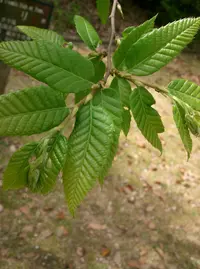
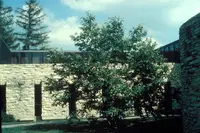
Japanese chestnut, Castanea crenata, is a deciduous nut tree valued for its edible seeds and moderate size. It typically has a rounded crown, simple serrated leaves, and showy catkin flowers that mature into spiny burs containing chestnuts.
This species is native to Japan and Korea but is also cultivated in orchards and larger gardens in temperate regions. It is generally considered easier to manage than some other chestnut species due to good disease resistance.
The tree prefers full sun, well-drained, slightly acidic soil, and consistent moisture during the growing season. Understanding how to care for Japanese chestnut helps support healthy growth and reliable nut production.

Care Difficulty
Moderate Care

Light Preference
Full Sun

Water Requirements
Moderate Water

Temperature Preference
Cold Hardy

Hardiness Zone
5–8

Soil Texture
Sandy, Loamy, Organic-rich

Soil pH
Strongly acidic (4.5–5.5), Acidic (5.5–6.5)

Soil Drainage
Well-drained

Fertilization
Minimal (feed rarely)
Scan your plant to receive care tips personalized for your specific plant
Available on iOS and Android
Castanea crenata needs strong outdoor light to build sturdy growth and produce nuts.
Castanea crenata prefers evenly moist, deep soil without staying saturated.
This chestnut species is a cold-hardy tree that also copes with warm summers when soil moisture is adequate.
This species prefers moderate atmospheric humidity similar to outdoor conditions in temperate climates.
Castanea crenata prefers deep, loose, well-drained mineral soil with moderate organic matter.
This species is only moderately suitable for container growing and works best as a temporary or dwarf specimen.
Castanea crenata benefits from moderate, targeted feeding rather than heavy fertilization.
Pruning Castanea crenata focuses on maintaining a strong framework and good light penetration.
Castanea crenata is usually transplanted to the ground once established and is rarely kept long term in containers.
Propagation of Castanea crenata is most reliable from seed, though named cultivars are usually grafted.
Mature Castanea crenata trees are generally cold hardy and need only basic winter care in most temperate regions.

Plant Health Check
Not sure what's wrong with your plant? Check your plant's health inside the app.
Japanese chestnut shows relatively high resistance to chestnut blight (Cryphonectria parasitica) compared with American chestnut, which is why it has been widely used in breeding programs to restore chestnut production and resilience.
Its nuts have a higher moisture content and slightly different starch structure than European chestnut, which gives them a softer texture and makes them especially suited for roasting and traditional East Asian confectionery.
This species develops a relatively shallow but dense fibrous root system, allowing efficient uptake of nutrients in well-drained volcanic or loamy soils common in its native range in Japan and Korea.

Japanese chestnut was one of the first Asian chestnut species intentionally introduced and planted in North America in the early 20th century, both as a nut crop and as a disease-resistant rootstock, and it still underpins many modern chestnut breeding lines through its genetic contribution.
Growth is moderately fast for a tree, often 30–60 cm per year once established. Rate depends on cultivar, soil fertility, moisture, and climate. Cooler or very dry sites slow growth, while deep, well-drained, fertile soils increase vigor.
Keep your plants happy and healthy with plant identification, disease detection, and easy care guidance.