Contain The Roots
Grow this plant in a buried pot, bottomless bucket, or dedicated raised bed to confine its vigorous rhizomes and prevent it from overtaking nearby crops.

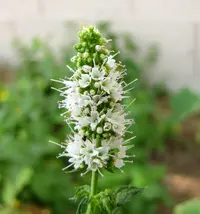
Apple mint, Mentha suaveolens, is a vigorous perennial herb in the mint family, valued for its fresh, fruity aroma and soft, slightly hairy leaves. It typically forms dense clumps and spreads by underground runners, creating low, leafy patches that can quickly fill a bed or container.
The plant is native to parts of southern and western Europe but is now widely grown in home gardens and herb beds. It is considered easy to grow, as it tolerates a range of soils and light conditions, thrives with regular moisture, and recovers well from pruning, which simplifies how to care for apple mint.

Care Difficulty
Easy Care

Light Preference
Partial Sun

Water Requirements
Regular Water

Temperature Preference
Cold Hardy

Hardiness Zone
5–9

Soil Texture
Loamy, Sandy, Organic-rich

Soil pH
Acidic (5.5–6.5), Slightly acidic (6.5–7.0)

Soil Drainage
Moist but well-drained

Fertilization
Light (every 4–6 weeks)
Scan your plant to receive care tips personalized for your specific plant
Available on iOS and Android
Mentha suaveolens prefers bright conditions with some protection from intense midday sun.
This mint thrives in consistently moist but not waterlogged soil.
This species grows best in mild, temperate conditions and tolerates some seasonal variation.
Mentha suaveolens grows well in typical indoor humidity but benefits from slightly moist air.
Mentha suaveolens prefers moist, airy, organic-rich soil that drains freely.
This species is well suited to container growing for controlled spread and easy harvesting.
Mentha suaveolens has modest nutrient needs but responds well to light feeding in active growth.
Mentha suaveolens benefits from routine pruning to keep growth dense and flavorful.
This species grows fast and often needs periodic transplanting, especially in containers.
Mentha suaveolens is commonly multiplied by cuttings and division for uniform plants.
This mint is generally cold hardy but benefits from simple winter care in cooler climates.

Plant Health Check
Not sure what's wrong with your plant? Check your plant's health inside the app.
Apple mint readily crosses with other mints, especially spearmint, and is one parent of the widely grown hybrid Mentha × villosa, which shows how genetically flexible this species is within the genus.
Its leaves and stems are covered in fine hairs (pubescence) that give a soft, felted look and help diffuse strong light and reduce water loss compared with many smoother-leaved mint relatives.
This species expands mainly through creeping underground stems called rhizomes, forming dense clonal patches that can dominate moist, disturbed sites if not physically contained.

In several parts of Europe, apple mint has been traditionally used as a culinary and aromatic herb for flavoring teas, sauces, and preserves, valued for its distinctly fruity, apple-like scent that differs from the sharper aroma of peppermint and spearmint.
This species spreads quickly by underground runners and can become invasive in garden beds. Use containers or root barriers, and trim wandering stems regularly to keep the patch contained and protect nearby plants.
Keep your plants happy and healthy with plant identification, disease detection, and easy care guidance.