Early canopy training
In the first 3–4 years, choose 3–5 strong, evenly spaced scaffold branches and remove steep, crossing, or very low shoots to build a balanced, open canopy that supports heavy future fruit loads.

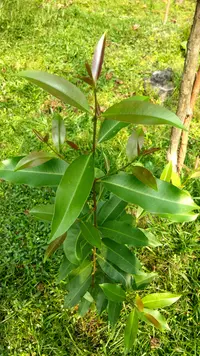
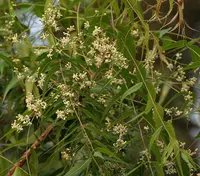
Java plum, Syzygium cumini, is a tropical evergreen tree grown for its dense foliage and dark purple, astringent fruits. It usually develops a rounded crown with glossy, oval leaves and pale, fragrant flowers that attract pollinators.
The species is native to South Asia but is now cultivated in many warm regions, including parts of the United States. It is considered moderately easy to grow when given warmth, sun, and consistent moisture.
Gardeners who want to care for Java plum should note that it prefers well-drained soil and enough space to develop its root system and canopy.

Care Difficulty
Moderate Care

Light Preference
Full Sun

Water Requirements
Regular Water

Temperature Preference
Tropical / Frost Sensitive

Hardiness Zone
10–11

Soil Texture
Sandy, Loamy, Organic-rich

Soil pH
Acidic (5.5–6.5), Slightly acidic (6.5–7.0)

Soil Drainage
Moist but well-drained

Fertilization
Minimal (feed rarely)
Scan your plant to receive care tips personalized for your specific plant
Available on iOS and Android
Syzygium cumini grows best with stable, bright outdoor light in warm climates.
Syzygium cumini prefers evenly moist, well-drained soil rather than extremes of wet or dry.
This species is a tropical tree that needs warm conditions and is not tolerant of frost.
This species prefers moderate to high humidity but usually copes with typical indoor air.
Syzygium cumini grows best in deep, well-structured, moist but freely draining soil.
This species can be grown in containers if the pot is sized and weighted to handle its eventual height and root mass.
This tree benefits from moderate feeding in containers or poor soils but established in-ground Java plum often grows acceptably with minimal fertilizer.
Pruning Syzygium cumini keeps the canopy manageable and encourages a strong, healthy structure.
Container-grown Syzygium cumini and young nursery trees respond well to careful transplanting when roots become crowded.
New Syzygium cumini plants are most often raised from seed, with cuttings used when clonal traits must be preserved.
Syzygium cumini is a tropical to subtropical tree that experiences damage in extended frost and needs some winter attention in cooler climates.

Plant Health Check
Not sure what's wrong with your plant? Check your plant's health inside the app.
The ripe fruits have a deep purple pigment that easily stains skin and clothing due to anthocyanins, a group of water-soluble plant pigments. These pigments are strongly concentrated in the skin and pulp, giving the fruit its nearly black appearance when fully mature.
Syzygium cumini is naturally adapted to warm, monsoon-type climates and tolerates seasonal flooding around its roots. In many parts of South and Southeast Asia, mature trees are often found along rivers and low-lying areas where the soil stays moist for long periods.
The species is a prolific fruiter, and many birds and bats feed on the fruits and disperse the seeds over long distances. This seed dispersal helps the tree colonize open or disturbed sites, sometimes allowing it to behave as an invasive species outside its native range, such as in parts of Florida and the Caribbean.

Individual Syzygium cumini trees can become very large and long-lived, forming massive trunks and broad crowns that are used as landmark shade trees in village centers and temple grounds across parts of India and Sri Lanka.
This species is generally fast-growing in warm climates, adding about 60–120 cm per year when young. Growth slows with age. Adequate water, fertile soil, and space for roots help grow Syzygium cumini to full size more quickly.
Keep your plants happy and healthy with plant identification, disease detection, and easy care guidance.