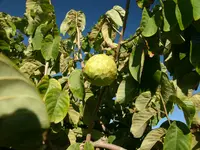
durian Care (Durio zibethinus)

Also known as: King of Fruits
durian

About durian

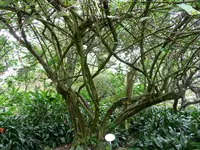
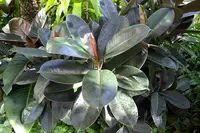
Durian, Durio zibethinus, is a large evergreen tropical tree grown for its distinctive, strong-scented fruit. It forms a tall, upright canopy with thick branches and glossy, elongated leaves.

This species is native to Southeast Asia, where it grows in warm, humid lowland forests. It can be challenging to grow outside the tropics because it needs stable heat, high humidity, and shelter from strong wind.

Gardeners who care for durian also need deep, well-drained, slightly acidic soil and consistent moisture without waterlogging. These specific climate and soil requirements make it a specialty tree rather than a general backyard fruit option.

Main Plant Requirements

Care Difficulty

Hard Care

Light Preference

Full Sun

Water Requirements

Keep Soil Moist

Temperature Preference

Tropical / Frost Sensitive

Hardiness Zone

11–12

Soil Texture

Loamy, Sandy, Organic-rich

Soil pH

Acidic (5.5–6.5)

Soil Drainage

Moist but well-drained

Fertilization

Moderate (every 2–4 weeks)

Get Personalized Care Plan

Scan your plant to receive care tips personalized for your specific plant

Available on iOS and Android

How to Care for the durian

This tropical tree needs strong, consistent light to establish and fruit well.

  • Provide 6–8 hours of direct sun daily, ideally with morning sun and light afternoon shade in very hot regions.
  • Young durian seedlings benefit from 30–50% filtered shade to prevent leaf scorch, gradually moving into more open sun over 1–2 years.
  • Insufficient light causes slow growth and sparse canopy, while intense, all-day dry sun can burn leaves, so use windbreaks and light shade during peak dry seasons.

This species needs steadily moist but not waterlogged soil for stable growth.

  • In deep, well-drained soil, irrigate when the top 3–5 cm feel just dry, aiming to keep the root zone evenly moist rather than cycling between soggy and bone dry.
  • Increase watering during hot, dry periods and early establishment, then reduce slightly in cooler or rainy seasons to avoid stagnant, oxygen-poor soil.
  • Overwatering shows as yellowing, wilting leaves and sour-smelling soil; underwatering causes leaf curl, tip burn, and premature leaf drop in Durio zibethinus.

This plant thrives in stable, warm, humid climates without cold stress or frost.

  • Aim for 77–86°F (25–30°C) for active growth, with only brief exposure up to about 95°F (35°C) if soil moisture and humidity remain adequate.
  • Avoid temperatures below 59°F (15°C); growth slows and stress increases as conditions approach 50°F (10°C).
  • The tree is extremely sensitive to frost; even light frost damages young tissue, so choose frost-free sites and protect from sudden cool, dry winds in transitional seasons.

This species needs consistently high humidity to grow well and avoid leaf stress.

  • Aim for 70–85% humidity; growth slows and leaves dry at levels below about 60%.
  • Dry air causes brown leaf tips, marginal scorch, and premature leaf drop on young trees.
  • Increase humidity with frequent fine misting, grouped plants, and large pebble trays, but still maintain free air movement to prevent fungal issues.

Durio zibethinus needs deep, well‑structured, aerated soil for stable, long-term growth.

  • Use a loose, loamy mix with high organic matter, such as 50% composted bark or leaf mold, 30% coarse sand, and 20% perlite.
  • Ensure rapid drainage so water does not pool around the taproot; raised beds or mounds help prevent waterlogging.
  • Keep pH slightly acidic, around 5.5–6.5, as higher pH can lock up key nutrients like iron and manganese.
  • Avoid compacted, heavy clay or poorly aerated mixes that restrict root oxygen and increase risk of root rot.

This species is only moderately suitable for container growing and usually remains a temporary stage for young trees.

  • Choose a tall, heavy container to stabilize the deep taproot and prevent the tree from toppling in wind.
  • Use a coarse, fast-draining mix and water thoroughly until excess drains freely, then discard all runoff immediately.
  • Position the container where it will not overheat, since dark pots in full sun can over-warm roots and stress growth.

Nutrient-hungry Durio zibethinus benefits from consistent, moderate feeding to support strong vegetative growth and fruiting.

  • Use a balanced slow-release NPK fertilizer or well-rotted compost as the base nutrient source.
  • Feed every 6–8 weeks during the warm growing season, adjusting to soil test results when possible.
  • Apply fertilizers at 1/2–3/4 label strength for young trees to limit root and leaf burn risk.
  • Reduce or stop feeding in cooler or less active periods, focusing instead on mulching and soil moisture management.

Pruning Durio zibethinus focuses on structural strength, light penetration, and safe fruiting height rather than tight size control.

  • Carry out main pruning at the end of the dry season, before strong new growth starts.
  • Remove dead, diseased, crossing, or storm-damaged branches with clean, sharp loppers or a pruning saw.
  • Thin crowded interior branches to improve airflow and light distribution through the canopy.
  • Head back overly tall or awkward limbs to shape a strong, open framework that supports fruit access.

Durio zibethinus is usually field-grown, so attention goes mainly to careful transplanting of young trees rather than frequent repotting.

  • Transplant when roots lightly fill the pot or root ball shows circling, ideally at the start of the rainy or warm season.
  • Plan on moving container-grown seedlings once into a larger pot, then into the ground when well established.
  • Water thoroughly before and after transplanting, keeping the root ball intact to limit shock.
  • Plant at the same soil level, shade lightly for 1–2 weeks, and maintain steady moisture to support root recovery.

Propagation of Durio zibethinus is technically demanding and usually handled by nurseries to maintain cultivar quality.

  • Use fresh seeds for genetic variation, sowing soon after harvest in warm, consistently moist, well-drained medium.
  • Grafting desirable cultivars onto vigorous seedlings is the standard method to combine traits and strength.
  • Carry out grafting in warm, humid conditions, using clean, sharp tools and secure graft unions with tape or clips.
  • Provide bright indirect light, 75–85°F temperatures, and stable moisture to support germination and graft take.

Durio zibethinus is strictly tropical and suffers severe damage in cool or frost-prone climates.

  • Avoid planting outdoors where temperatures fall near 40°F or below, as tissue injury occurs quickly.
  • Mulch the root zone 5–10 cm deep in marginal climates to moderate soil temperature and conserve moisture.
  • Grow Durio zibethinus in large containers in cooler regions and move indoors or to a heated greenhouse for winter.
  • Use windbreaks, frost cloth, or greenhouse shelter to keep foliage above critical chilling levels in cold snaps.

Care Tips

Windbreak planning

Establish sturdy windbreaks or plant the tree in a naturally sheltered spot to protect young growth and flowers from strong winds that can cause fruit drop and branch damage.

Flower thinning

On heavily flowering trees, remove some flower clusters by hand to reduce fruit load, which helps remaining fruits size up better and reduces the risk of limb breakage.

Branch training

Train main branches early to wide, open angles using soft ties or spacers so the framework becomes strong enough to support heavy fruits and allows better light penetration and air movement.

Fruit support slings

As fruits enlarge, use wide fabric or mesh slings tied to strong branches to cradle individual fruits, preventing sudden branch breakage and injury when they detach naturally.

Mulch management

Maintain a 5–10 cm layer of coarse organic mulch under the canopy, keeping it a few inches away from the trunk to stabilize soil moisture, moderate temperature, and reduce competition from weeds when growing durian.

Common Pests and Diseases

Phytophthora stem canker

This disease causes dark, water-soaked cankers on the trunk and scaffold branches, often with gumming and bark collapse. Symptoms include yellowing foliage, branch dieback, and sudden tree decline, especially in poorly drained or waterlogged sites.

Solution

Improve drainage around the tree, avoid waterlogging, and keep mulch and wet soil away from the lower trunk. Cut out small, early cankers back to healthy tissue, disinfect tools between cuts, and apply an appropriate phosphonate or copper-based fungicide to protect remaining healthy bark, following local Durio zibethinus care guidelines.

Phytophthora root rot

This disease attacks fine roots first, leading to poor water uptake, stunted growth, pale leaves, and eventual canopy dieback. Symptoms include sudden wilting in hot weather despite moist soil, especially in heavy or compacted soils.

Solution

Reduce soil moisture by improving drainage and avoiding standing water around the root zone, and do not mound soil or mulch against the trunk. Remove severely affected trees and avoid replanting durian in the same poorly drained spot, while in mildly affected trees, use phosphonate drenches and maintain moderate, not excessive, irrigation.

durian leaf blight

This disease produces small brown spots on leaves that expand into irregular lesions, often with yellow halos and premature leaf drop. Symptoms include thinning foliage and reduced vigor, especially in wet, humid weather with poor air circulation.

Solution

Prune to open the canopy for better airflow, remove and destroy heavily infected fallen leaves, and avoid overhead irrigation that keeps foliage wet. During wet seasons, protect young or high-value trees with a labeled copper or systemic fungicide, applying at intervals that match local disease pressure.

durian shoot borer

This pest is a moth larva whose caterpillars bore into young shoots and twigs, causing wilting tips, dieback, and distorted branching. This pest often leaves frass (sawdust-like excreta) at entry holes on soft shoots.

Solution

Inspect young shoots regularly, prune and destroy infested tips below the borer tunnel, and disinfect tools between plants. Support control with light traps or pheromone traps where available and, if pressure is high, use a targeted biological or systemic insecticide timed to young larval stages.

fruit borer

These insects lay eggs on developing fruits; the larvae bore into the rind and pulp, causing internal feeding damage, premature fruit drop, and entry points for secondary rot. Symptoms include small holes on the rind, frass, and unpleasantly decayed sections inside the fruit.

Solution

Collect and destroy infested and fallen fruits promptly to break the life cycle, and use fruit bagging with sturdy paper or mesh bags as fruits enlarge to prevent egg-laying on the rind. In commercial or larger plantings, integrate monitoring traps and apply selective insecticides at early fruiting stages according to local durian care instructions.

Interesting Facts

Specialized bat pollination

Durian flowers open at night, produce a strong odor, and hang downward, which suits nectar-feeding bats that act as the primary pollinators in many native habitats.

Complex sulfur aroma

The fruit’s powerful smell comes from a mix of volatile sulfur compounds and esters; analytical studies have identified dozens of distinct aroma molecules contributing to its sweet, onion-like, and sometimes gas-like scent profile.

Large woody fruits

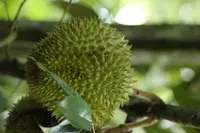
The spiny fruits develop from a thick, woody rind that protects the seeds and can reach several kilograms in mass, making them among the largest tree-borne fruits regularly eaten by humans.

Botan icon

Did you know?

This species is believed to have originated in the rainforests of Borneo and Sumatra, and genetic studies indicate that long-term cultivation and selective propagation by local communities played a major role in shaping the diversity of modern durian varieties.

FAQs about durian

Lack of flowers usually comes from tree immaturity, inconsistent warm temperatures, or nutrient imbalance with too much nitrogen and too little potassium. Irregular dry and wet periods and insufficient cross‑pollinating trees nearby also reduce flowering and fruit set.

Grow Healthy Plants with Botan Care

Keep your plants happy and healthy with plant identification, disease detection, and easy care guidance.

Botan plant care app — identify plants on mobile

Explore More Plants