Host tree matching
Establish the mycelium only with compatible host trees such as pine or other conifers and avoid mixing many unrelated species in the same bed, as a stable, consistent tree partner supports better and more reliable fruiting.

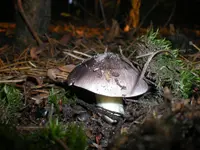
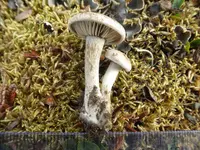
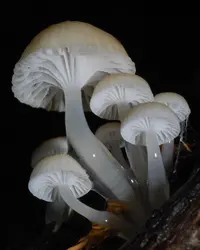
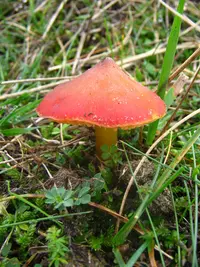
Sticky gray trich, Tricholoma portentosum, is a basidiomycete fungus rather than a traditional leafy plant. It forms fleshy, gray to dark gray caps with paler gills and a stout, white stem, usually appearing in clusters or scattered groups.
This mushroom occurs naturally in temperate coniferous and mixed forests, especially in sandy or well-drained soils, often near pines. It forms mycorrhiza, a symbiotic root partnership, which means cultivation is challenging and slow compared with common garden plants.
For anyone looking to care for Sticky Gray Trich, it is usually managed more by protecting suitable woodland conditions than by typical indoor or container culture. It prefers cool, moist air, clean soil, and stable, undisturbed forest habitat.

Care Difficulty
Hard Care

Light Preference
Partial Shade

Water Requirements
Keep Soil Moist

Temperature Preference
Cool Climate

Hardiness Zone
Unknown

Soil Texture
Loamy, Sandy, Organic-rich

Soil pH
Acidic (5.5–6.5)

Soil Drainage
Moist but well-drained

Fertilization
Minimal (feed rarely)
Scan your plant to receive care tips personalized for your specific plant
Available on iOS and Android
Tricholoma portentosum, a late-season woodland mushroom, thrives in cool, filtered light beneath conifers or mixed forest canopies.
Tricholoma portentosum depends on consistently moist, well-drained forest soil rather than direct watering of the mushrooms themselves.
This species fruits best in cool to cold conditions typical of late autumn conifer woods.
Humidity is not a primary control factor for this outdoor forest fungus.
This ectomycorrhizal fungus requires naturally structured, undisturbed forest soil rather than a constructed potting mix.
This species is not suitable for container growing because it depends on complex, long-term root associations with living trees.
Tricholoma portentosum is a mycorrhizal fungus that does not benefit from direct fertilizing in the way garden plants do.
Tricholoma portentosum is a wild, soil-dwelling fungus that does not require or tolerate conventional pruning.
This fungus naturally forms symbiosis with tree roots and is not suited to typical container culture or frequent transplanting.
Tricholoma portentosum propagation is specialized and usually attempted only by experienced growers or researchers, not general home gardeners.
As a cold-hardy woodland fungus, Sticky Gray Trich usually needs no special winter care in the ground within its natural climate range.

Plant Health Check
Not sure what's wrong with your plant? Check your plant's health inside the app.
This species typically appears late in the mushroom season, often fruiting after many other woodland fungi have finished, and can persist into cold weather as long as the soil is not frozen.
Populations growing on sandy, often nutrient-poor soils have been shown to accumulate certain heavy metals like cadmium and zinc in their fruiting bodies, which is important for food safety monitoring.
Its grey, slightly sticky cap and yellowish gills make it easy to confuse with toxic species such as Tricholoma sulphureum and Tricholoma pardinum, so correct identification requires attention to substrate, smell, and subtle color differences.

This mushroom was historically prized in parts of central and eastern Europe as a traditional autumn food species, particularly in Poland and neighboring regions, where it was often collected in large quantities and preserved for winter despite more recent caution about its potential to accumulate heavy metals.
This mushroom is considered a good edible species in many European traditions, but correct identification is critical. It can be confused with toxic gray Tricholoma species. Only eat wild specimens if confirmed by an experienced mycologist.
Keep your plants happy and healthy with plant identification, disease detection, and easy care guidance.