


Select Proper Substrate
Attach brackets of this fungus only to untreated, resin-rich conifer wood (logs, boards, or stumps) since preservatives, paints, or pressure-treated lumber inhibit colonization and decay activity.

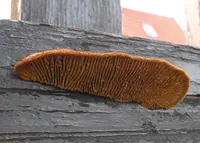
Conifer mazegill, Gloeophyllum sepiarium, is a bracket fungus that grows on dead conifer wood rather than a typical leafy plant. It forms tough, brown, shelf-like fruiting bodies with a maze-like pore surface underneath.
This species is common in temperate forests and in human environments such as lumberyards, fence posts, and railway sleepers, where it causes brown rot in softwoods. It is not grown for decoration, but understanding how to care for Conifer Mazegill mainly involves managing moisture and wood exposure, since it thrives on dry to moderately moist, sun-exposed conifer timber.
Its durability and slow decay pattern make it more relevant to wood longevity and forest ecology than to home horticulture or indoor cultivation.

Care Difficulty
Moderate Care

Light Preference
Partial Shade

Water Requirements
Regular Water

Temperature Preference
Cold Hardy

Hardiness Zone
2–9

Soil Texture
Rocky, Organic-rich

Soil pH
Acidic (5.5–6.5)

Soil Drainage
Moist but well-drained

Fertilization
Minimal (feed rarely)
Scan your plant to receive care tips personalized for your specific plant
Available on iOS and Android
This wood-decaying bracket fungus thrives on sun-exposed conifer timber but tolerates some shade.
This fungus depends on wood moisture rather than direct watering, so focus on substrate conditions instead of fixed schedules.
This species is well adapted to outdoor wood environments and tolerates a wide temperature range across seasons.
Humidity is not a major factor for Gloeophyllum sepiarium, which is adapted to relatively dry, exposed wood surfaces.
This wood-decaying fungus naturally grows on conifer timber, so any artificial substrate should mimic firm, well-aerated, low-nutrient wood rather than garden soil.
This species can be maintained in containers only when grown on pieces of conifer wood placed in a well-drained pot or tray.
This wood-decay fungus grows on nutrient-rich conifer wood and does not benefit from added fertilizer in typical cultivation or observation settings.
Gloeophyllum sepiarium does not require intentional pruning; management focuses on safe removal when fruiting bodies appear on structural or valued wood.
This species naturally colonizes dead or declining conifer wood, so handling focuses on relocating colonized material rather than classic repotting.
Propagation of Gloeophyllum sepiarium is not typically a goal in home or ornamental settings, as it functions mainly as a wood-decay organism.
This fungus is very cold hardy on outdoor conifer wood and normally needs no special winter care beyond general site hygiene.

Plant Health Check
Not sure what's wrong with your plant? Check your plant's health inside the app.
This species is a classic brown-rot fungus that primarily breaks down cellulose and hemicellulose in conifer wood, leaving behind crumbly, brown, cube-like blocks of modified lignin.
It is a frequent cause of decay in outdoor wooden structures such as fences, railway sleepers, and roof battens, especially in softwood conifers used in construction.
Studies show that its mycelium can grow and degrade wood across a relatively wide temperature range, which helps it thrive in boreal and temperate climates on exposed, dead conifer wood.

The species produces a distinctive labyrinth-like or maze-patterned spore-bearing surface (hymenophore), which is why it is commonly called the conifer mazegill.
This bracket fungus is not considered edible. The fruiting body is very tough and woody, lacks culinary value, and is often associated with decaying conifer wood that may contain environmental contaminants, so it is best left unharvested.
Keep your plants happy and healthy with plant identification, disease detection, and easy care guidance.

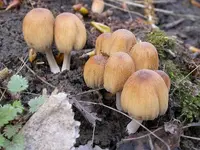
mica cap
Coprinellus micaceus
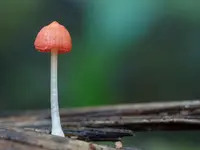
Scarlet Bonnet
Atheniella adonis
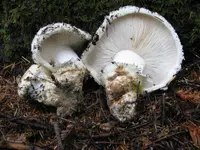
American matsutake
Tricholoma magnivelare
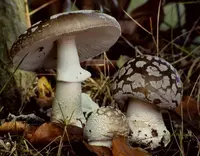
European False Blusher
Amanita excelsa
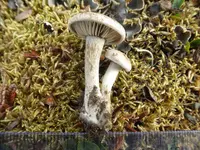
Atractosporocybe inornata
Atractosporocybe inornata
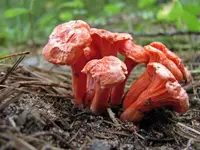
Red Chanterelle
Cantharellus cinnabarinus
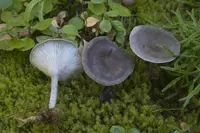
The Humpback
Cantharellula umbonata
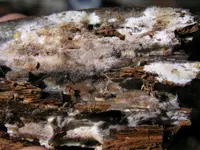
Ceriporiopsis jelicii
Ceriporiopsis jelicii