American matsutake Care (Tricholoma magnivelare)

American matsutake

About American matsutake

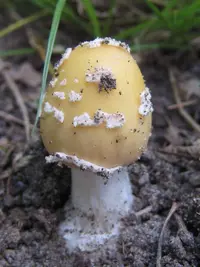
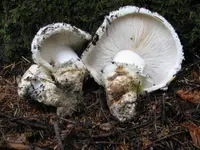
American matsutake, Tricholoma magnivelare, is a wild ectomycorrhizal mushroom that forms a close symbiosis with conifer tree roots. It cannot complete its life cycle without this partnership. The fruiting bodies are stout, white to cream with brownish scales on the cap and a thick stem, and they develop in soil under mature pines and related trees. This species is native to North America and is most often found in dry, well-drained forest habitats rather than in gardens or pots. Because of its strict dependence on specific tree partners and soil fungi communities, it is considered very difficult to cultivate intentionally. Most information on how to care for American matsutake focuses on conserving its forest habitat instead of traditional home growing methods.

Main Plant Requirements

Care Difficulty

Hard Care

Light Preference

Partial Shade

Water Requirements

Regular Water

Temperature Preference

Cool Climate

Hardiness Zone

5–8

Soil Texture

Loamy, Sandy, Organic-rich

Soil pH

Strongly acidic (4.5–5.5), Acidic (5.5–6.5)

Soil Drainage

Moist but well-drained

Fertilization

Minimal (feed rarely)

Get Personalized Care Plan

Scan your plant to receive care tips personalized for your specific plant

Available on iOS and Android

How to Care for the American matsutake

This ectomycorrhizal fungus prefers cool, dappled forest light rather than direct open sun.

  • Provide bright, filtered light under conifers or mixed woodland, similar to light on a forest floor, with 2–4 hours of gentle morning sun and shade or high, open canopy the rest of the day.
  • Allow partial to full shade in summer, as intense midday and afternoon sun can overheat the soil surface and dry the duff layer where American matsutake develops.
  • Ensure some seasonal light change: more open light in spring and fall is acceptable, but maintain a shaded, leaf-littered environment in midsummer to prevent mycelium stress from excess surface heating.

This species relies on even, cool soil moisture rather than frequent surface watering.

  • Aim for consistently moist but not saturated soil in the top 5–8 cm, letting the surface leaf litter feel just slightly dry before the next deep soak if irrigation is used.
  • Use well-drained, porous soil with plenty of organic matter; standing water, sour smells, or mushy roots of nearby trees indicate overwatering that can harm Tricholoma magnivelare mycelium.
  • Adjust seasonally: rely mainly on natural rainfall in cool, wet months, then supplement with slow, infrequent deep watering during hot, dry spells if the forest floor becomes powder-dry and fungal fruiting declines.

This fungus thrives in cool to mild conditions that mirror its native conifer forest habitats.

  • Support active growth and fruiting in temperatures around 45–65°F (7–18°C), with brief periods up to 70°F (21°C) tolerated if soil and mulch stay cool and moist.
  • Protect habitat from hard freezes below about 20°F (-7°C) when possible, since prolonged deep frost can damage fine mycelial strands near the surface.
  • Limit exposure to heat spikes above 80°F (27°C) by maintaining thick mulch and shade, as repeated hot, dry periods can reduce future fruiting even if the host trees remain healthy.

This ectomycorrhizal fungus needs consistently moist, cool air rather than typical indoor humidity targets.

  • Aim for ambient humidity around 60–80% in outdoor, shaded forest-like settings, avoiding hot, dry exposure.
  • Prolonged dry air causes caps to crack, mycelium to retreat deeper, and pins to abort before maturing.
  • Increase local humidity with thick leaf litter mulch and shaded windbreaks instead of misting or overhead watering.

This species requires specific forest soil conditions rather than standard garden or potting substrates.

  • Use a loose, sandy to sandy-loam mineral soil overlain with deep pine or mixed conifer litter to mimic natural habitat.
  • Ensure very sharp drainage; water should percolate quickly through the profile without pooling at or below the litter layer.
  • Maintain slightly acidic conditions, typically pH 5.0–6.5, avoiding liming or alkaline amendments that alter native fungal communities.
  • For practical Tricholoma magnivelare care, prioritize undisturbed, aerated, low-compaction soil around suitable host tree roots instead of heavy organic mixes.

This species is not realistically suitable for container growing, because it depends on ectomycorrhizal association with mature conifer tree roots and complex forest soil conditions.

This ectomycorrhizal fungus relies on its tree host for nutrients, so direct fertilizing of Tricholoma magnivelare is usually unnecessary and often harmful.

Pruning is not applicable to Tricholoma magnivelare, as it is a mushroom-forming fungus rather than a woody or leafy plant.

This species forms a symbiotic relationship with living tree roots, so transplanting attempts almost always fail outside managed research settings.

  • Avoid lifting or moving soil and duff around known fruiting trees, since disturbing the root zone can disrupt the fungal network.
  • Do not attempt container growing, as the fungus requires ongoing association with compatible conifer roots in natural soil.
  • If a construction project is planned, leaving undisturbed buffer zones around host trees offers the best chance of long-term colony survival.

Practical home propagation of Tricholoma magnivelare is very difficult and rarely successful, even for experienced mushroom growers.

In native forests, American matsutake tolerates natural winter conditions well and needs no special care.

Care Tips

Host tree selection

Establish the fungus only with compatible conifers such as ponderosa pine or Douglas fir, as the mycorrhizal relationship with the roots of specific hosts is essential for reliable fruiting.

Minimal soil disturbance

Avoid tilling, raking, or compacting the soil within the tree root zone, since intact fine roots and undisturbed forest duff support stable mycelial networks and consistent mushroom production.

Maintain forest duff

Leave a natural layer of needles, twigs, and leaf litter around host trees to conserve moisture, moderate soil temperature, and provide the semi-buried conditions that encourage matsutake formation.

Targeted harvest technique

When harvesting, gently loosen soil around each mushroom and lift it out by the base instead of twisting or cutting high on the stem, then carefully replace the duff so the underlying mycelium remains protected for future flushes.

Monitor competing fungi

Inspect the site regularly for dense colonies of other ectomycorrhizal mushrooms and, where practical, remove their fruiting bodies to slightly reduce competition and improve long-term prospects for growing American matsutake.

Common Pests and Diseases

Fungal mycelial competitors

This problem occurs when other soil fungi colonize the same host tree roots and outcompete the American matsutake mycelium for space and nutrients. Symptoms include declining fruiting over seasons in an area that previously produced well-formed mushrooms.

Solution

Manage by minimizing soil disturbance around known host trees, avoiding addition of foreign forest soil, mulch, or woodchips that may introduce aggressive competitor fungi, and maintaining a relatively stable, undisturbed litter layer. For small-scale growing American matsutake experiments, use locally collected duff from productive sites and avoid mixing it with commercial mushroom substrates that often carry competing fungi.

Soil nematodes

These microscopic roundworms can feed on hyphae, the thread-like structures of the mushroom mycelium, reducing its vigor and slowing expansion through the soil. Symptoms include weak or patchy mycelial growth around host roots and a gradual drop in fruiting density over time without obvious changes in climate or host health.

Solution

Management focuses on prevention by keeping soil organic matter moderate, avoiding overfertilization, and not importing soil from unknown sources that may carry high nematode loads. In managed sites, maintain good tree health and natural leaf litter so the ectomycorrhizal association remains strong and can better tolerate moderate nematode pressure; chemical nematicides are not recommended in forest or semi-natural settings used for Tricholoma magnivelare care.

Bacterial blotch

This disease appears on mushroom caps and stems as water-soaked, slimy, or discolored patches that may turn brown and soft, especially after prolonged wet conditions. Symptoms include localized lesions and a rapid decline in market quality of harvested mushrooms.

Solution

Reduce incidence by harvesting promptly in wet weather, keeping collected mushrooms dry and well ventilated, and avoiding washing or soaking fruiting bodies before storage. In managed areas, limit overhead wetting from irrigation, remove heavily affected mushrooms from the site, and handle caps gently to avoid wounds that favor bacterial entry.

Mushroom-feeding maggots

These fly larvae tunnel through the mushroom flesh, creating small holes and soft, discolored internal tissue that quickly becomes unmarketable. Symptoms include spongy stems, exit holes on caps, and visible larvae within sliced fruiting bodies.

Solution

Monitor fruiting areas frequently and harvest mushrooms as soon as young, firm caps emerge, before flies have time to lay eggs. Remove and discard heavily infested mushrooms away from the patch to reduce local fly breeding, and in experimental cultivation near buildings consider using fine mesh barriers around small collection areas to lower egg-laying on developing fruit bodies.

Slugs and snails

These mollusks feed on the surface of caps and stems, leaving irregular chew marks, slime trails, and sometimes hollowed sections of young mushrooms. Symptoms include missing margins on caps and damaged buttons that fail to develop properly.

Solution

Limit feeding by hand-picking slugs and snails during damp periods, especially at dusk and dawn, and by keeping dense herbaceous cover slightly thinned near key host trees while preserving the necessary forest litter. In small managed plots, use physical barriers such as copper tape on low edging or rough, dry mulch rings around key fruiting zones, and avoid broad-spectrum baits that can harm non-target organisms in the forest floor community.

Interesting Facts

Specialist pine partner

This mushroom forms an obligate ectomycorrhizal relationship with certain pines, especially shore pine and lodgepole pine, exchanging mineral nutrients and water for sugars from the tree roots.

North American counterpart

It plays a similar ecological and culinary role in North America as the closely related Japanese matsutake, but is considered a distinct species adapted to North American conifer forests.

Strong spicy aroma

The fruiting bodies have a distinctive, penetrating smell often described as a mix of cinnamon, spice, and resin, caused by volatile organic compounds that help distinguish it from toxic look-alike species.

Botan icon

Did you know?

This species has supported significant commercial wild-harvest industries in parts of the Pacific Northwest, where seasonal matsutake picking has shaped local economies, foraging cultures, and land-use practices since large Japanese matsutake harvests declined in the late 20th century.

FAQs about American matsutake

This species is a highly valued edible mushroom when correctly identified and fully cooked. It has a firm texture and distinctive spicy aroma. Raw consumption is not recommended, and accurate identification by an expert is essential.

Grow Healthy Plants with Botan Care

Keep your plants happy and healthy with plant identification, disease detection, and easy care guidance.

Botan plant care app — identify plants on mobile

Explore More Plants