Pad propagation hygiene
Always use a sterilized, very sharp knife to remove mature pads and let the cut surfaces callus in a dry, shaded spot for 5–10 days before planting to reduce rot and disease entry.

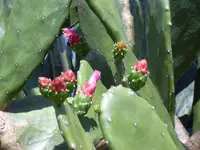
Opuntia cochenillifera, commonly called cochineal nopal cactus, is a shrubby cactus grown for its flat, paddle-like stems and traditional dye-producing insects. It often forms dense, multi-stemmed clumps with upright pads and few or no large spines, making it easier to handle than many other prickly pears.
This species is native to tropical America and is now widely cultivated in warm regions for cochineal production, fodder, and as a living fence. It is generally easy to grow in low-rainfall or dry climates, as long as the soil drains well and the site is bright and warm. Beginners who want to learn how to care for cochineal nopal cactus usually find it forgiving if overwatering is avoided.

Care Difficulty
Easy Care

Light Preference
Full Sun

Water Requirements
Low Water

Temperature Preference
Tropical / Frost Sensitive

Hardiness Zone
9–11

Soil Texture
Sandy, Loamy, Rocky

Soil pH
Slightly acidic (6.5–7.0), Slightly alkaline (7.0–7.5)

Soil Drainage
Well-drained

Fertilization
Minimal (feed rarely)
Scan your plant to receive care tips personalized for your specific plant
Available on iOS and Android
This sun-loving cactus needs strong light to build sturdy pads and healthy growth.
This drought-adapted species prefers thorough but infrequent watering in sharply draining soil.
This cactus thrives in consistently warm, frost-free conditions typical of subtropical and tropical climates.
This cactus tolerates a wide humidity range and rarely needs special adjustment indoors.
Opuntia cochenillifera prefers fast-draining, mineral-rich soil that mimics arid, rocky habitats.
This species adapts well to container growing when the pot is chosen to manage its weight and spread.
This cactus grows in poor soils but benefits from light feeding in containers or lean garden beds.
Pruning helps manage size and pad density in Opuntia cochenillifera while maintaining plant health.
This species is often grown in the ground, but container plants or young specimens sometimes need repotting or transplanting.
New plants are most commonly produced from stem pads rather than seeds.
This cactus is frost-sensitive and needs protection in regions with cool or freezing winters.

Plant Health Check
Not sure what's wrong with your plant? Check your plant's health inside the app.
This prickly pear species is a traditional host for the cochineal scale insect Dactylopius coccus, which produces carminic acid used as a natural red dye. Its flat cladodes provide an ideal surface and microclimate for cultivating dense insect populations.
Many cultivated forms of this species are nearly spineless, yet still carry abundant tiny glochids, which are barbed hair-like bristles. These glochids can easily detach and irritate skin or mucous membranes despite the plant’s otherwise smooth appearance.
In parts of Mexico and Central America, the young pads are cooked and eaten, and mature cladodes are used as fodder for livestock. The plant’s high water content and tolerance of poor soils make it useful in semi-arid smallholder farming systems.

This species played a documented role in historical cochineal dye production, where plantations of the cactus and its insects in Mexico and later other tropical and subtropical regions supplied one of the most economically valuable natural red colorants in global trade for several centuries, long before synthetic dyes were developed.
The pads and fruits are edible when harvested young and properly de-spined, and are widely used in food and beverages. Ensure plant material is pesticide-free, and introduce it gradually to avoid digestive upset in sensitive individuals.
Keep your plants happy and healthy with plant identification, disease detection, and easy care guidance.