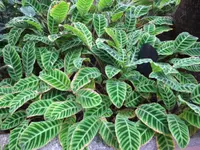
Australian tamarind Care (Diploglottis australis)

Australian tamarind

About Australian tamarind

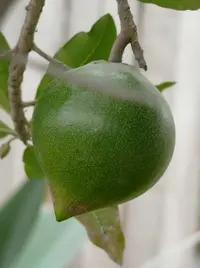
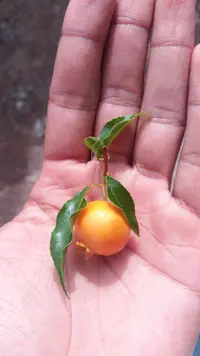
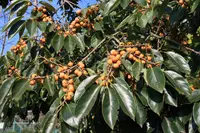
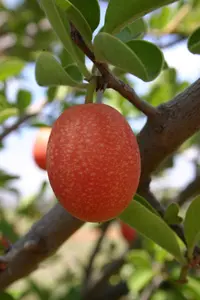
Australian tamarind (Diploglottis australis) is a rainforest tree native to eastern Australia, valued for its decorative foliage and tangy, edible fruit. In nature it forms a medium to tall tree with a straight trunk, large divided leaves, and clusters of orange to red capsules that reveal glossy seeds surrounded by sour, fleshy arils.

It occurs mainly in subtropical and warm temperate rainforests, often along creek lines and sheltered gullies. The species prefers consistently moist, well-drained soil and protection from harsh, drying winds.

Compared with many rainforest trees, it is moderately easy to grow if given enough moisture, organic-rich soil, and partial shade when young. Understanding how to care for Australian tamarind helps it adapt from humid forest conditions to home gardens or larger outdoor containers.

Main Plant Requirements

Care Difficulty

Moderate Care

Light Preference

Partial Shade

Water Requirements

Regular Water

Temperature Preference

Tropical / Frost Sensitive

Hardiness Zone

10–11

Soil Texture

Loamy, Sandy, Organic-rich

Soil pH

Acidic (5.5–6.5), Slightly acidic (6.5–7.0)

Soil Drainage

Moist but well-drained

Fertilization

Minimal (feed rarely)

Get Personalized Care Plan

Scan your plant to receive care tips personalized for your specific plant

Available on iOS and Android

How to Care for the Australian tamarind

This rainforest tree prefers bright, filtered light that mimics an understory habitat.

  • Provide 3–5 hours of gentle morning sun with dappled or bright shade for the rest of the day to protect foliage from scorch.
  • Tolerates light to medium shade but growth of Australian tamarind becomes sparser and slower if kept in deep shade long term.
  • In hot summers, shield from harsh sun between 11 a.m. and 3 p.m.; in cooler months, allow slightly more direct morning exposure to support photosynthesis.

This species prefers consistently moist but not saturated soil, especially in the growing season.

  • Water when the top 3–5 cm of soil feels slightly dry, then soak the root zone thoroughly and let excess drain away.
  • In spring and summer, expect faster drying and more frequent watering; in cooler months, let the surface dry a little deeper to reduce root-rot risk.
  • Signs of overwatering include yellowing leaves and soft stems, while crisp edges and drooping, dry leaves suggest Diploglottis australis is staying too dry.

This plant thrives in warm, frost-free conditions similar to its native subtropical rainforest climate.

  • Optimal growth occurs around 65–82°F (18–28°C), with steady warmth promoting stronger, faster vegetative growth.
  • It tolerates brief dips to about 41°F (5°C) but can suffer leaf damage; prolonged exposure near this level weakens the plant.
  • Avoid frost and extremes above 95°F (35°C); provide shade and extra moisture during heat waves and shelter from cold, drying winds in winter.

This rainforest tree prefers consistently moist air and reacts to very dry indoor conditions.

  • Aim for 50–70% humidity, as Australian tamarind evolved in sheltered, humid forest understory.
  • Crisping leaf tips, edge browning, and stalled new growth indicate humidity stress rather than underwatering.
  • Group plants, use a pebble tray under (not touching) the pot, or run a small humidifier nearby to raise humidity.

This species grows best in deep, moist, well-drained loam that mimics forest floor conditions.

  • Use a mix of roughly 50% composted organic matter, 30% loam or standard potting soil, and 20% coarse material such as pine bark or perlite.
  • Ensure free drainage so water moves through in seconds but soil still holds moisture without becoming waterlogged.
  • Aim for slightly acidic to neutral pH around 6.0–7.0, avoiding strongly alkaline mixes that slow nutrient uptake in Diploglottis australis.
  • Avoid compacted clay, heavy peat-only mixes, or soil that stays soggy, since low aeration increases root disease risk.

This tree can be grown in containers for its juvenile foliage and manageable size under regular pruning.

  • Choose a tall, heavy pot to keep the root system cool and provide stability as the canopy becomes top-heavy.
  • Select thicker-walled plastic or glazed ceramic if the climate is hot and dry, as these slow evaporation and reduce water stress.
  • Leave a clear gap between soil surface and pot rim so overhead watering does not flush mix and fine feeder roots out.

This rainforest tree grows in lean soils but benefits from light, targeted feeding in cultivation.

  • Use a balanced slow-release fertilizer (around 10-10-10) or well-aged compost at the start of spring for caring for Australian tamarind.
  • Feed once in spring and again in midsummer for container or young trees; established in-ground trees often need no extra fertilizer.
  • Dilute liquid balanced fertilizer to 1/2 strength and apply only to moist soil to avoid root burn.
  • Stop feeding in late summer; do not fertilize during winter dormancy or cool, low-growth periods.

Diploglottis australis needs only light structural and hygiene pruning in gardens or orchards.

  • Carry out main pruning in late winter to early spring before vigorous new growth begins.
  • Remove dead, diseased, crossing, or storm-damaged branches first to maintain health and airflow.
  • Thin crowded inner shoots modestly to keep a strong central framework and stable canopy shape.
  • Use clean, sharp bypass pruners or a pruning saw and make cuts just outside the branch collar.

This species is usually grown in the ground, with container culture mainly for young plants before planting out.

  • Transplant in mid to late spring once soil is warming and risk of hard frost has passed.
  • Look for roots circling the pot, slow growth, or plants drying quickly as signs a young tree needs a larger container.
  • Shift to the next pot size only, teasing out circling roots gently and keeping the root ball as intact as possible.
  • Water thoroughly after transplanting, shade for 3–7 days, and maintain even moisture to reduce stress.

Propagation of Diploglottis australis is most reliable from fresh seeds rather than from cuttings.

  • Collect ripe fruit in late summer to autumn and clean seeds thoroughly of pulp, which can inhibit germination.
  • Sow seeds promptly in a deep tray with free-draining, slightly acidic mix and keep at 70–80°F with high humidity.
  • Lightly cover seeds, keep the medium evenly moist but not waterlogged, and provide bright, indirect light.
  • Expect slow and uneven germination; pot seedlings on carefully once roots hold the mix and true leaves form.

This subtropical tree is frost sensitive and needs protection in regions with cold winters.

  • In-ground plants benefit from 5–10 cm of organic mulch over the root zone, kept clear of the trunk.
  • Wrap young trunks and lower branches with breathable frost cloth during predicted freezes.
  • Move container plants indoors or into a frost-free greenhouse when temperatures approach 32°F.
  • Water slightly less in winter but prevent the root ball from fully drying out, especially in containers.

Care Tips

Wind-hardening young plants

Expose young trees gradually to stronger breezes over 2–3 weeks by moving pots or removing windbreaks stepwise, which helps them develop sturdier trunks and reduces breakage once planted out.

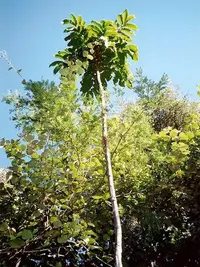
Establishing shelterbelt support

In windy or exposed sites, plant the tree near a temporary shrub or install a permeable windbreak on the windward side for the first 2–3 years to protect new growth and limit moisture stress.

Mulch to protect surface roots

Apply a 5–8 cm deep ring of coarse organic mulch kept 5–10 cm away from the trunk to keep the shallow root zone cool, reduce weed competition, and stabilize soil moisture.

Pruning for harvest access

In the early years, selectively remove or tip-prune only a few vertical leaders to encourage a low, spreading framework so fruit is easier and safer to reach later.

Understory companion planting

Grow low, shallow-rooted groundcovers under the canopy once the tree is established to shade the soil, reduce weeds, and create a more humid microclimate that supports growing Australian tamarind in warm regions.

Common Pests and Diseases

Fruit-piercing moth

This pest uses a sharp proboscis to pierce ripening fruit and suck out juice, leaving collapsed patches and oozing wounds that invite secondary infection. Symptoms include distorted, blemished tamarind-like capsules and premature fruit drop.

Solution

Bag developing fruit with fine mesh bags once they reach small marble size, and collect and destroy damaged fruit on the ground to break the life cycle. Reduce nearby night-blooming plants that attract adults, and in high-pressure areas use light traps or pheromone traps placed away from the tree canopy to intercept moths before they reach the fruit, which is an important part of Diploglottis australis care instructions.

Queensland fruit fly

This pest lays eggs under the skin of tender fruit, and the larvae tunnel through the flesh causing internal browning and collapse. Symptoms include small sting marks on fruit, soft patches, and maggot-filled, rotting capsules that fall early.

Solution

Hang purpose-made fruit fly traps or bait stations around but not inside the canopy and keep them serviced through the fruiting period. Use fine insect-exclusion netting or individual fruit bags, and promptly collect and solarize or tightly bag and bin all fallen or infested fruit to prevent larvae completing their life cycle in the soil.

Leaf-chewing caterpillars

These insects feed on the soft new foliage, leaving irregular holes, skeletonized leaf blades, or completely stripped leaflets on young shoots. Damage is often patchy but can be heavy on young or hedged trees where flush growth is concentrated.

Solution

Inspect new growth regularly during warm months and handpick or shake off caterpillars into soapy water where practical. Encourage birds and predatory insects by maintaining plant diversity nearby, and on larger specimen trees use targeted applications of Bacillus thuringiensis (Bt), a biological insecticide that affects caterpillars but is relatively gentle on beneficial insects when used as directed.

Sooty mold

This disease develops as a black, powdery or crusty coating on leaves and stems that grow underneath sap-sucking insects such as scale or aphids. Symptoms include dull, blackened foliage and reduced photosynthesis, often with sticky honeydew present.

Solution

Identify and control the underlying sap-sucking insects by hosing foliage with a firm stream of water and, if needed, applying horticultural oil to smother them. Once insect numbers are reduced, gently wipe or hose leaves to remove mold, and improve air movement around the canopy by light thinning so foliage dries faster after rain.

Scale insects

These insects appear as small, dome-shaped or flattened bumps on stems and the undersides of leaves, feeding on plant sap and excreting sticky honeydew. Symptoms include yellowing leaves, weak growth, ant activity, and sometimes sooty mold developing on the honeydew.

Solution

Prune out and dispose of heavily infested twigs, then treat remaining colonies with horticultural oil or insecticidal soap, making sure to cover the undersides of leaves and stems thoroughly. Control attendant ants by using ant baits or trunk barriers so natural predators can reach the scale, and keep the tree adequately watered and mulched to support strong, resilient growth.

Interesting Facts

Native rainforest range

This species occurs naturally in subtropical and warm temperate rainforests of eastern Australia, mainly from central New South Wales to south‑eastern Queensland, where it grows as an understorey or mid‑canopy tree along moist gullies and creek lines.

Edible tangy arils

The bright orange to red fruit capsules split to reveal glossy brown seeds surrounded by a tangy, edible aril, which is used locally for bushfood and can be made into sauces and preserves.

Fauna food resource

Its fleshy fruit is eaten by rainforest birds such as pigeons and doves, which in turn help disperse the seeds and maintain natural regeneration dynamics in its native habitat.

Botan icon

Did you know?

The large, ornamental leaves of this species are paripinnate, meaning they have paired leaflets without a terminal leaflet, and individual leaves can reach over 60 cm long, giving young trees a distinctly tropical, almost palm‑like appearance in the rainforest understorey.

FAQs about Australian tamarind

Growth is moderate for a rainforest tree. In good outdoor conditions it often adds 30–60 cm per year when young, slowing as it matures. Container plants grow more slowly, especially if rootbound or underfertilized.

Grow Healthy Plants with Botan Care

Keep your plants happy and healthy with plant identification, disease detection, and easy care guidance.


Botan plant care app — identify plants on mobile

Explore More Plants