Red water lily Care (Nymphaea rubra)

Red water lily

About Red water lily

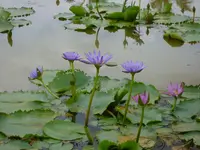
The red water lily, Nymphaea rubra, is an aquatic flowering plant grown in ponds, water gardens, and large containers. It forms floating round leaves and striking red to deep pink blooms.

This species is native to tropical regions of Asia, where it thrives in still or slow-moving freshwater. Its growth habit is spreading but contained to the water surface, which makes it suitable for ornamental pools.

Nymphaea rubra is moderately easy to grow if it receives stable warm conditions, full sun, and consistently still, clean water. Understanding how to care for Red water lily mainly involves managing water depth, light, and nutrient-rich aquatic soil.

Main Plant Requirements

Care Difficulty

Moderate Care

Light Preference

Full Sun

Water Requirements

Aquatic

Temperature Preference

Tropical / Frost Sensitive

Hardiness Zone

10–12

Soil Texture

Loamy, Silty, Organic-rich

Soil pH

Slightly acidic (6.5–7.0), Neutral (7.0)

Soil Drainage

Waterlogged tolerant

Fertilization

Moderate (every 2–4 weeks)

Get Personalized Care Plan

Scan your plant to receive care tips personalized for your specific plant

Available on iOS and Android

How to Care for the Red water lily

This tropical water lily needs strong sun to flower and maintain compact, healthy leaves.

  • Provide 6–8 hours of direct sun daily; full sun ponds give the best flowering for Red water lily.
  • Allow light morning and midday sun; brief light afternoon shade in very hot climates reduces leaf scorch and water overheating.
  • In sites with only 3–4 hours of sun, expect fewer blooms; move or thin surrounding plants if pads stretch and flowers decline seasonally.

This aquatic species relies on stable, clean, standing water rather than periodic soil watering.

  • Keep the crown 20–60 cm below the water surface; maintain a consistent level so the crown is never exposed to air.
  • Use heavy loam or clay soil in baskets or pond shelves; avoid peat-heavy, fluffy mixes that float or cause cloudy water around Nymphaea rubra.
  • Watch leaves: yellowing, limp pads with sour-smelling water suggest stagnation or anaerobic soil; crisp edges and slowed growth signal the water level is too shallow or fluctuating.

This tropical water lily prefers warm, stable water and does poorly in cold or frosty conditions.

  • Aim for water temperatures of 75–86°F (24–30°C) for strong growth and regular flowering.
  • Protect from cold: below about 68°F (20°C) growth slows, and below 55°F (13°C) the plant can decline or die, especially with repeated chills.
  • Avoid frost and freezing at all times; during heat waves above 90°F (32°C) provide some afternoon shade and adequate pond depth to buffer temperature swings.

This aquatic species does not rely on ambient air humidity, since leaves sit on or just above the water surface.

This species grows best rooted in dense, mineral-rich aquatic soil rather than standard potting mixes.

  • Use heavy loam or clay-loam garden soil with high mineral content and minimal undecomposed organic matter that might float.
  • Aim for neutral to slightly acidic conditions, roughly pH 6.5–7.2, which suit most hardy and tropical water lilies like Nymphaea rubra.
  • Avoid light, peaty, or sandy substrates that wash out, cloud the water, or expose rhizomes to temperature swings.
  • If soil is loose, cap it with 2–3 cm of washed gravel to reduce turbidity and keep rhizomes anchored under water.

This species is suitable for container growing when planted in wide, low aquatic baskets submerged in a pond or large water feature.

  • Choose a container wide enough for lateral rhizome spread so new crowns do not crowd and shade each other prematurely.
  • Use a solid-sided basket or pot to prevent soil loss into the water while still allowing stable placement on pond shelves.
  • Select a heavy container or weight it with gravel so floating leaves and water movement cannot tip it or shift it from position.

This tropical water lily responds well to moderate, targeted feeding during its active warm-season growth.

  • Use a slow-release aquatic fertilizer tablet or basket-safe, balanced NPK such as 10-10-10, never general lawn products.
  • Feed every 4–6 weeks during late spring to early fall, pressing tablets deep into the planting basket soil.
  • Apply at half to three-quarter label rate for established plants to avoid leaf burn and algae blooms.
  • Stop feeding the Red water lily once growth slows and leaves yellow in fall, resuming only when new growth appears.

Pruning Nymphaea rubra maintains water quality and supports strong flowering.

  • Inspect plants weekly in the growing season and remove yellowing, torn, or decaying leaves at the base with clean scissors or pruners.
  • Cut spent flowers just below the water surface before they decay to reduce nutrient buildup and algae.
  • Thin crowded leaves so remaining pads can spread without overlapping heavily, improving light exposure and bloom production.
  • Disinfect tools between ponds or containers to limit the spread of pathogens and aquatic pests.

Container-grown plants benefit from periodic transplanting into fresh, heavy soil to sustain vigorous growth.

  • Check baskets every 2–3 years; signs include rhizomes pressing against the container, crowded leaves, or reduced flowering.
  • Plan transplanting for early to mid spring, just as new growth starts and water temperatures rise above about 60°F.
  • Lift the basket gently, rinse to expose the rhizome, and trim damaged or rotten sections with a clean, sharp knife.
  • Replant Nymphaea rubra into a wider, shallow aquatic basket with clay loam, firming soil around the rhizome and submerging gradually to reduce shock.

Propagation of this species is usually done by division of the rhizome rather than by seed for reliable results.

  • Divide mature clumps in late spring or early summer when water is warm and the plant is actively growing.
  • Lift the basket, rinse off soil, and cut the rhizome into sections, each with at least 1–2 healthy growing points and roots.
  • Dust cuts with aquatic-safe fungicide if available, then plant divisions in fresh, heavy loam in separate baskets.
  • Submerge baskets gradually in still, warm water with full sun to encourage rapid establishment and rooting of Nymphaea rubra divisions.

In mild climates this tropical species can overwinter in ponds that do not freeze solid, but it is not frost hardy.

  • In regions with frost, sink containers to the deepest, non-freezing part of the pond before sustained cold.
  • Where ponds freeze deeply, lift baskets in late fall and overwinter rhizomes in water tubs kept at 50–60°F indoors.
  • Trim soft, decaying foliage before storage and maintain the rhizome just submerged to prevent drying out.

Care Tips

Rhizome Positioning

Set the rhizome at a 30–45° angle with the growing tip just above the substrate surface so new leaves can reach the water easily while the base stays anchored and stable.


Gradual Depth Adjustment

Start the pot on an upturned brick or crate at 15–20 cm water depth, then lower it by 5–10 cm every 1–2 weeks until the plant reaches its final depth, which reduces transplant shock and leaf yellowing.

Controlled Spread Management

Limit spread by growing plants in wide, shallow containers (30–40 cm diameter) and trimming off surplus rhizome sections each season so they do not overrun small ponds or tubs.

Leaf Turnover Hygiene

Remove aging, yellow, or torn leaves at the base with clean scissors every 1–2 weeks to maintain water quality and reduce hiding places for pests like aphids and water lily beetles.

Winter Storage Strategy

In cold regions, lift container-grown plants in late fall and store the pots in a frost-free location in water kept around 40–50°F, which protects the rhizomes and supports long-term success when growing Red water lily.

Common Pests and Diseases

Water lily aphids

This pest clusters on flower stalks and leaf undersides, sucking sap and causing distortion or yellowing. Symptoms include sticky honeydew on pads and sooty mold growing on the residue.

Solution

Rinse colonies off pads and buds with a strong but controlled stream of water, repeating every few days during peak infestation. For persistent problems, use a horticultural soap or neem oil labeled for aquatic use and avoid oversupplementing nitrogen, which encourages soft, aphid-prone growth.

China mark moth

This pest, also called the water lily leafcutter, has larvae that cut, fold, and chew floating leaves, leaving notched edges and window-like holes. Symptoms include leaves bundled together or rolled with visible caterpillars inside.

Solution

Hand-pick and destroy rolled or mined leaves containing larvae as soon as damage is seen, and skim any loose leaf pieces from the surface. In larger ponds, encourage fish that feed on larvae, and use a biological control such as Bacillus thuringiensis (Bt) formulated for caterpillars, applied carefully to avoid harming non-target aquatic life.

Water lily beetle

These insects chew round or irregular holes in floating pads, and their larvae feed on the leaf surface, leading to weakened, yellowing foliage. Symptoms include shot-hole damage and reduced leaf area on the water surface.

Solution

Remove and destroy heavily damaged pads early to break the life cycle, and check the undersides of leaves for adults and larvae to hand-pick. In outdoor ponds, fish often help reduce larvae; in severe cases, use a targeted insecticidal soap safe for aquatic environments, applied in the evening to reduce stress on the plant.

Crown rot

This disease affects the rhizome or crown at the base of the plant, causing pads to yellow, collapse, and fail to send up new healthy leaves. Symptoms include a soft, foul-smelling crown and blackened tissue at the growing point.

Solution

Lift the plant and cut away all soft, dark, or rotten rhizome tissue with a sterile knife, keeping only firm, clean sections with at least one healthy eye. Replant in fresh, heavy pond soil, avoid burying the crown too deep, and keep water relatively clean and well-circulated to reduce further infection, which supports Nymphaea rubra care instructions in most pond settings.

Leaf spot fungus

This disease causes small brown, purplish, or black spots on pads that may enlarge, merge, and lead to premature leaf decay. Symptoms include thinning foliage and pads that deteriorate faster than usual during the growing season.

Solution

Promptly remove and discard affected pads to reduce spore spread, and skim any decaying leaf debris from the water surface. Improve water quality and circulation, avoid crowding plants, and in severe, recurring cases consider an aquatic-safe fungicide used strictly according to label directions.

Interesting Facts

Night-blooming schedule

This red water lily typically opens its flowers in the late afternoon or evening and keeps them open through much of the night, an adaptation that aligns with its nocturnal moth and beetle pollinators.

Floating leaf anatomy

Its broad floating leaves contain large internal air spaces (aerenchyma) that increase buoyancy and help transport oxygen from the leaf surface down into submerged tissues in still or slow-moving water.

Pigment-rich red petals

The deep red color of the flowers is due to high levels of anthocyanin pigments, which can help protect floral tissues from intense sunlight and temperature fluctuations at the water surface.

Botan icon

Did you know?

In traditional water gardens across parts of South and Southeast Asia, especially in historical temple ponds, this species has long been chosen not only for color but also because its robust rhizomes can anchor firmly in mud at variable water depths, allowing it to persist for many years in the same pond with minimal intervention.

FAQs about Red water lily

Lack of blooms usually comes from insufficient sun, water that is too deep or cold, or a nutrient-poor substrate. Shallow, warm, still water and a slow-release aquatic fertilizer usually restore flowering in this species.

Grow Healthy Plants with Botan Care

Keep your plants happy and healthy with plant identification, disease detection, and easy care guidance.

Botan plant care app — identify plants on mobile

Explore More Plants