Provide climbing support
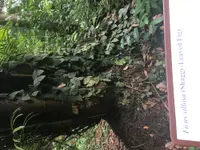
Mount the plant on a rough vertical surface such as cork bark, tree fern panel, or moss pole so the juvenile shingling leaves can adhere tightly and form an even mat rather than trailing loosely.

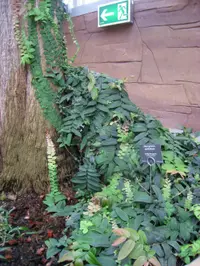
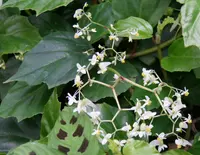
Monkey paws, Marcgravia umbellata, is a tropical evergreen vine known for its shingling growth habit and overlapping, rounded leaves that cling tightly to surfaces. Young leaves form neat, flattened layers on bark or wood, then mature into larger foliage as the plant climbs or trails.
It is native to humid rainforests of Central and South America, where it grows as an epiphyte on trees. In cultivation it is valued for its textured foliage and compact growth rather than flowers.
This species prefers warm, stable conditions, consistent moisture, and high humidity, which can make it more demanding than many common houseplants. Understanding how to care for Monkey paws is important before choosing it for indoor terrariums or vivariums.

Care Difficulty
Moderate Care

Light Preference
Bright Indirect Light

Water Requirements
Keep Soil Moist

Temperature Preference
Tropical / Frost Sensitive

Hardiness Zone
11–12

Soil Texture
Loamy, Peaty, Organic-rich

Soil pH
Acidic (5.5–6.5), Slightly acidic (6.5–7.0)

Soil Drainage
Moist but well-drained

Fertilization
Light (every 4–6 weeks)
Scan your plant to receive care tips personalized for your specific plant
Available on iOS and Android
Marcgravia umbellata prefers bright, indirect light that mimics filtered forest conditions.
Marcgravia umbellata likes consistently lightly moist, never soggy, soil.
This species prefers warm, stable temperatures similar to a humid tropical forest understory.
This species needs high, stable humidity to grow compact, healthy foliage.
This species prefers a loose, airy, moisture-retentive but well-drained mix.
This species is well suited to container culture, especially in terrariums or enclosed setups.
This tropical climber benefits from modest, consistent feeding during its active season for steady foliage growth.
Pruning supports compact, manageable growth and encourages fresh foliage on Marcgravia umbellata.
This species adapts well to containers but prefers gentle, infrequent repotting to avoid root disturbance.
New plants are most reliably produced from stem cuttings taken during the warm growing season.
This tropical vine is frost-sensitive and needs mild, stable winter conditions, especially in containers.

Plant Health Check
Not sure what's wrong with your plant? Check your plant's health inside the app.
This species naturally grows as a shingling vine, pressing its juvenile leaves flat against tree trunks to maximize light capture in the low-light understory of tropical forests.
Young climbing shoots bear small, tightly overlapping leaves, but once the plant reaches brighter light in the canopy, it transitions to larger, differently shaped adult leaves, an example of strong leaf dimorphism.
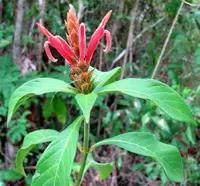
In its native range, this species is a classic example of a hummingbird-pollinated vine, with arching inflorescences that present nectar in a way that fits the feeding behavior and bill shape of certain hummingbirds.

The inflorescences of this species can form curved, almost saucer-like structures where multiple flowers are clustered together, creating a single prominent visual target that is easier for fast-flying hummingbirds to locate and repeatedly visit in dense rainforest vegetation.
Growth is moderate rather than rapid. In stable, warm, humid conditions it can add 10–20 cm of vine length per year. Growth slows strongly if humidity, temperature, or support structures are inadequate, or if roots are confined.
Keep your plants happy and healthy with plant identification, disease detection, and easy care guidance.