Red Aphelandra Care (Aphelandra scabra)

Red Aphelandra

About Red Aphelandra

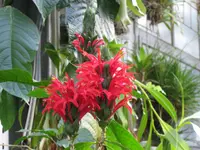
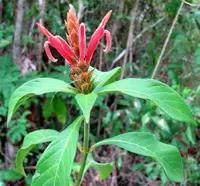
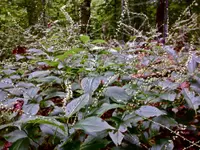
Red Aphelandra (Aphelandra scabra) is a tropical evergreen shrub from Central and South America, often grown as a compact indoor ornamental. It is valued for its vivid red flower spikes and contrasting deep green, textured leaves, which give it a bold, architectural look.

In nature it grows in warm, humid forests, so it prefers stable warmth, moderate to high humidity, and evenly moist but well-drained soil. Light shade or bright, filtered light supports healthy foliage and flowering.

Because it dislikes cold drafts, drying out, or soggy roots, it is considered moderately challenging for beginners. Learning how to care for Red Aphelandra mainly involves providing consistent moisture, humidity, and gentle light without extremes.

Main Plant Requirements

Care Difficulty

Hard Care

Light Preference

Bright Indirect Light

Water Requirements

Keep Soil Moist

Temperature Preference

Tropical / Frost Sensitive

Hardiness Zone

11–12

Soil Texture

Loamy, Peaty, Organic-rich

Soil pH

Acidic (5.5–6.5), Slightly acidic (6.5–7.0)

Soil Drainage

Moist but well-drained

Fertilization

Moderate (every 2–4 weeks)

Get Personalized Care Plan

Scan your plant to receive care tips personalized for your specific plant

Available on iOS and Android

How to Care for the Red Aphelandra

This shrub from humid tropical forests prefers bright, filtered light with some protection from harsh midday sun.

  • Provide 4–6 hours of bright, indirect light daily; light morning sun is acceptable, but avoid direct sun from 11 a.m.–3 p.m. to prevent leaf scorch.
  • Tolerates partial shade, yet very deep shade leads to leggy growth and fewer bracts, especially in colorful forms such as Red Aphelandra.
  • In hot summers, use overhead foliage or shade cloth to filter light, while in cooler seasons allow a bit more direct morning sun to maintain compact growth.

Aphelandra scabra prefers evenly moist, well-drained soil that never stays soggy or bone dry for long.

  • Water when the top 2–3 cm of soil feel dry, aiming for slightly moist but not wet conditions around the root zone.
  • Improve drainage with organic matter or a loose potting mix so excess water runs off quickly, reducing risk of root rot and yellowing, mushy leaves.
  • In cooler months, allow the soil surface to dry a little deeper and monitor for drooping, crisp leaves as a sign to water, while avoiding standing water after rain or irrigation.

This species thrives in warm, stable temperatures typical of lowland tropical climates.

  • Aim for 65–80°F (18–27°C) for active growth, avoiding rapid swings that can stress foliage and buds.
  • Protect from cold; growth slows below 60°F (16°C), and exposure below 50°F (10°C) can cause leaf drop, tissue damage, and increased disease risk.
  • The plant tolerates brief heat up to about 90°F (32°C) if humidity and soil moisture are maintained, but it is highly sensitive to frost and should be shielded from cold winds and radiative cooling at night.

This species needs consistently high humidity to maintain healthy foliage and flowering.

  • Aim for 60–80% humidity; levels below 50% often lead to leaf edge browning and curling.
  • It dislikes very dry indoor air from heating or AC vents, so keep the plant away from direct airflow sources.
  • Increase humidity with a pebble tray, grouping plants, or a room humidifier rather than frequent misting, which can encourage leaf spots on Red Aphelandra leaves.

Aphelandra scabra prefers an airy, moisture-retentive but fast-draining potting medium.

  • Use a peat- or coco-based mix with added perlite and fine orchid bark to create loose, organic-rich structure.
  • Ensure rapid drainage; the mix should hold moisture yet never stay waterlogged or sticky after watering.
  • Aim for slightly acidic to neutral pH around 6.0–7.0, which supports balanced nutrient uptake and root health.
  • Improve aeration by avoiding heavy garden soil or high-clay mixes that compact and suffocate roots, increasing rot risk.

This species is well suited to container growing when the pot supports its moisture-sensitive roots.

  • Choose a pot only 2–4 in wider than the root mass to keep the mix drying evenly between waterings and prevent soggy centers.
  • Select a stable, heavier container if the plant grows tall flower spikes, to reduce tipping risk on shelves or stands.
  • Use containers with multiple drainage holes so excess water exits quickly, then empty saucers promptly to avoid roots sitting in runoff.

Aphelandra scabra benefits from light, consistent feeding during the warm growing season for sustained foliage and flower production.

  • Use a balanced liquid fertilizer (such as 10-10-10 or 20-20-20) diluted to 1/4–1/2 strength for caring for Red Aphelandra.
  • Apply every 2–4 weeks in spring and summer on moist soil to avoid root burn.
  • Stop or reduce feeding to once every 6–8 weeks in fall and winter when growth slows.
  • Slow-release granules or a thin layer of well-rotted compost can be used at the start of the growing season instead of frequent liquid feeds.

Pruning Aphelandra scabra helps maintain a compact shape and encourages bushier, healthier growth.

  • Best time for structural pruning is late winter to early spring before active growth starts.
  • Use clean, sharp scissors or hand pruners to remove dead, damaged, or crossing stems at their base.
  • Pinch or tip back leggy shoots above a leaf node to promote branching and denser foliage.
  • After flowering, cut back spent flower spikes and lightly shape to control height and spread.

Container-grown Aphelandra scabra needs periodic repotting to avoid root congestion and maintain vigorous growth.

  • Check for roots circling the pot, emerging from drainage holes, or slower growth as signs it needs a larger container.
  • Plan to repot every 1–2 years in late winter or early spring, just before new growth begins.
  • Select a pot 2–3 cm wider with good drainage and use a loose, peat-free, well-draining mix.
  • Gently tease apart circling roots, remove some old soil, water thoroughly after repotting, and keep in bright, indirect light to limit stress.

Aphelandra scabra is most commonly propagated from stem cuttings taken during the active growing season.

  • Take 8–12 cm semi-ripe stem cuttings in late spring or summer with 2–3 leaf nodes.
  • Remove lower leaves, optionally dip the cut base in rooting hormone, and place in a sterile, airy mix such as perlite and peat-free compost.
  • Maintain 70–80°F, high humidity, and bright, indirect light; cover with a clear dome or bag for moisture.
  • Seeds are less common but can be sown warm in a similar light, moist medium with good air circulation.

Aphelandra scabra is tropical and requires careful winter care in climates with cool or freezing conditions.

  • The plant is frost-sensitive and should be kept above 55°F, ideally 60–75°F in winter.
  • Move container plants indoors before nights drop below 55°F, placing them in bright, indirect light.
  • Reduce watering slightly in winter but do not allow the root ball to dry out completely.
  • In very dry heated rooms, increase humidity with a pebble tray or room humidifier to prevent leaf stress.

Care Tips

Rotate For Symmetry

Turn the pot 90° every 1–2 weeks so the plant grows evenly and does not lean or twist toward the light, which helps keep the stem strong and upright.

Stake Softly

If the main stem starts to flop, insert a slim bamboo stake and secure the stem with soft plant ties or strips of cloth, leaving a little space so the stem can thicken without damage.

Refresh Bract Color

After flowering, remove spent bracts and slightly increase light (without direct sun) to encourage stronger new flushes of colored bracts in the next cycle when growing Red Aphelandra.

Use Pebble Trays

Place the pot on a wide tray filled with water and pebbles so the base of the pot sits above the water line, raising local humidity around the foliage without soaking the roots.

Prevent Leaf Spotting

When misting or showering the plant, water early in the day and aim for lukewarm, fine spray on the underside of leaves so surfaces dry by evening, reducing the risk of fungal leaf spots.

Common Pests and Diseases

Spider mites

This pest appears in warm, dry indoor air and causes tiny yellow stippling on leaves and fine webbing, especially on the undersides. Symptoms include dulled leaf color and gradual leaf drop if infestations are heavy.

Solution

Rinse foliage thoroughly with lukewarm water, including the undersides, then repeat every few days for 2–3 weeks; for heavier infestations, use insecticidal soap or a neem oil spray labeled for indoor ornamentals. Increase humidity around the plant and avoid placing it next to heating vents, as drier air favors mites and makes Aphelandra scabra care more difficult.

Mealybugs

These insects form white, cottony clusters in leaf axils, along stems, and sometimes on roots, sucking sap and causing distorted, weakened growth. Symptoms include sticky honeydew and sooty mold developing on leaf surfaces.

Solution

Isolate the plant, dab visible mealybugs with cotton swabs dipped in 70% isopropyl alcohol, then rinse the plant after treatment. Repeat inspections weekly and, if activity continues, apply insecticidal soap or neem oil to all aboveground parts, ensuring coverage into crevices and leaf bases.

Leaf spot

This disease causes small water-soaked or brown lesions on leaves that can enlarge, coalesce, and lead to premature yellowing and drop, particularly in crowded or poorly ventilated conditions. Symptoms include spots often bordered by darker margins and sometimes a yellow halo.

Solution

Remove and discard affected leaves promptly, avoid overhead watering, and keep foliage dry as much as possible. Improve air circulation around the plant and, in persistent cases, use a copper or chlorothalonil-based fungicide labeled for ornamental foliage plants, following all label directions.

Powdery mildew

This disease produces whitish, powdery patches on upper leaf surfaces, which can dull the foliage and cause leaves to yellow and distort. Symptoms include a dusty coating that can spread over much of the leaf if humidity is high but air movement is low.

Solution

Increase air movement, reduce overcrowding around the plant, and avoid frequent light misting that keeps leaves damp in stagnant air. Gently wipe affected leaves, remove heavily infected foliage, and apply a sulfur or potassium bicarbonate-based fungicide labeled for indoor ornamentals if the problem persists.

Scale insects

These insects appear as small, rounded or oval brown bumps on stems and leaf midribs, feeding on sap and weakening plants over time. Symptoms include sticky honeydew, possible sooty mold, and declining vigor of shoots and leaves.

Solution

Physically remove scale by scraping gently with a fingernail or soft brush, or by wiping with a cloth dipped in 70% isopropyl alcohol. For ongoing infestations, apply horticultural oil or insecticidal soap thoroughly to stems and leaf midribs, repeating every 7–10 days until new crawlers are no longer seen.

Interesting Facts

Distinctive bract structure

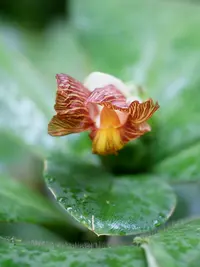
Its bright red flower spikes are actually formed by showy bracts, which are modified leaves, while the true flowers are small, tubular, and orange-yellow and emerge only briefly from between them.

Native to wet forests

This species is naturally found in lowland tropical rainforests of Central and northern South America, where it grows in warm, humid, partially shaded understory conditions along forest edges and clearings.

Specialist hummingbird pollination

In its native range, the tubular flowers are primarily pollinated by hummingbirds, whose long bills and hovering flight match the flower shape and nectar position, making them highly effective pollen carriers for the plant.

Botan icon

Did you know?

In the wild, this species can form dense, shrubby colonies along disturbed forest margins, where its bright red inflorescences often stand out as one of the most conspicuous color signals to hummingbirds during local flowering peaks.

FAQs about Red Aphelandra

Brown leaf edges usually come from low humidity, underwatering, or exposure to strong drafts or heat sources. Brown patches can also follow direct sun scorch. Trim damaged areas, improve humidity, and keep moisture and environment consistent.

Grow Healthy Plants with Botan Care

Keep your plants happy and healthy with plant identification, disease detection, and easy care guidance.

Botan plant care app — identify plants on mobile

Explore More Plants