Blue Justicia Care (Justicia petiolaris)

Blue Justicia

About Blue Justicia

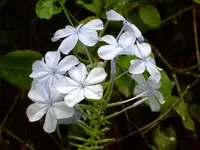
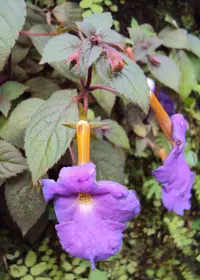
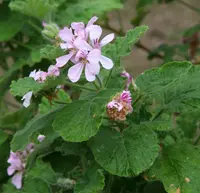
Blue Justicia, Justicia petiolaris, is a tropical ornamental shrub grown mainly for its soft blue flowers and lush green foliage. It usually forms a compact, bushy clump with upright stems and showy flower spikes.

This species is native to tropical regions of Central and South America, where it grows in warm, humid understory conditions. In cultivation it is often used as a patio, conservatory, or bright indoor accent plant.

Relatively fast growth, a forgiving nature, and good response to pruning make it moderately easy to care for Blue Justicia. It prefers bright, filtered light, evenly moist but not waterlogged soil, and protection from cold or very dry air.

Main Plant Requirements

Care Difficulty

Moderate Care

Light Preference

Partial Shade

Water Requirements

Regular Water

Temperature Preference

Tropical / Frost Sensitive

Hardiness Zone

10–11

Soil Texture

Loamy, Organic-rich

Soil pH

Acidic (5.5–6.5), Slightly acidic (6.5–7.0)

Soil Drainage

Moist but well-drained

Fertilization

Light (every 4–6 weeks)

Get Personalized Care Plan

Scan your plant to receive care tips personalized for your specific plant

Available on iOS and Android

How to Care for the Blue Justicia

Justicia petiolaris prefers bright, indirect light with some gentle direct sun for best growth.

  • Provide 3–4 hours of soft morning sun with bright, filtered light the rest of the day; avoid strong afternoon sun that can scorch leaves.
  • Tolerates light shade, but stems may stretch and flowers decline if grown in less than 4–5 hours of combined bright and filtered light.
  • In summer, move Blue Justicia out of harsh midday sun; in winter, shift it closer to brighter windows or a brighter outdoor spot to offset shorter days.

Justicia petiolaris prefers evenly moist, well-drained soil that never stays soggy.

  • Water when the top 2–3 cm of soil feel dry, using enough water to moisten the full root zone, then allow excess to drain away fully.
  • Reduce watering in cooler months when growth slows, letting the top 3–5 cm dry; increase frequency during hot, active growth periods.
  • Watch leaves for feedback: limp, dull, curling leaves often indicate underwatering, while yellowing lower leaves and a sour smell from soil suggest overwatering or poor drainage.

This species grows best in warm, frost-free conditions with stable temperatures.

  • Aim for 65–80°F (18–27°C) for active growth; flowering and foliage quality are most consistent within this range.
  • Protect the plant from temperatures below 50°F (10°C); light chill can stunt growth and true frost can kill top growth or the entire plant.
  • It tolerates brief heat up to about 90°F (32°C) if soil moisture is maintained and afternoon shade is provided, especially during dry, windy periods.

This species prefers moderately high humidity to keep foliage lush and reduce leaf-edge damage.

  • Aim for 50–70% humidity; it tolerates brief dips to 40% but growth may slow.
  • Crisping leaf tips, curling edges, and stalled new growth indicate air that is too dry for Blue Justicia.
  • Use a nearby humidifier, pebble tray under the pot, or grouped plants to lift humidity around the foliage.

This plant performs best in loose, airy, organic-rich soil that drains quickly but does not dry out instantly.

  • Use a mix of roughly 50% all-purpose potting mix, 25% fine bark, and 25% perlite to combine moisture retention with fast drainage.
  • Aim for slightly acidic to neutral pH, around 6.0–7.0, which suits Justicia petiolaris and keeps nutrients available.
  • Ensure the mix feels crumbly, not sticky; heavy clay or compacted media suffocate roots and increase rot risk.
  • Improve aeration by adding extra perlite or pumice if the pot feels heavy and stays wet longer than 3–4 days after watering.

This species adapts well to container growing when the pot supports its root system and water needs.

  • Choose a pot that is wider than deep to support branching top growth and reduce tipping in wind or on balconies.
  • Select slightly porous materials like unglazed terracotta only if you tend to overwater, since they let the mix dry a bit faster.
  • Ensure drainage holes are large and unobstructed so excess water leaves within seconds instead of pooling at the base of the container.

Justicia petiolaris responds well to modest feeding during active growth to maintain foliage color and steady shoots.

  • Use a balanced liquid fertilizer (around 10-10-10 or 20-20-20) at 1/2 strength every 4–6 weeks in spring and summer when growing Blue Justicia.
  • Apply fertilizer only to moist soil to reduce root burn risk and avoid contact with stems or leaves.
  • Pause feeding in fall and winter, or reduce to 1 light application mid-winter under strong indoor light.
  • Organic growers can top-dress with a thin layer of compost or use a mild slow-release product at the start of spring.

Pruning helps Justicia petiolaris stay compact, bushy, and productive.

  • Carry out light shaping in late winter or early spring before vigorous new growth begins.
  • Remove dead, damaged, or crossing stems with clean, sharp pruners to maintain airflow and reduce disease risk.
  • Tip back overly long or leggy shoots by 2–5 cm to encourage branching and denser foliage.
  • Disinfect blades between plants, and avoid cutting more than 1/3 of total growth at one time.

Blue Justicia benefits from occasional repotting or transplanting to refresh soil and prevent root congestion.

  • Check for roots circling the pot base, emerging from drainage holes, or unexplained slow growth as signs it needs a larger container.
  • Plan to repot every 2–3 years in late winter or early spring, moving up only 2–5 cm in pot diameter.
  • Gently loosen circling roots, trim broken ones with clean tools, and replant in a free-draining, peat-free mix.
  • Water thoroughly after repotting, then keep in bright, indirect light and slightly reduced watering for 1–2 weeks to limit stress.

Justicia petiolaris is commonly multiplied by stem cuttings for consistent new plants.

  • Take 8–12 cm softwood or semi-ripe cuttings in late spring or early summer from healthy, non-flowering shoots.
  • Remove lower leaves, optionally dip the cut end in rooting hormone, and insert into a sterile, moist mix of perlite and peat-free compost.
  • Maintain high humidity with a clear cover, bright but indirect light, and soil temperatures around 70–75°F.
  • Division of well-established clumps is possible in spring, keeping each section with healthy roots and several shoots.

This species is frost-tender and needs structured winter care in cooler climates.

  • Move container plants indoors before temperatures fall below 50°F, placing them in bright, indirect light.
  • Maintain indoor temperatures around 60–70°F and reduce watering so the root zone stays lightly moist, not wet.
  • In mild climates, apply a 5–8 cm mulch layer over the root area to buffer short cool spells and limit moisture swings.

Care Tips

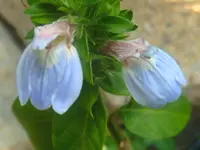
Support arching stems

Use small hoop stakes or a low wire frame to support mature arching stems so they do not crease at the base and can carry more flowers without snapping.

Pinch for bushiness

Pinch out the soft tips of young shoots every 4–6 weeks during active growth to keep the plant compact and encourage multiple flowering stems rather than one lanky cane.

Light grooming routine

Inspect the undersides of leaves weekly and wipe them with a damp, soft cloth to remove dust and dislodge early spider mites or whiteflies before they establish.

Rotate for even growth

Rotate the pot by 90° every 1–2 weeks so stems receive light from different angles and develop a balanced, symmetrical canopy instead of leaning strongly to one side.

Seasonal rest adjustment

In late autumn, allow slightly slower growth by reducing fertilization and trimming only weak or crossing stems, which helps the plant store energy and respond more strongly at the next flush when growing Blue Justicia.

Common Pests and Diseases

Spider mites

This pest often appears on stressed plants grown in dry, warm indoor air, causing stippled, dull leaves and fine webbing on stems and leaf undersides.

Solution

Increase humidity around the plant, then hose or shower foliage thoroughly to remove mites and webbing; repeat every few days. Follow with targeted treatment using insecticidal soap or a ready-to-use miticidal spray labeled for houseplants, ensuring full coverage of leaf undersides.

Mealybugs

These insects hide in leaf axils and along the velvety stems, appearing as white cottony clusters and causing leaf yellowing and sticky honeydew.

Solution

Isolate the plant, then dab visible mealybugs with cotton swabs dipped in 70% isopropyl alcohol and rinse the plant with lukewarm water. For lingering infestations, apply insecticidal soap or a neem oil product weekly until no new insects appear, paying close attention to stem joints and leaf bases.

Leaf spot

This disease causes small brown or tan spots with darker margins on the thin leaves, which can merge into larger blotches under persistently wet foliage conditions.

Solution

Remove and discard affected leaves, avoid overhead watering, and allow the canopy to dry quickly by improving airflow. If spotting continues to spread, use a copper-based or broad-spectrum houseplant fungicide according to label directions, treating both upper and lower leaf surfaces.

Botrytis blight

This disease develops in cool, stagnant, and humid air, leading to soft, water-soaked patches on leaves and stems that develop gray, fuzzy mold.

Solution

Promptly cut off and discard all affected tissue, then improve light, airflow, and spacing around the plant to keep surfaces dry. Reduce evening watering, avoid misting, and if needed apply a fungicide labeled for Botrytis on ornamentals as part of broader Justicia petiolaris plant care to prevent recurrence.

Interesting Facts

Variable leaf patterning

This species shows naturally variable leaf variegation, with some individuals displaying strongly contrasting pale veins and patches while others remain more evenly green, even when grown under similar conditions.

Shrub from tropical Africa

Justicia petiolaris is native to tropical regions of Africa, where it grows as a small understory shrub in warm, humid habitats rather than as a groundcover or canopy tree.

Taxonomic reassessments

The species has been involved in several taxonomic revisions within the Acanthaceae family, reflecting ongoing research on floral and vegetative traits used to separate closely related Justicia species.

FAQs about Blue Justicia

Lack of blooms usually comes from insufficient light, heavy pruning at the wrong time, or low nutrients. Provide bright, indirect light, avoid cutting new tips in the growing season, and use a balanced, dilute fertilizer to support flowering.

Grow Healthy Plants with Botan Care

Keep your plants happy and healthy with plant identification, disease detection, and easy care guidance.

Botan plant care app — identify plants on mobile

Explore More Plants