Encourage Compact Growth
Pinch back soft stem tips after each main flowering flush to keep the plant dense and to trigger new side shoots instead of letting stems become long and bare.

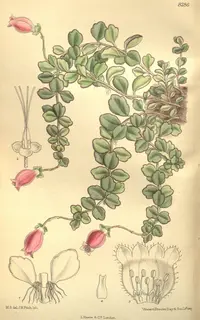
Kalanchoe uniflora is a trailing succulent from Madagascar, often grown as a hanging plant. It forms long, arching stems with small, fleshy leaves and showy tubular flowers.
This species naturally occurs on rocky slopes and cliffs, where it stores water in its leaves and tolerates short dry periods. Its compact growth and drought tolerance make it relatively low-maintenance for indoor growers.
Those learning how to care for Kalanchoe uniflora should note that it prefers bright, indirect light, a well-draining gritty mix, and careful watering that allows the soil to dry slightly between waterings.

Care Difficulty
Easy Care

Light Preference
Partial Sun

Water Requirements
Low Water

Temperature Preference
Tropical / Frost Sensitive

Hardiness Zone
11–12

Soil Texture
Sandy, Loamy, Organic-rich

Soil pH
Slightly acidic (6.5–7.0), Neutral (7.0)

Soil Drainage
Well-drained

Fertilization
Light (every 4–6 weeks)
Scan your plant to receive care tips personalized for your specific plant
Available on iOS and Android
This trailing succulent prefers bright conditions with protection from intense midday sun.
This species stores water in its fleshy leaves and needs infrequent, careful watering.
This plant prefers warm, stable conditions and is sensitive to cold and frost.
This plant manages well in typical indoor humidity without special adjustments.
Use a sharply draining, airy mix that behaves like a succulent medium rather than standard houseplant soil.
This species is well suited to container growing, especially in hanging baskets or elevated pots.
This succulent benefits from light feeding but excessive nutrients can damage Kalanchoe uniflora roots.
Thoughtful pruning keeps Kalanchoe uniflora compact, healthy, and flowering well.
This species prefers snug pots and only occasional repotting to avoid overwatering risk.
Kalanchoe uniflora is commonly propagated from stem cuttings under warm, bright conditions.
This tropical succulent is frost-tender and needs protection in regions with cold winters.

Plant Health Check
Not sure what's wrong with your plant? Check your plant's health inside the app.
This species produces long, arching stems with solitary, tubular red to orange flowers that hang like small bells, unlike many other Kalanchoe that carry clusters of upright blooms.
In its native Madagascar, it often grows as an epiphyte on trees or among rocks, anchoring itself in crevices with minimal organic matter rather than rooting in deep soil.
Like several relatives in the genus, it can regenerate from stem and leaf pieces, an efficient vegetative reproduction strategy that helps it persist in fragmented, rocky habitats.
Lack of blooms usually relates to insufficient light, too much nitrogen fertilizer, or no cool, short-day period. Provide bright conditions, avoid heavy feeding, and give a cooler, slightly drier rest phase to trigger flower production.
Keep your plants happy and healthy with plant identification, disease detection, and easy care guidance.