


Optimize air movement
Mount plants where they receive gentle, consistent airflow from an open window or low-speed fan, which helps leaves dry quickly after misting and reduces fungal problems.

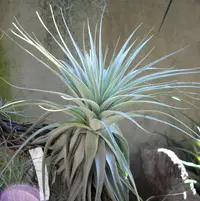
Tillandsia gardneri is an epiphytic air plant from Brazil and neighboring regions, where it grows on trees and rocks in bright, airy habitats. It belongs to the bromeliad family and absorbs water and nutrients through specialized leaf scales rather than roots in soil. The plant forms soft, silvery rosettes with arching, narrow leaves and produces tall flower spikes with pink bracts and tubular blooms. Its tolerance of open air, lack of soil, and moderate light needs make it suitable for indoor displays and small spaces. With regular misting, good air flow, and bright indirect light, it is relatively simple for beginners learning how to care for Tillandsia gardneri.

Care Difficulty
Moderate Care

Light Preference
Bright Indirect Light

Water Requirements
Moderate Water

Temperature Preference
Tropical / Frost Sensitive

Hardiness Zone
10–12

Soil Texture
Sandy, Rocky, Organic-rich

Soil pH
Acidic (5.5–6.5)

Soil Drainage
Well-drained

Fertilization
Light (every 4–6 weeks)
Scan your plant to receive care tips personalized for your specific plant
Available on iOS and Android
This air plant prefers bright, indirect light that mimics open woodland or bright veranda conditions.
This species absorbs water through its leaves and needs thorough wetting followed by complete drying.
This air plant prefers warm, frost-free conditions with moderate temperature swings between day and night.
This species prefers moderately humid air but adapts if moisture needs are met consistently.
This epiphytic air plant does not need conventional potting soil and is healthiest when kept out of dense substrates.
This species can be grown in containers or vessels, provided they are treated as display supports rather than traditional pots.
Air plants like Tillandsia gardneri need only light feeding to support healthy foliage and flowering.
Pruning needs are minimal and mainly focus on cleanliness and maintaining an open clump structure in Tillandsia gardneri.
This air plant is not traditionally repotted but may be remounted or repositioned when clumps become crowded or unstable.
Multiplication of Tillandsia gardneri is most reliable through offsets that form naturally around the mother plant.
This species is frost sensitive, so winter care focuses on avoiding freezing and excess cold moisture.

Plant Health Check
Not sure what's wrong with your plant? Check your plant's health inside the app.
This species is naturally found in cooler, misty cloud forests in eastern Brazil, often at higher elevations than many other air plants, which is why it prefers milder temperatures and good air movement.
Its leaves are thickly coated with silvery, hair-like scales called trichomes that allow it to capture water and nutrients directly from fog and air, giving the plant its distinctive pale, almost frosted appearance.
Unlike many stiff-leaved Tillandsia, this species forms soft, gracefully arching rosettes that can grow into loose clumps over time, making it a favored species for showing how to take care of Tillandsia gardneri in mounted or hanging displays.

In nature, this species often grows on exposed rock faces and coastal cliffs as well as on tree branches, showing unusual adaptability for an air plant that also comes from relatively cool and humid habitats.
Blooming usually depends on plant maturity, bright indirect light, and stable warmth. If conditions are right, a high-phosphorus air-plant fertilizer used lightly during the growing season can support flower production, but overfertilizing may delay or distort blooms.
Keep your plants happy and healthy with plant identification, disease detection, and easy care guidance.

-1-200x150.webp)
Pregnant onion
Albuca bracteata
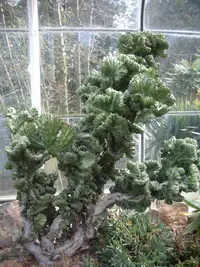
Elkhorn
Euphorbia lactea 'Cristata'
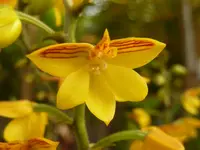
Hairy-lipped Polystachya
Polystachya pubescens
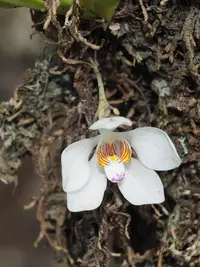
Orange blossom orchid
Sarcochilus falcatus

Jewel Alocasia
Alocasia baginda 'Dragon Scale'
Ficus binnendijkii
Ficus binnendijkii
 POPULAR
Blue star fern
Phlebodium aureum
 POPULAR
Jade plant
Crassula ovata