blue-sage Care (Eranthemum pulchellum)

Also known as: Blue Eranthemum
blue-sage

About blue-sage

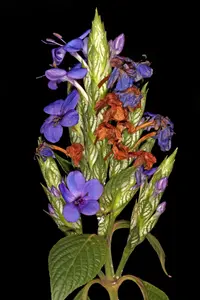
Blue-sage, Eranthemum pulchellum, is a tropical flowering shrub known for its vivid cobalt-blue flower spikes and lush green foliage. It is usually grown as an ornamental accent or seasonal container plant.

This species is native to the Himalayan foothills and parts of Southeast Asia, where it grows in warm, humid, partially shaded habitats. In gardens, it tends to form a dense, upright to slightly spreading clump.

It is considered moderately easy to grow if given warmth, frost protection, and consistent moisture without waterlogging. Many growers find it helpful to learn how to care for blue-sage with bright, filtered light and well-drained, fertile soil.

Main Plant Requirements

Care Difficulty

Moderate Care

Light Preference

Partial Shade

Water Requirements

Keep Soil Moist

Temperature Preference

Tropical / Frost Sensitive

Hardiness Zone

10–11

Soil Texture

Loamy, Organic-rich

Soil pH

Acidic (5.5–6.5), Slightly acidic (6.5–7.0)

Soil Drainage

Moist but well-drained

Fertilization

Light (every 4–6 weeks)

Get Personalized Care Plan

Scan your plant to receive care tips personalized for your specific plant

Available on iOS and Android

How to Care for the blue-sage

Eranthemum pulchellum prefers bright, gentle light that mimics dappled tropical conditions.

  • Provide 3–5 hours of soft morning sun with bright, filtered light for the rest of the day; avoid harsh afternoon sun in hot climates.
  • Plant in partial shade outdoors, such as east or light north exposure; strong west or south sun can scorch leaves and fade blue-sage flowers.
  • If stems stretch or foliage thins, increase light exposure; in winter, choose a brighter spot or lightly thin overhead shade to maintain color.

This species prefers evenly moist, fast-draining soil rather than cycles of deep drought or saturation.

  • Water when the top 2–4 cm of soil feels dry, aiming for moist but not soggy soil; use a soil mix that drains freely to prevent root rot.
  • In hot growing seasons, expect more frequent watering, guided by soil feel; in cool or rainy periods, extend intervals and check that soil is not staying wet for several days.
  • Wilting with dry soil, crisp leaf edges, and slow growth suggest underwatering, while yellowing lower leaves and a sour soil smell point to overwatering in Eranthemum pulchellum.

This plant grows best in consistently warm, frost-free conditions.

  • Aim for 65–80°F (18–27°C) for active growth; temperatures in this range support steady foliage and flowering.
  • Protect from cold below 50°F (10°C); brief dips to 40–45°F (4–7°C) may be survived but can cause leaf drop and slowed recovery.
  • Avoid frost and freezing conditions, and shield from extreme heat above 95°F (35°C) with extra shade and monitoring of soil moisture to reduce stress.

This species prefers moderately high humidity and reacts quickly to very dry air.

  • Aim for 50–70% humidity, as blue-sage foliage stays fuller and glossier in this range.
  • Dry indoor air causes crispy leaf edges, tip browning, and slower new growth, especially in heated rooms.
  • Increase humidity with a nearby humidifier, grouped plants, or a pebble tray under the pot, avoiding misting that wets leaves heavily.

This shrub grows best in loose, airy, organic-rich soil that drains quickly but does not dry out instantly.

  • Use a peat- or coco-based potting mix with added compost for nutrients and 20–30% perlite to improve drainage and aeration.
  • A slightly acidic to neutral pH around 6.0–7.0 suits Eranthemum pulchellum and supports balanced nutrient uptake.
  • Ensure the mix feels springy, not compacted; break up clods and avoid fine, heavy textures that hold water around the roots.
  • Avoid dense clay, unamended garden soil, or any mix that stays wet for days, which encourages root rot and stem decline.

This species is well suited to container growing for patios, balconies, or protected outdoor spots.

  • Choose a pot 2–4 in wider than the root mass to allow bushy top growth without creating a waterlogged soil column.
  • Select a heavier or wide-based container if grown tall, as the shrub can become top-heavy in wind or when flowering abundantly.
  • Use a potting mix that stays evenly moist but drains fast through unobstructed holes, and empty saucers promptly after watering to avoid root saturation.

This shrub responds well to moderate feeding during the warm growing season, especially when grown as blue-sage in containers.

  • Use a balanced liquid fertilizer (such as 10-10-10) at 1/2 strength every 4–6 weeks from spring through early fall.
  • Alternatively, mix a slow-release balanced fertilizer into the topsoil at the start of spring for outdoor plantings.
  • Avoid feeding in late fall and winter when growth slows, to prevent weak, soft shoots.
  • Water before and after applying fertilizer to reduce root burn and aid nutrient uptake.

Eranthemum pulchellum benefits from light, timed pruning to maintain bushy growth and good flowering.

  • Carry out main pruning in late winter or early spring before strong new growth starts.
  • Remove dead, damaged, or crossing stems with clean, sharp hand pruners to limit disease entry.
  • Shorten leggy shoots by 1/3 to encourage branching and denser foliage.
  • After flowering, lightly trim spent flower spikes to keep the plant tidy and promote new shoots.

Container-grown plants need periodic repotting to maintain healthy roots and sustained flowering.

  • Check for roots circling the pot, pushing through drainage holes, or reduced growth as signs it needs a larger container.
  • Plan to repot every 2–3 years in late winter or early spring, just before vigorous growth resumes.
  • Move the plant into a pot 2–5 cm wider, using fresh, well-drained mix and setting the root ball at the same depth.
  • Handle roots gently, water thoroughly after potting, and keep in bright, indirect light for 1–2 weeks to limit stress.

New plants are most often produced from softwood or semi-ripe stem cuttings under warm, humid conditions.

  • Take 8–10 cm non-flowering tip cuttings in late spring or summer, cutting just below a node.
  • Remove lower leaves, dip the cut end in rooting hormone, and insert into moist, sterile, well-drained mix.
  • Maintain 70–80°F, bright but indirect light, and high humidity using a clear cover with small vents.
  • Allow roots to form over 3–6 weeks, then gradually acclimate young plants to lower humidity before potting individually.

This species is frost-sensitive and needs protection in regions with cold winters.

  • In USDA zones colder than 10, grow in containers and move indoors before temperatures drop below 45°F.
  • Provide bright indoor light and keep temperatures around 60–70°F to reduce stress.
  • Reduce watering in winter, allowing the topsoil to dry slightly more between waterings.
  • In mild climates, apply a 5–8 cm mulch layer around outdoor plants to insulate the root zone.

Care Tips

Pinch To Bush

Regularly pinch out soft stem tips once shoots reach 10–15 cm to encourage branching, a fuller outline, and more flowering points on the plant.

Rotate For Symmetry

Turn the pot 90° every 1–2 weeks so stems grow evenly and do not lean or stretch toward the light on one side only.

Refresh After Bloom

After the main flowering flush, lightly trim back spent flower spikes and the top 2–3 nodes of each stem to stimulate fresh growth and a possible second bloom cycle.

Strategic Stem Support

In taller, pot-grown plants, insert slim stakes near the base and loosely tie the main stems with soft ties to prevent flopping and reduce risk of breakage when moving the pot.

Preventive Pest Checks

Inspect the undersides of leaves and young shoots every 1–2 weeks for early signs of mites or whiteflies, and isolate and treat promptly with horticultural soap to protect long-term success in growing blue-sage.

Common Pests and Diseases

Spider mites

This pest feeds on the undersides of leaves, causing fine stippling, dull foliage color, and sometimes thin webbing between stems and leaves.

Solution

Rinse foliage thoroughly with a strong but gentle stream of water, then increase humidity and improve air circulation; for persistent infestations use insecticidal soap or a horticultural oil, repeating applications every 5–7 days until new growth appears clean.

Mealybugs

These insects appear as white, cottony clusters on stems, leaf nodes, and leaf undersides, and they weaken plants by sucking sap.

Solution

Isolate the plant, dab visible insects with cotton swabs dipped in isopropyl alcohol, then wash the plant and follow up with insecticidal soap or neem oil, ensuring coverage into crevices where pests hide.

Leaf spot

This disease produces small to medium brown or black spots on leaves, often with yellow halos and occasional leaf drop in humid, crowded conditions.

Solution

Remove and discard affected leaves, avoid wetting foliage when watering, and improve spacing and airflow; in persistent cases, apply a copper-based or other broad-spectrum fungicide labeled for ornamental foliage plants, following label directions carefully.

Powdery mildew

This disease causes a white to gray, powdery coating on upper leaf surfaces that can lead to distortion and reduced vigor under shady, stagnant, or cool conditions.

Solution

Increase light and airflow around the plant, remove heavily affected leaves, and treat remaining foliage with a sulfur-based fungicide or potassium bicarbonate product, repeating according to label directions until new growth is clear.

Interesting Facts

Unusual blue inflorescences

This species produces vivid cobalt-blue flowers arranged on dark, upright spikes, a relatively rare color combination among tropical Acanthaceae and a key reason it is used as a winter-blooming accent shrub in warm climates.

Cool-season blooming pattern

In many subtropical regions, this plant tends to flower most heavily during the cooler, drier months, providing nectar when fewer other ornamental shrubs are in bloom.

Pollinator-friendly nectar source

The tubular blue flowers are adapted for pollination by nectar-feeding insects and possibly sunbirds or hummingbirds in suitable regions, with the corolla shape guiding visitors toward the nectar while promoting pollen transfer.

FAQs about blue-sage

Poor flowering usually comes from low light, heavy or soggy soil, or old, unpruned stems. Ensure bright conditions, avoid high-nitrogen fertilizer, and lightly prune after flowering to stimulate new growth and more buds next season.

Grow Healthy Plants with Botan Care

Keep your plants happy and healthy with plant identification, disease detection, and easy care guidance.

Botan plant care app — identify plants on mobile

Explore More Plants