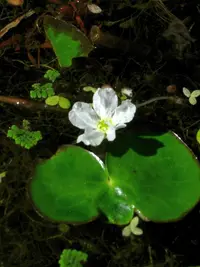
Cahaba lily Care (Hymenocallis coronaria)

Also known as: Rocky Shoals Spider Lily
Cahaba lily

About Cahaba lily

Cahaba lily, Hymenocallis coronaria, is an aquatic flowering plant native to fast-flowing rivers and shoals in the southeastern United States. It anchors to rocky, shallow streambeds and forms clumps of strap-like green leaves.

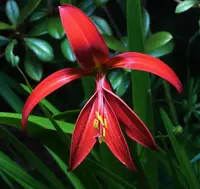
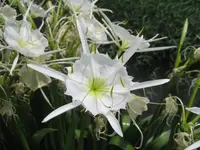
Each plant sends up tall stalks topped with large, fragrant white flowers that open in late spring to early summer, often in dramatic mass displays. The blooms have a distinctive crown-like center with long, narrow petals.

This species evolved for moving, well-oxygenated water and stable, rocky substrates, which makes it challenging to grow in typical garden ponds. Understanding its need for constant water movement and secure anchoring is essential if you plan to care for Cahaba lily in cultivation.

Main Plant Requirements

Care Difficulty

Hard Care

Light Preference

Full Sun

Water Requirements

Aquatic

Temperature Preference

Warm Climate

Hardiness Zone

5–9

Soil Texture

Silty, Loamy, Organic-rich

Soil pH

Slightly acidic (6.5–7.0), Neutral (7.0)

Soil Drainage

Waterlogged tolerant

Fertilization

Minimal (feed rarely)

Get Personalized Care Plan

Scan your plant to receive care tips personalized for your specific plant

Available on iOS and Android

How to Care for the Cahaba lily

This aquatic bulb thrives in strong light and open exposure along streams and rivers.

  • Provide 6–8 hours of direct sun, with at least 3–4 hours of morning sun; light afternoon shade helps in very hot summers to reduce leaf scorch.
  • Tolerates light or dappled shade for part of the day, but dense shade reduces flowering and can produce weak, floppy leaves on Cahaba lily.
  • In cooler seasons allow as much full sun as possible; monitor foliage in late spring and summer for bleaching or crispy tips as a sign of excessive sun intensity.

This species is adapted to flowing, consistently wet conditions rather than alternating wet and dry cycles.

  • In natural or garden stream settings, keep bulbs where water moves gently over them; avoid stagnant pools that encourage rot and low oxygen levels.
  • For soil-based plantings, keep the root zone constantly moist so the top 1–2 cm never fully dries, using rich, organic, but well-aerated substrate.
  • Signs of overwatering in heavy or still conditions include yellowing, mushy bulbs, and foul smell; brown, folding leaf tips and slow growth suggest the site is too dry.

This plant prefers warm, frost-free conditions but can handle brief cool spells if its bulbs stay protected.

  • Active growth is strongest at 70–85°F (21–29°C); flowering and leaf production slow noticeably below 65°F (18°C).
  • Tolerates short drops to about 40°F (4°C) if bulbs are submerged and insulated, but foliage is damaged by frost and repeated chills can weaken plants.
  • In regions with winters below 40°F (4°C), treat as a tender aquatic bulb: lift and store bulbs at 50–60°F (10–16°C) or shift containers to a protected, frost-free area.

This riverine species prefers moist air but usually tolerates typical household humidity if roots stay consistently wet.

  • Aim for 50–70% humidity; protect from hot, very dry air that speeds leaf tip browning.
  • Dry-air stress shows as crisp brown margins, folding leaves, and slower growth despite wet roots.
  • Increase humidity with grouped pots, a nearby open tray of water and stones, or a small outdoor water feature near Cahaba lily.

This aquatic bulb needs permanently wet, loose, organic-rich substrate rather than conventional garden soil.

  • Use a mix of 50–70% coarse sand or fine gravel with the rest rich organic material such as composted bark or leaf mold.
  • Substrate must be water-saturated yet oxygenated; flowing or gently moving water around Hymenocallis coronaria helps prevent stagnation.
  • Target slightly acidic to neutral conditions around pH 6.0–7.0, avoiding highly alkaline or salty sites that reduce nutrient uptake.
  • Avoid heavy clay, compacted beds, or peat-only mixes that turn anaerobic; add sand or fine gravel to improve structure and root aeration.

This species can grow in containers if they mimic a shallow, fast-moving aquatic edge.

  • Choose a wide, heavy container that resists tipping when filled with water-saturated substrate and tall foliage catches wind.
  • Drill or use side slits near the upper substrate level to let water overflow quickly while keeping the root zone submerged but not stagnant.
  • Place the container inside a larger water feature or recirculating tray so water can move past the roots rather than sitting still.

Hymenocallis coronaria benefits from light, targeted feeding during its active growing season in nutrient-poor sites.

  • Apply a balanced, slow-release NPK granular fertilizer at 1/2 label rate in early spring as new growth appears.
  • In containers, supplement with a diluted (1/4–1/2 strength) balanced liquid feed every 4–6 weeks during active growth.
  • Avoid fertilizing during dormancy or winter; excess nutrients can cause weak, floppy foliage and bulb rot.
  • For naturalized Cahaba lily colonies in rich, undisturbed stream margins, additional fertilizer is usually unnecessary.

Hymenocallis coronaria needs minimal pruning, mainly to keep clumps healthy and tidy.

  • Best time for cleanup is late fall or very early spring, once foliage has yellowed and collapsed naturally.
  • Use clean, sharp scissors or hand pruners to remove dead, damaged, or diseased leaves at the base.
  • Cut spent flower stalks down to the foliage line after blooming to direct energy back into the bulbs.
  • Avoid cutting green, healthy leaves, as they are essential for photosynthesis and future flowering strength.

Transplanting or dividing Hymenocallis coronaria is done infrequently and mainly to relieve crowding or improve site conditions.

  • Plan to divide or transplant established clumps every 4–6 years, or when flowering declines and bulbs become congested.
  • Best timing is in late fall after foliage dies back, or very early spring before new growth starts.
  • Lift clumps carefully with a garden fork, keeping as much root and surrounding soil intact as possible to limit stress.
  • Replant bulbs at the same depth in a consistently moist, well-drained site, then water thoroughly and keep soil evenly moist.

Hymenocallis coronaria is most commonly propagated by division, with seed used mainly for conservation or breeding work.

  • Divide established clumps in late fall or early spring, separating offset bulbs with firm, healthy roots.
  • Replant divisions immediately into moist, well-drained soil, setting bulbs at the same depth and spacing them 15–30 cm apart.
  • For seed, sow fresh in a shallow tray of consistently moist medium at 65–75°F with bright, indirect light.
  • Keep conditions evenly moist, never waterlogged, and expect seed-grown plants to take several years to flower.

This species is moderately cold hardy in much of its native range but benefits from basic winter care in colder gardens.

  • In zones warmer than about USDA 7, established in-ground clumps usually overwinter without special measures.
  • In colder areas, apply 5–8 cm of loose mulch over the root zone after foliage dies back to buffer freeze–thaw cycles.
  • Container plants are more exposed; move pots into a frost-free, cool, bright area before hard freezes and keep soil just barely moist.

Care Tips

Prevent Bulb Uprooting

In moving water, wedge bulbs between larger river stones or in perforated aquatic baskets filled with coarse sand and gravel so the current cannot dislodge them during floods.

Flow-Aware Placement

Site plants where water depth stays around knee-deep for most of the growing season and flow is brisk but not scouring, avoiding channels where flood surges concentrate and strip away substrate.

Divide With Markers

When clump division is needed, flag individual bulbs with soft ties before lifting so each division can be replanted at the same original orientation and depth, which reduces transplant stress and reestablishment time.

Monitor After Floods

After high-water events, inspect clumps for exposed bulbs or damaged roots and immediately reset any loosened plants, backfilling with clean gravel to stabilize them and prevent rot from buried organic debris.

Ethical Propagation

Use only nursery-propagated stock or divisions from legally permitted populations and keep accurate location records, which supports conservation goals while growing Cahaba lily in designed water gardens.

Common Pests and Diseases

Spider mites

This pest often appears during hot, dry periods when river levels drop and foliage is stressed. Symptoms include fine webbing, stippled or bronzed leaves, and gradual yellowing along the strap-like foliage.

Solution

Rinse foliage thoroughly with a strong stream of water, including the undersides of leaves, to dislodge mites, and repeat every few days during outbreaks. In ornamental or conservation plantings, improve humidity around plants, avoid drought stress, and use a horticultural oil or insecticidal soap labeled for mites, applied in the early morning to avoid leaf burn.

Aphids

These insects congregate on young scapes, flower buds, and leaf bases, sucking sap and excreting sticky honeydew that can lead to sooty mold growth. Symptoms include curled or distorted new growth and reduced flower quality.

Solution

Prune off heavily infested shoots and rinse the remaining foliage and flower stalks with water to remove colonies. For persistent problems, use insecticidal soap or a light horticultural oil, focusing on tender growth, and limit high-nitrogen fertilization that encourages soft, aphid-prone tissue.

Bulb nematodes

This pest attacks the bulbs and basal plate, causing stunted growth, deformed leaves, and poor flowering in clumps grown outside fast-moving stream habitats. Symptoms include soft, misshapen bulbs and weak or sparse shoots.

Solution

Discard severely affected bulbs and avoid replanting in the same soil, as nematodes persist in the substrate. For container or nursery stock, use only certified clean bulbs, rotate planting sites, and, where permitted, solarize moist soil (cover with clear plastic in full sun for several weeks) before replanting to reduce nematode populations.

Leaf spot

This disease is usually caused by fungi that colonize splash-wetted leaves along streams or in densely planted clumps. Symptoms include small brown or tan lesions that may merge into larger dead patches, especially on older foliage.

Solution

Remove and discard affected leaves to reduce spore levels, and avoid overhead irrigation in cultivated settings so foliage dries quickly. Improve spacing and airflow, water at the base where possible, and, in valuable ornamental plantings, apply a labeled broad-spectrum fungicide preventively if wet, warm conditions persist.

Interesting Facts

River shoal specialist

This species grows almost exclusively on rocky shoals and shallow rapids of clean, fast-flowing Southeastern US rivers, anchoring its bulbs and roots into crevices that many other flowering plants cannot tolerate.

Night-scented spider flowers

The large white flowers open in late afternoon or evening and release a strong fragrance at night, an adaptation that helps attract nocturnal moth pollinators along river corridors.

Fragmented native range

Once more widespread, this plant now naturally occurs only in scattered populations in Alabama, Georgia, and South Carolina, making local river conditions and water quality critical for long-term population survival.

Botan icon

Did you know?

The species is considered an indicator of high river water quality, because its populations persist only where flows remain relatively natural, oxygen levels are high, and pollution and siltation are low, so conservation biologists often track it when assessing the ecological health of shoal habitats.

FAQs about Cahaba lily

Lack of flowering often comes from insufficient winter chill, weak bulbs, or nutrient imbalance. Provide a cool dormant period, avoid deep planting, and use a balanced, low-nitrogen fertilizer. Stable, shallow, moving water also supports strong bloom production.

Grow Healthy Plants with Botan Care

Keep your plants happy and healthy with plant identification, disease detection, and easy care guidance.

Botan plant care app — identify plants on mobile

Explore More Plants