carolina jessamine Care (Gelsemium sempervirens)

Also known as: evening trumpetflower, false jessamine, Carolina jessamine, Carolina yellow jessamine, Carolina jasmine
carolina jessamine

About carolina jessamine

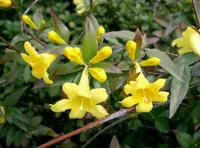
Carolina jessamine, Gelsemium sempervirens, is an evergreen, twining vine valued for its fragrant yellow, trumpet-shaped flowers that appear in late winter or early spring. It typically climbs over fences, arbors, or shrubs, forming a dense, glossy green curtain.

This species is native to the southeastern United States, where it grows in woodlands, thickets, and along forest edges. It adapts well to garden conditions and is generally considered low-maintenance once established.

Understanding how to care for carolina jessamine starts with choosing a sunny to lightly shaded spot, well-drained soil, and moderate moisture. Its vigorous growth and resilience make it suitable for many temperate gardens, provided it has support to climb.

Main Plant Requirements

Care Difficulty

Easy Care

Light Preference

Full Sun

Water Requirements

Moderate Water

Temperature Preference

Warm Climate

Hardiness Zone

7–10

Soil Texture

Sandy, Loamy, Clay

Soil pH

Acidic (5.5–6.5), Slightly acidic (6.5–7.0)

Soil Drainage

Well-drained

Fertilization

Minimal (feed rarely)

Get Personalized Care Plan

Scan your plant to receive care tips personalized for your specific plant

Available on iOS and Android

How to Care for the carolina jessamine

This vine flowers best with strong light but tolerates some shade in hot climates.

  • Provide 6–8 hours of sun daily, ideally with morning sun and light afternoon shade, especially in hotter regions.
  • Carolina jessamine handles light or open shade, but dense shade reduces flowering and leads to sparse, weak growth.
  • In summer, protect from intense west-facing afternoon sun to prevent leaf scorch; in winter, a brighter south-facing exposure supports bud formation.

This plant prefers consistent moisture in well-drained soil rather than extremes of wet or dry.

  • Allow the top 3–5 cm of soil to dry before deep watering, then moisten the root zone thoroughly without leaving standing water.
  • In active growth and flowering, monitor Gelsemium sempervirens weekly; in cooler or rainy seasons, extend the interval and rely on soil feel, not a fixed schedule.
  • Watch foliage for signals: yellowing, soft leaves and persistent wet soil suggest overwatering; dull, curling, or browning leaf edges indicate underwatering.

This vine is adapted to mild to warm climates with some tolerance of both heat and cold.

  • Optimal growth occurs around 65–80°F (18–27°C), with strongest vegetative growth in warm, frost-free periods.
  • Mature plants typically tolerate brief drops to about 10–15°F (-12–-9°C), but young or newly planted vines are more sensitive and benefit from protection.
  • In hot regions, periods above 95°F (35°C) are tolerated if roots are mulched and soil moisture is stable, reducing heat stress and leaf scorch risk.

This vine handles a wide humidity range but prefers moderate ambient moisture.

  • Aim for 40–60% humidity; typical outdoor conditions in many regions suit carolina jessamine well.
  • It tolerates brief dry air but prolonged very low humidity may cause crispy leaf edges and premature leaf drop.
  • Increase humidity for potted plants by grouping containers, using a nearby water tray, or placing pots in more sheltered microclimates.

This species prefers well-structured, free-draining soil with moderate organic content.

  • Use a loamy or sandy-loam soil that stays evenly moist but does not stay waterlogged after rainfall or irrigation.
  • Aim for slightly acidic to neutral pH around 6.0–7.0, which supports nutrient availability and root health for Gelsemium sempervirens.
  • In planting beds, mix compost with sharp sand or fine gravel to improve both fertility and drainage without creating compacted layers.
  • Avoid heavy, compacted clay or sites where water pools; raised beds or berms help keep the root zone aerated and reduce root rot risk.

This vine is suitable for container growing when the pot is set up to support its climbing habit and root depth.

  • Choose a tall, heavy container to counterbalance the top growth and reduce the risk of tipping once the vine climbs a support.
  • Select a pot material like glazed ceramic or thick plastic if outdoor exposure and wind could dry the root zone too quickly.
  • Position a sturdy trellis or rail directly in the pot so roots anchor it, improving overall stability in wind and as stems lengthen.

This native vine grows well with modest feeding, so focus on light, targeted fertilizer support for carolina jessamine.

  • Use a balanced, slow-release fertilizer (around 10-10-10) or a thin layer of compost once in early spring.
  • Feed established plants only during the active growing season, about every 6–8 weeks if growth or flowering is weak.
  • Reduce or stop feeding in late fall and winter when growth slows or stops.
  • Apply at half the label strength for container plants and water thoroughly to avoid salt buildup.

Pruning supports controlled size and better flowering in Gelsemium sempervirens.

  • Schedule main pruning just after the main flowering flush in late winter or early spring.
  • Remove dead, damaged, or crossing stems first to improve airflow and plant health.
  • Thin out overly long or crowded vines to maintain structure and prevent tangling on supports.
  • Use clean, sharp hand pruners and make cuts just above healthy buds or lateral shoots.

This vine is most often grown in the ground, so focus on careful transplanting rather than frequent repotting.

  • Transplant in early spring or early fall when temperatures are mild and soil is workable.
  • Look for signs such as roots circling the pot, slow growth, or frequent wilting before moving container plants.
  • Shift to a slightly larger container or garden spot with well-drained soil and a stable support structure.
  • Water deeply before and after moving, keep roots shaded and moist, and avoid heavy pruning at the same time to reduce stress.

Gelsemium sempervirens is commonly propagated by cuttings and layering for consistent flowering plants.

  • Take semi-ripe stem cuttings in late spring or summer, 8–10 cm long, with several leaf nodes.
  • Insert cuttings into a moist, free-draining mix under bright, indirect light and high humidity until rooted.
  • Use simple layering by pegging a flexible stem to the soil, then sever and transplant once strong roots form.
  • Seeds are possible but slower; sow fresh seed in fall in a cold frame or sheltered outdoor tray.

This vine is generally cold hardy in mild climates but benefits from basic winter care in colder regions.

  • In USDA zones 7–9, established plants usually tolerate normal winter conditions with minimal intervention.
  • Apply 5–8 cm of organic mulch around the root zone in late fall, keeping it slightly away from the stems.
  • In colder areas or exposed sites, wrap vulnerable stems with breathable fabric or burlap during hard freezes.
  • Move container-grown plants into a sheltered, frost-free area and water sparingly while soil remains cool.

Care Tips

Early support training

Install a sturdy trellis, wire, or fence at planting time and loosely tie new shoots with soft garden ties so the vine learns its support and does not develop tangled, wind-damaged stems later.

Root-zone mulching

Maintain a 5–8 cm layer of bark or pine needle mulch over the root zone, keeping it a few cm away from the stems, to moderate soil temperature and reduce moisture stress during summer heat.

Controlled spread management

Check for wandering stems several times each growing season and redirect or clip back only the outermost shoots so the plant covers its support without smothering nearby shrubs or blocking pathways.

Post-bloom assessment

Right after the main flowering flush, inspect the plant for dead or weak stems and remove them at the base so the plant directs energy into healthy framework branches for next year.

Seasonal pest scouting

During warm, humid periods, inspect undersides of leaves and young shoots every 2–3 weeks for scale insects or leaf spots and treat early with targeted products recommended for caring for carolina jessamine in your region.

Common Pests and Diseases

Aphids

These insects cluster on tender shoot tips and flower buds, sucking sap and causing curling, distortion, and sticky honeydew that can lead to sooty mold.

Solution

Rinse colonies off new growth with a strong stream of water, repeating as needed, and prune heavily infested shoot tips. For persistent infestations, apply insecticidal soap or a light horticultural oil, coating the undersides of leaves and young stems while avoiding applications during high heat.

Spider mites

This pest thrives in hot, dry conditions, causing fine stippling on leaves, pale or bronzed foliage, and delicate webbing between leaves and stems.

Solution

Increase humidity around the plant and hose down foliage, paying attention to the undersides of leaves to physically remove mites. For ongoing problems, use horticultural oil or insecticidal soap at labeled intervals and avoid drought stress, which favors mite buildup.

Leaf spot

This disease produces small brown to black spots that may enlarge and merge, leading to yellowing and premature leaf drop on stressed vines.

Solution

Remove and discard affected leaves and any fallen debris, and water at the base to keep foliage dry. Improve air circulation by thinning dense growth and, in severe or recurring cases, use a copper or chlorothalonil-based fungicide according to label directions as part of broader Gelsemium sempervirens care.

Powdery mildew

This disease appears as a white, powdery coating on leaves and young stems, which can lead to distorted growth and reduced vigor in shaded or crowded plantings.

Solution

Prune to open the vine for better airflow and remove heavily affected shoots, disposing of them away from healthy plants. Avoid overhead watering and, if needed, apply a suitable fungicide labeled for powdery mildew on ornamentals, repeating at intervals during humid or mild weather.

Scale insects

These insects appear as small, rounded or oval bumps on stems and leaf veins, weakening the vine by feeding on sap and producing honeydew that may support sooty mold growth.

Solution

Gently scrape off or wipe individual scales with a cloth or soft brush dipped in soapy water, and prune out heavily infested stems. For larger infestations, apply horticultural oil during the growing season to thoroughly cover stems and leaf undersides, repeating as label directions indicate.

Interesting Facts

Specialist bee visitor

The bright yellow, trumpet-shaped flowers are an early-season nectar source in the southeastern US and are regularly visited by the southeastern blueberry bee (Habropoda laboriosa), which can handle the deep corolla better than many generalist bees.

Evergreen twining habit

This species is an evergreen to semi-evergreen woody vine that twines clockwise around supports, allowing it to climb trees and structures without tendrils or adhesive roots.

Highly toxic chemistry

All parts of the plant contain powerful neurotoxic alkaloids such as gelsemine and gelseminine, which can affect the central nervous system in humans and other mammals if ingested.

Botan icon

Did you know?

Historical records from the 19th century describe accidental poisonings after confusion between this species and medicinal plants such as gentian, which led to stronger emphasis on proper labeling and botanical identification in early American pharmacies.

FAQs about carolina jessamine

All parts of this species are highly toxic if eaten by pets or humans, causing nausea, weakness, or more severe nervous-system symptoms. Sap may irritate skin. Avoid ingestion, keep away from children and animals, and wear gloves when pruning.

Grow Healthy Plants with Botan Care

Keep your plants happy and healthy with plant identification, disease detection, and easy care guidance.

Botan plant care app — identify plants on mobile

Explore More Plants