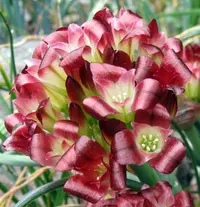
American water-willow Care (Dianthera americana)

American water-willow

About American water-willow

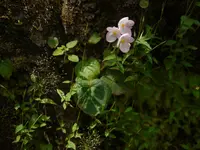
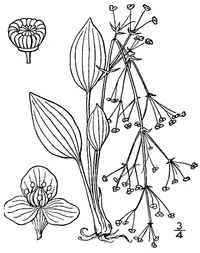
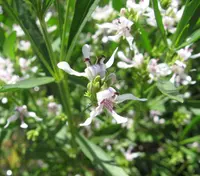
American water-willow (Dianthera americana) is a hardy, rhizomatous aquatic perennial native to streams, ponds, and wet shores across much of eastern and central North America. It forms low, spreading colonies with upright, willow-like stems and narrow leaves, topped in warm months by small, two-lipped white to pale lavender flowers with purple markings.

This species stabilizes shorelines and tolerates moving water, fluctuating water levels, and heavy soils, which makes it adaptable in naturalistic water gardens. It generally prefers full sun to light shade and consistently wet, shallow soils. Understanding how to care for American water-willow starts with providing stable moisture and space for its creeping root system to spread.

Main Plant Requirements

Care Difficulty

Moderate Care

Light Preference

Full Sun

Water Requirements

Aquatic

Temperature Preference

Warm Climate

Hardiness Zone

4–10

Soil Texture

Loamy, Silty, Organic-rich

Soil pH

Slightly acidic (6.5–7.0), Neutral (7.0)

Soil Drainage

Waterlogged tolerant

Fertilization

Minimal (feed rarely)

Get Personalized Care Plan

Scan your plant to receive care tips personalized for your specific plant

Available on iOS and Android

How to Care for the American water-willow

This wetland perennial thrives in consistent sun but tolerates some shade along stream and pond edges.

  • Provide 4–8 hours of direct sun daily, with morning sun and light afternoon shade ideal in hotter regions to prevent leaf scorch.
  • American water-willow tolerates partial shade (as low as 3–4 hours sun) but may flower less and grow more sparsely in dense shade.
  • In summer, protect from intense reflected heat near rock or concrete; in cooler seasons, ensure more open exposure to maximize light for strong growth.

This species naturally grows in or beside shallow water, so soil moisture must stay consistently high.

  • Keep the root zone saturated; in the ground, allow soil to stay wet to waterlogged rather than letting even the top 2–3 cm dry out.
  • In pond margins, place rhizomes where water covers the crown by 2–8 cm; flowing or refreshed water reduces stagnation and root problems.
  • Watch for underwatering signs such as limp or browning leaf edges, and overwatering issues only arise in stagnant, anaerobic soil that smells sour.

This aquatic perennial prefers warm conditions but can survive a moderate winter in much of its native range.

  • Optimal active growth occurs around 70–86°F (21–30°C), typical of late spring and summer in many temperate regions.
  • The plant tolerates down to about 20–25°F (-6 to -4°C) once established, with top growth dying back but rhizomes often surviving underwater or in saturated soil.
  • In heat above 90°F (32°C), growth usually remains stable if roots are submerged; freezes below 20°F (-6°C) may require deeper water or mulched sites for protection.

This semi-aquatic species prefers consistently high humidity around 60–90% and rarely suffers from excess moisture in the air.

  • American water-willow tolerates brief dips to 40–50% humidity but may grow slower and produce fewer shoots.
  • Low humidity stress appears as browning leaf tips, curling, and thinner, stunted stems even when roots are wet.
  • Outdoors, place containers near ponds or water features; in drier spots, cluster plants closely to trap moisture around foliage.

Dianthera americana thrives in saturated, mucky substrates rather than conventional potting soil.

  • Use a heavy, organic-rich mix such as 2 parts clay or loam to 1 part compost to mimic natural streambank mud.
  • Allow very slow drainage or no drainage at all, keeping the root zone constantly wet or shallowly submerged.
  • Aim for slightly acidic to neutral conditions, roughly pH 6.0–7.5, which supports nutrient availability in wet soils.
  • Avoid sandy, fast-draining, or drying mixes that let the root zone fluctuate between wet and dry, which stresses this wetland plant.

This wetland species adapts well to container culture when the pot is managed like a permanently wet bog or pond margin.

  • Choose a wide, heavy container to prevent tipping as stems spread and to keep the waterlogged medium stable.
  • Use pots without drainage holes only when you can maintain a shallow, stable water level just above the soil surface.
  • Place the container inside a larger water-filled outer tub to buffer temperature swings and maintain constant saturation for growing Dianthera americana.

This native wetland perennial usually thrives in nutrient-rich soils and needs only light supplemental feeding.

  • Use a balanced, slow-release fertilizer (such as 10-10-10) or thin layer of compost in early spring as growth begins.
  • Apply once per growing season in most garden soils; in poor or sandy sites, feed again mid-summer.
  • Dilute liquid fertilizers to 1/2 strength if used in containers to avoid salt buildup around the roots.
  • Stop feeding American water-willow in late summer so growth can harden before cooler weather.

Pruning helps keep Dianthera americana dense, tidy, and flowering well in managed plantings.

  • Cut back dead, damaged, or winter-killed stems in early spring before new growth elongates.
  • Lightly shear or pinch back taller shoots after flowering to encourage branching and a fuller shape.
  • Remove crowded or crossing stems near the base to improve air movement and reduce disease risk.
  • Use clean, sharp hand pruners or shears, disinfecting blades when moving between plants or sites.

This species is usually grown in-ground along shorelines, so transplanting is more common than repotting.

  • Transplant in early spring or early fall when temperatures are mild and soil remains consistently moist.
  • Move plants when clumps become overly dense, growth declines, or stems flop because of crowding.
  • Lift the root mass carefully, keep roots wet, and replant at the same depth in saturated or shallowly flooded soil.
  • Water thoroughly after transplanting, then maintain steady moisture for several weeks to limit root stress and shock.

Dianthera americana is commonly propagated by division, stem cuttings, or seeds in restoration and pond projects.

  • Divide mature clumps in early spring, replanting vigorous sections with healthy roots and several shoots.
  • Take 10–15 cm softwood or semi-ripe cuttings in late spring, rooting them in consistently moist sand or peat-perlite.
  • Keep cuttings warm (65–75°F) with high humidity and bright, indirect light until new roots form.
  • Sow fresh seed in late fall or early spring in wet soil, keeping trays or beds constantly saturated.

This hardy perennial tolerates typical winters in much of its native range and usually needs minimal winter care.

  • In cold regions, allow above-ground stems to die back naturally while the root system overwinters below.
  • Apply a thin mulch layer around the crown in late fall where freeze-thaw cycles are frequent.
  • For container-grown plants in zones colder than their hardiness, sink pots into the ground or move them to a cold, frost-free shelter.

Care Tips

Shallow Water Positioning

Set plants so crowns sit in 2–10 cm of still or very slow-moving water, then gradually deepen to 15–20 cm over several weeks to reduce transplant shock and encourage strong rooting in ponds or along shorelines.

Erosion Control Planting

Install several plants in a staggered, zigzag line along gently sloping banks to create a living edge that slows water movement, traps silt, and stabilizes soil over time.

Rhizome Containment

In small ponds or near delicate shoreline plantings, sink a bottomless plastic or rigid edging ring 20–25 cm deep around the clump to limit rhizome spread while still allowing good water exchange.

Seasonal Cutback Management

In colder climates, leave dead stems standing over winter to help catch silt and protect crowns, then cut them to just above the waterline in late winter before new growth starts.

Wildlife-Friendly Spacing

Space clumps 30–45 cm apart and avoid shearing them uniformly so the patch develops a mix of emergent stems and small openings that provide fish cover, amphibian resting spots, and pollinator access when growing American water-willow.

Common Pests and Diseases

Leaf spot fungi

This disease causes scattered brown to dark purple spots on leaves that may merge into larger blotches, especially in warm, wet conditions along shorelines or in shallow water. Symptoms include premature yellowing and shedding of older foliage when infections are heavy.

Solution

Remove and discard heavily spotted or yellowing leaves to reduce spore spread, and avoid overhead splashing from hoses or pumps where possible. Improve water circulation around stands, space clumps so foliage can dry between wetting, and if needed use a labeled copper-based fungicide suitable for aquatic or marginal plants, following local water-use regulations.

Rust

This disease produces small orange to brown pustules on the undersides of leaves and streaking on stems, more common in dense, humid stands. Symptoms include leaf yellowing, early dieback, and weakened stems later in the season.

Solution

Cut back and discard infected stems and leaves at the first sign of pustules, and remove dead plant debris at the end of the season to lower the number of overwintering spores. Thin or divide dense patches of American water-willow to increase airflow, and in severe, recurring cases consider a rust-labeled fungicide registered for use near water, applied before or at very early symptom development.

Aphids

These insects cluster on young shoots and flower spikes, sucking sap and causing leaf curling, distortion, and sticky honeydew that can promote sooty mold. This pest is often more noticeable on plants growing in slow-moving or nutrient-rich water where growth is soft and lush.

Solution

Rinse colonies off stems and leaves with a firm stream of clean water, directing flow away from delicate roots and surrounding bank soil. Encourage natural predators such as lady beetles, avoid high-nitrogen fertilization, and if populations remain high use an insecticidal soap or horticultural oil labeled for use on aquatic or marginal plants, applied in calm, cool parts of the day.

Leaf beetles

These insects chew elongated holes or windows in leaves, sometimes skeletonizing foliage on emergent stems in summer. This pest typically appears in sunny, open shorelines where beetles can move easily between stands of American water-willow and other aquatic or riparian hosts.

Solution

Handpick adult beetles and larvae where stands are accessible, dropping them into soapy water, and remove leaves that are heavily covered with feeding damage or eggs. Maintain a mixed shoreline planting to support predators and, only if damage threatens stand survival, consider a selective, water-safe biological product containing Bacillus thuringiensis (Bt) targeted to the specific beetle group, applied according to aquatic use directions.

Powdery mildew

This disease appears as a white to gray powdery coating on upper leaf surfaces and sometimes stems during warm, humid periods, particularly in dense clumps with limited air movement. Symptoms include reduced vigor, dull foliage, and increased leaf drop late in the season.

Solution

Cut back and discard affected stems and leaves to open the stand, and avoid overfertilizing, which creates lush, susceptible growth. For recurring issues, select the sunniest available site with gentle water movement, and, where permitted, apply a sulfur or potassium bicarbonate product labeled for powdery mildew on ornamentals, keeping spray out of open water as directed in American water-willow care instructions.

Interesting Facts

North American endemic

This species is native to eastern and central North America, where it naturally grows along slow-moving rivers, pond margins, and marshy shorelines, often forming dense colonies that help stabilize soft, eroding banks.

Specialized pollinator access

The tubular, two-lipped flowers are structured so that bees and small wasps must push past the anthers and stigma to reach nectar, which increases the chance of effective cross-pollination.

Rhizome-based spread

American water-willow spreads not only by seed but also through creeping rhizomes, underground stems that allow it to form clonal patches and rapidly recolonize disturbed wetland edges.

Botan icon

Did you know?

American water-willow is so tolerant of fluctuating water levels that it can survive both brief submergence and periods of exposed, muddy shoreline, which makes it a common choice in streambank and lakeshore restoration projects in the US.

FAQs about American water-willow

This species spreads steadily by rhizomes in shallow, consistently wet sites, forming dense colonies over time. It is not typically considered invasive in its native range but can outcompete weaker shoreline plants in small ponds or narrow margins.

Grow Healthy Plants with Botan Care

Keep your plants happy and healthy with plant identification, disease detection, and easy care guidance.

Botan plant care app — identify plants on mobile

Explore More Plants