Stabilize Shoreline Edges
Plant in shallow margins where water is 5–20 cm deep and gently grade the shoreline so crowns stay anchored and are not undercut by waves or fluctuating water levels.

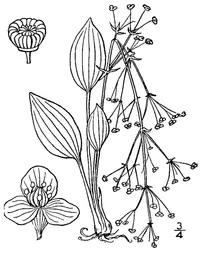
American water plantain (Alisma subcordatum) is a perennial aquatic plant found in shallow freshwater, such as ponds, marshes, and slow-moving streams. It forms clumps from a basal rosette of leaves.
The leaves are broad, oval to lance-shaped, rising above the water on sturdy stalks, while airy clusters of small white flowers appear on tall, branching stems. It spreads by seed and by thickened root structures, so it can naturalize in the right conditions.
This species prefers full sun, consistently wet or shallowly flooded sites, and nutrient-rich, muddy or silty soils. Once established in a suitable pond or bog garden, it is relatively low maintenance, making it straightforward to care for American water plantain in outdoor water features.

Care Difficulty
Moderate Care

Light Preference
Full Sun

Water Requirements
Aquatic

Temperature Preference
Cold Hardy

Hardiness Zone
4–9

Soil Texture
Loamy, Silty, Organic-rich

Soil pH
Slightly acidic (6.5–7.0), Neutral (7.0)

Soil Drainage
Waterlogged tolerant

Fertilization
Minimal (feed rarely)
Scan your plant to receive care tips personalized for your specific plant
Available on iOS and Android
Alisma subcordatum is a sun-loving emergent aquatic that also tolerates some shade in natural ponds and wet soils.
This species is adapted to saturated soils and shallow standing water, rather than alternating wet and dry cycles.
This hardy aquatic plant tolerates a broad outdoor temperature range but responds strongly to seasonal changes.
This emergent aquatic species prefers high humidity and saturated air around foliage.
This species is adapted to saturated, even submerged, muddy substrates rather than conventional garden soil.
This marginal aquatic is suitable for container growing in ponds or large water tubs.
This emergent aquatic species usually needs little fertilization when planted in nutrient-bearing pond or marsh soils.
Pruning for Alisma subcordatum is light and mainly focused on cleanliness and appearance.
This wetland perennial is more often transplanted in ponds or bog gardens than repotted as a houseplant.
Propagation of Alisma subcordatum is most practical by seed and by division of established clumps.
This hardy aquatic perennial usually overwinters well in ponds across much of its native range, needing minimal intervention.

Plant Health Check
Not sure what's wrong with your plant? Check your plant's health inside the app.
This water plantain species is native to eastern and central North America and does not naturally occur in Europe or Asia, unlike its close relative Alisma plantago-aquatica.
It typically develops heart-shaped to broadly ovate emergent leaves with a noticeably cordate (indented) leaf base, a feature that helps distinguish it from other Alisma species that have more lance-shaped foliage.
Flowers are visited by the specialist bee Hesperapis oraria in parts of its range, indicating a relatively specific pollinator relationship compared with many other emergent wetland herbs.

Alisma subcordatum often acts as an early colonizer of newly formed or disturbed shallow-water habitats such as pond margins, roadside ditches, and sediment deposits, helping stabilize soft substrates and paving the way for later wetland plant communities.
This species spreads by seed and short rhizomes, forming clumps rather than dense, choking mats. In a typical garden pond it is moderate, not highly aggressive, but can self-seed into nearby shallow, muddy areas.
Keep your plants happy and healthy with plant identification, disease detection, and easy care guidance.