


Submerged Depth Control
Maintain the plant crowns just below the water surface or at the soil–water interface, raising baskets gradually as stems elongate so foliage gets strong light without being forced into deep, low-oxygen water.

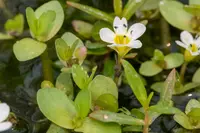
Gila River waterhyssop (Bacopa eisenii) is a small, creeping aquatic perennial native to wet habitats of the southwestern United States and northern Mexico. It often grows along riverbanks, marsh edges, and shallow pools.
The plant forms low mats of fleshy, opposite leaves and produces small, white to pale lavender flowers that sit just above the water or mud surface. Its spreading habit makes it useful for naturalistic pond margins and water gardens.
This species prefers consistently moist or shallowly flooded conditions and does best in sunny to lightly shaded sites with nutrient-rich, silty or sandy soil. Once its moisture needs are met, it is relatively straightforward to care for Gila River waterhyssop.

Care Difficulty
Moderate Care

Light Preference
Partial Sun

Water Requirements
Aquatic

Temperature Preference
Warm Climate

Hardiness Zone
8–11

Soil Texture
Loamy, Silty, Organic-rich

Soil pH
Slightly acidic (6.5–7.0), Neutral (7.0)

Soil Drainage
Waterlogged tolerant

Fertilization
Light (every 4–6 weeks)
Scan your plant to receive care tips personalized for your specific plant
Available on iOS and Android
This aquatic perennial thrives with bright conditions but is sensitive to harsh drying sun.
This species prefers consistently saturated conditions and does not tolerate drying out.
This plant favors mild, frost-free conditions and grows best in warm seasons.
This species prefers consistently moist air similar to its native streamside habitats.
Bacopa eisenii thrives in consistently moist, fine-textured soils that stay wet without becoming stagnant.
This species is well suited to container growing, especially in shallow water or very wet pots.
Bacopa eisenii grows in nutrient-rich wet habitats but benefits from light, balanced feeding in containers or managed beds.
Pruning Bacopa eisenii keeps growth compact and flowering stems productive in managed plantings.
Bacopa eisenii in containers or managed margins benefits from occasional transplanting to maintain vigor.
Bacopa eisenii is commonly propagated in cultivation by stem cuttings and division of established mats.
In mild climates, Bacopa eisenii usually overwinter outdoors with minimal intervention when water does not freeze solid.

Plant Health Check
Not sure what's wrong with your plant? Check your plant's health inside the app.
This species occurs naturally in shallow, slow-moving waters and saturated soils of the lower Colorado River and Gila River drainages in the southwestern United States, where it grows partially submerged or on muddy banks.
Its slender, creeping stems can root at the nodes in shallow water or wet soil, allowing the plant to form low mats and stabilize soft, silty shorelines.
Leaves grow in opposite pairs along the stem, forming a clear, symmetrical pattern that helps distinguish it from some other North American waterhyssop species.

Bacopa eisenii has been used in wetland restoration projects within its native range because its mat-forming growth helps bind fine sediments and support invertebrate habitat in shallow freshwater margins.
This species spreads steadily by creeping stems in shallow water or saturated soil, forming dense mats over time. It is not usually classified as invasive, but regular trimming and containment in ponds or bog gardens are recommended.
Keep your plants happy and healthy with plant identification, disease detection, and easy care guidance.

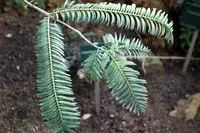
New Caledonia retrophyllum
Retrophyllum minus
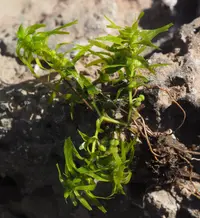
Short-leaved Water-starwort
Callitriche truncata
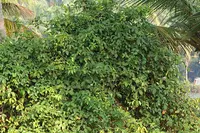
threeleaf derris
Derris trifoliata
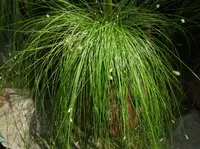
Slender Club-rush
Isolepis cernua
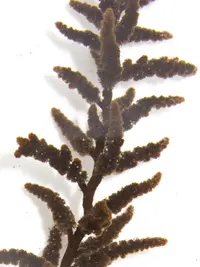
beauty bush alga
Callithamnion pikeanum
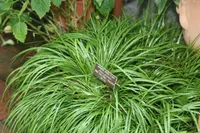
Japanese sweet flag
Acorus gramineus
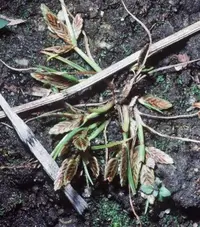
slender flatsedge
Cyperus bipartitus
Various-leaved Water-starwort
Callitriche platycarpa