threeleaf derris Care (Derris trifoliata)

Also known as: Common Derris
threeleaf derris

About threeleaf derris

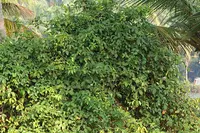
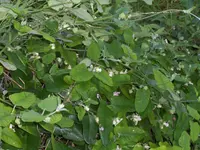
Threeleaf derris, Derris trifoliata, is a woody climbing vine from coastal mangroves and swampy areas in South and Southeast Asia and northern Australia. It often scrambles over shrubs and trees, forming dense tangles.

The plant has compound leaves with three smooth leaflets and produces clusters of small, pale flowers followed by flat seed pods. It is not usually grown as a decorative houseplant, but may be used in specialized coastal or wetland plantings.

Because it prefers warm, humid, and coastal conditions with consistently moist, well-drained soil, it can be challenging outside its natural climate. Anyone wanting to care for threeleaf derris should be prepared to provide stable warmth, strong light, and protection from cold or drying winds.


Main Plant Requirements

Care Difficulty

Moderate Care

Light Preference

Partial Sun

Water Requirements

Regular Water

Temperature Preference

Tropical / Frost Sensitive

Hardiness Zone

10–12

Soil Texture

Sandy, Loamy, Organic-rich

Soil pH

Acidic (5.5–6.5), Slightly acidic (6.5–7.0)

Soil Drainage

Waterlogged tolerant

Fertilization

Minimal (feed rarely)

Get Personalized Care Plan

Scan your plant to receive care tips personalized for your specific plant

Available on iOS and Android

How to Care for the threeleaf derris

This coastal climber prefers bright conditions with some protection from harsh midday sun.

  • Provide 4–6 hours of direct morning sun with light shade or filtered light in the early afternoon to prevent leaf scorch, especially in hotter climates.
  • Allow partial shade, such as dappled light under taller trees; growth of threeleaf derris slows and flowering may reduce if light drops below about 3–4 hours of sun.
  • Monitor leaves seasonally: in summer, pale, crispy edges indicate too much intense sun; in winter, long, weak stems and sparse foliage suggest insufficient sunlight.

This woody vine prefers consistently moist but not waterlogged soil in its natural coastal and mangrove habitats.

  • Aim for soil that stays slightly moist; allow the top 2–4 cm to dry before watering again, using closer observation of soil feel rather than a fixed schedule.
  • Use well‑draining soil with added sand or grit so excess water runs off quickly, reducing the risk of root rot and stagnant conditions around Derris trifoliata roots.
  • In hot, dry periods, increase watering when leaves begin to droop or curl slightly; in cooler or rainy seasons, reduce watering and watch for yellowing, soft leaves as a sign of overwatering.

This tropical vine grows best in warm, frost‑free climates with stable temperatures.

  • Maintain an optimal growing range of 70–86°F (21–30°C), which supports steady vegetative growth and healthy root activity.
  • Protect the plant from cold; growth slows below about 60°F (16°C), and foliage or young stems can be damaged if temperatures approach 40°F (4°C).
  • Avoid frost entirely, as freezing conditions can kill stems and roots, and provide light shade plus extra moisture during hot spells above 95°F (35°C) to limit heat stress.

This coastal vine prefers moderately high humidity but usually tolerates typical household air.

  • Aim for 50–70% humidity to support steady foliage growth and reduce stress.
  • In very dry air, leaf edges may brown or curl and new growth may appear stunted.
  • Increase humidity by grouping plants, placing the pot on a pebble tray with water, or running a nearby humidifier.

This species grows best in loose, moist, well-drained soil that mimics coastal or riverside substrates.

  • Use a mix of 40% compost, 40% sandy or loamy topsoil, and 20% coarse material such as perlite or fine gravel for drainage.
  • Target slightly acidic to neutral pH around 6.0–7.0 to support nutrient availability and root activity.
  • Keep soil structure open and airy; avoid compaction by mixing in coarse particles instead of relying only on fine organic matter.
  • Avoid heavy clay, waterlogged sites, or dense peat-only mixes, which can suffocate roots and encourage rot in Derris trifoliata.

This vine can adapt to container growing when given a stable, well-drained setup.

  • Choose a wide, heavy container to counterbalance the climbing top growth and reduce tipping risk in wind-exposed spots.
  • Provide a deep pot that allows a robust root system to anchor the vine and support strong seasonal growth.
  • Use a container material like thick terracotta if extra moisture loss is needed, or glazed ceramic if mix dries too quickly in your climate.

Nutrient needs for threeleaf derris are modest, but light, balanced feeding can support steady growth in cultivation.

  • Use a balanced, slow-release fertilizer (such as 10-10-10 or 14-14-14) mixed into the topsoil at planting or early spring.
  • Supplement with dilute liquid balanced NPK at 1/2 strength every 4–6 weeks during the growing season if growth seems weak.
  • Avoid rich compost layers or heavy feeding on fertile soils to prevent overly soft, lanky shoots.
  • Stop feeding in late summer to allow tissues to harden and avoid any fertilization in winter dormancy.

Pruning Derris trifoliata helps manage its vigorous vining habit and keeps growth safe and contained.

  • Carry out main pruning in late winter or very early spring before strong new growth starts.
  • Remove dead, damaged, or crossing stems first, then thin congested areas to improve light and air flow.
  • Shorten overly long or wayward shoots to maintain the desired framework and prevent structural or fence damage.
  • Use clean, sharp bypass pruners and make cuts just above a leaf node to encourage branching.

This vine is more often transplanted in the landscape than grown long term in containers, due to its vigorous, scrambling habit.

  • Transplant in late spring or early summer once soils are warm and frost risk has passed.
  • Look for roots circling the pot base, very quick drying of the root ball, or stalled growth as cues to upsize the container or transplant out.
  • Move to a hole or pot only 1 size larger, keeping the root ball intact and planting at the same depth as before.
  • Water thoroughly after planting, shade lightly for 3–5 days, and keep soil evenly moist to limit transplant shock.

Derris trifoliata is commonly propagated by semi-ripe stem cuttings and sometimes from seed in controlled conditions.

  • Take semi-ripe cuttings in late spring to midsummer, 8–12 cm long with 2–3 nodes.
  • Remove lower leaves, dip the cut end in rooting hormone, and place in a free-draining mix of sand and peat or perlite.
  • Maintain high humidity (cover with a clear dome or bag) and warmth around 70–77°F with bright, indirect light.
  • Sow fresh seed in warm conditions, just covered with substrate, and keep evenly moist for steady germination.

In genuinely frost-free, tropical to warm subtropical climates, Derris trifoliata needs little dedicated winter care.

  • In regions with rare light chills, add a 5–8 cm mulch layer around the root zone to buffer short cool spells.
  • Grow Derris trifoliata in large containers in marginal climates so plants can be moved into a greenhouse or bright indoor space before temperatures drop below 50°F.
  • Avoid waterlogged soils in cool weather, as chilled, saturated roots increase the risk of rot.

Care Tips

Salinity Tolerance Use

Position plants where occasional brackish or saline splashes occur, such as the upper edge of mangroves or shorelines, to take advantage of the species’ natural salt tolerance while reducing competition from less adapted plants.

Regular Liana Training

Install strong horizontal wires or a trellis and loosely tie new stems every 20–30 cm, guiding the vine away from walkways and other shrubs to prevent tangling and to maintain a manageable, layered canopy.

Bank And Edge Stabilization

Plant on gently sloping banks, ditches, or pond edges where roots can help bind the soil, spacing plants 1.5–2 m apart so the woody vine can knit together and reduce erosion over time.

Tidal And Flood Planning

When growing threeleaf derris in coastal or estuarine sites, place plants where they receive periodic inundation but are not submerged for more than a few hours at a time, which matches their natural intertidal tolerance.

Access And Safety Management

Plan maintenance paths and keep a 50–100 cm clear strip near frequently used areas, cutting back long runners several times a year to prevent tripping hazards and overgrowth into service zones.

Common Pests and Diseases

Leaf-mining caterpillars

This pest feeds within the leaf tissue and creates winding, pale tunnels that can cause partial leaf drop on young shoots of this mangrove-edge climber.

Solution

Prune and destroy mined leaves before larvae complete their development, and encourage natural predators by avoiding broad-spectrum insecticides; if damage is heavy, spot-treat young foliage with a targeted biological product containing Bacillus thuringiensis, applied in the late afternoon when caterpillars are actively feeding.

Scale insects

These insects attach firmly to stems and leaf midribs, sucking sap and causing local yellowing, reduced vigor, and sticky honeydew that can lead to sooty mold on leaves.

Solution

Gently remove scales on small plants with a soft brush or cloth dipped in diluted insecticidal soap, then monitor new growth and repeat every 7–10 days; for dense outdoor vines, trim heavily infested twigs and improve light penetration and air movement to support natural predators such as lady beetles and parasitic wasps.

Leaf spot

This disease causes scattered brown or dark purple spots with possible yellow halos on leaf blades, which can merge under humid coastal conditions and lead to premature leaf drop.

Solution

Remove and dispose of affected leaves, avoid overhead watering in cultivation, and thin excess growth to improve airflow; if the plant is grown in a nursery or landscape with repeated outbreaks, use a copper-based fungicide on new flushes of leaves according to label directions as part of broader Derris trifoliata care instructions.

Interesting Facts

Mangrove edge climber

This woody climber naturally grows along the landward margins of mangrove forests, often scrambling over other vegetation where tidal influence is weaker but soils remain saline and periodically waterlogged.

Nitrogen-fixing legume

As a member of the legume family, it forms symbiosis with root bacteria that fix atmospheric nitrogen, helping enrich nutrient-poor coastal soils and supporting nearby plant communities.

Natural fish stupefying agent

Its roots and stems contain rotenone and related compounds that have been traditionally used in parts of Asia to stun fish in small water bodies, although these compounds are toxic to many aquatic organisms.

Botan icon

Did you know?

This species can tolerate both saline and brackish conditions and often survives where few other woody climbers can, making it a characteristic component of transitional zones between true mangrove stands and inland vegetation in tropical coasts from India to Southeast Asia and northern Australia.

FAQs about threeleaf derris

This woody vine can spread quickly via long stems and roots in warm, coastal climates. In suitable wetlands or mangroves it may form dense thickets, so monitor its growth and remove unwanted shoots regularly to prevent encroachment.

Grow Healthy Plants with Botan Care

Keep your plants happy and healthy with plant identification, disease detection, and easy care guidance.

Botan plant care app — identify plants on mobile

Explore More Plants