Manage Aggressive Vines
Regularly check for wandering stems and promptly detach and cut back any that wrap around nearby plants, as this vine can quickly strangle softer stems if left unmanaged.

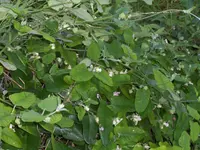
White bladderflower, Araujia sericifera, is a fast-growing twining vine known for its white, slightly fragrant trumpet flowers and inflated seed pods. It is a perennial climber that can quickly cover fences, trellises, or trees in mild climates.
This species is native to South America but has naturalized in many warm and temperate regions, where it may behave aggressively. Its vigorous growth and tolerance of a range of soils make it relatively easy to establish.
Understanding how to care for white bladderflower starts with its preference for bright light, well-drained soil, and moderate moisture, combined with firm structural support and regular pruning to control spread.

Care Difficulty
Moderate Care

Light Preference
Full Sun

Water Requirements
Moderate Water

Temperature Preference
Warm Climate

Hardiness Zone
8–11

Soil Texture
Sandy, Loamy, Organic-rich

Soil pH
Slightly acidic (6.5–7.0), Slightly alkaline (7.0–7.5)

Soil Drainage
Well-drained

Fertilization
Minimal (feed rarely)
Scan your plant to receive care tips personalized for your specific plant
Available on iOS and Android
This vigorous climber thrives in bright, direct sun but tolerates some light shade in hot regions.
This plant prefers deep, infrequent watering and soil that dries slightly between soakings.
This species prefers warm conditions and does best in mild to hot climates without prolonged frost.
Araujia sericifera handles a wide humidity range and rarely needs special adjustments indoors or outdoors.
Araujia sericifera prefers freely draining, moderately fertile soil that does not stay wet.
This vigorous climber is suitable for container growing when provided with stable support and free-draining conditions.
Araujia sericifera is vigorous and needs only modest feeding, especially in containers, to support balanced growth.
Pruning Araujia sericifera helps control its vigorous growth and maintain a manageable, flowering framework.
This strong vine is more often transplanted outdoors than kept long term in containers, but root management still matters.
This species is commonly propagated but can become invasive, so manage new plants and seed spread carefully.
In mild climates this vine tolerates light frost, but colder regions require some targeted winter care.

Plant Health Check
Not sure what's wrong with your plant? Check your plant's health inside the app.
In its native South America, this vine is mainly pollinated by sphingid moths, which are strong night fliers with long proboscises that can reach deep into its tubular flowers.
The flowers have stiff, inward-pointing hairs and a narrow throat that can temporarily trap visiting insects, increasing the chance that they contact and transfer the pollen masses known as pollinia.
Outside its native range, especially in parts of the Mediterranean, New Zealand, and Australia, it can become a serious environmental weed that smothers shrubs and trees and competes strongly with native vegetation.

The seeds are equipped with silky hairs that act like tiny parachutes, allowing the wind to disperse them over long distances and helping the species rapidly colonize open or disturbed habitats.
This species is highly invasive in many mild, frost-free regions. It spreads rapidly by wind-dispersed seed and suckering roots, smothers other vegetation, and is often listed as a noxious weed. Always check local regulations before planting.
Keep your plants happy and healthy with plant identification, disease detection, and easy care guidance.