Use sturdy cages
Install tomato-style cages or short stakes early in the season to keep stems upright, improve airflow, and make harvesting the papery husks easier and cleaner.

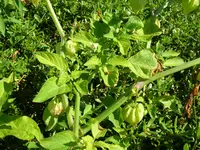
Cutleaf groundcherry (Physalis angulata) is a small, herbaceous annual in the nightshade family, often found in fields, roadsides, and disturbed soils. It produces lantern-like papery husks around small berries and typically grows with a branching, bushy habit.
This species is native to tropical and subtropical regions but has naturalized widely in warmer parts of the world, including parts of the southern United States. It seeds easily and can spread quickly in open, sunny areas.
Understanding how to care for cutleaf groundcherry starts with its preference for full sun, moderately moist but well-drained soil, and low to moderate fertility. Its fast growth and self-seeding nature make it relatively easy to grow but sometimes weedy in suitable climates.

Care Difficulty
Easy Care

Light Preference
Full Sun

Water Requirements
Moderate Water

Temperature Preference
Tropical / Frost Sensitive

Hardiness Zone
9–11

Soil Texture
Sandy, Loamy, Organic-rich

Soil pH
Acidic (5.5–6.5), Slightly acidic (6.5–7.0)

Soil Drainage
Well-drained

Fertilization
Minimal (feed rarely)
Scan your plant to receive care tips personalized for your specific plant
Available on iOS and Android
Physalis angulata grows best in bright, direct sun but tolerates some light shade, especially in hot climates.
This species prefers evenly moist, well-drained soil and reacts quickly to both drought and waterlogging.
This warm-season plant thrives in stable, frost-free conditions from late spring through early fall.
Humidity is not a major factor for Physalis angulata, which adapts well to typical household and outdoor air levels.
Physalis angulata grows best in loose, well-drained, moderately fertile soil that stays slightly moist but not waterlogged.
This species is suitable for container growing when given enough root space and reliable drainage control.
Physalis angulata responds well to moderate feeding in fertile, well-drained soil.
Pruning Physalis angulata is mainly used to maintain plant health and encourage productive branching.
Transplanting Physalis angulata correctly helps roots establish quickly and supports vigorous seasonal growth.
New Physalis angulata plants are most often raised from seed under warm, bright conditions.
In many climates Physalis angulata behaves as a warm-season annual and needs thoughtful handling around frost.

Plant Health Check
Not sure what's wrong with your plant? Check your plant's health inside the app.
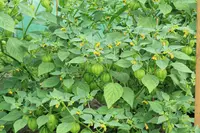
Each berry develops inside an inflated, papery husk formed from the calyx, creating a lantern shape that protects the young fruit from herbivores and harsh sunlight while it matures.
The plant is largely self-compatible, meaning a single individual can set viable seed without another plant, which helps it colonize new disturbed sites such as fields, roadsides, and fallows.
Native to tropical and subtropical regions, this species typically flowers under a wide range of day lengths, which contributes to its success as a weed in many warm agricultural systems.

In several tropical regions, birds and small mammals disperse the seeds by eating the ripe berries and excreting the hard, resilient seeds intact, allowing the plant to spread rapidly through both natural habitats and croplands.
Ripe, fully yellow to orange fruits inside dry papery husks are generally considered edible and used in jams, sauces, or eaten fresh. Unripe green fruits, leaves, and other parts contain higher alkaloid levels and should not be eaten.
Keep your plants happy and healthy with plant identification, disease detection, and easy care guidance.