Install sturdy trellis
Use a permanent, heavy-duty trellis or wire system with posts set at least 45–60 cm deep, since mature vines become woody and heavy and are difficult to reposition later.


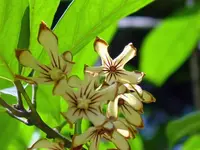
Kiwi, Actinidia chinensis, is a vigorous deciduous vine grown for its fuzzy brown fruits with bright green, vitamin-rich flesh. It climbs by twining stems and needs a strong support structure. Leaves are large, rounded, and form a dense canopy, while creamy white flowers appear in late spring on separate male and female plants. In the wild, it occurs in forested and mountainous regions of China and parts of East Asia. It can be moderately challenging to grow because it requires space, compatible pollinating plants, and protection from late frosts. In home gardens, care for kiwi generally involves full sun, evenly moist but well-drained soil, and shelter from strong winds.

Care Difficulty
Moderate Care

Light Preference
Full Sun

Water Requirements
Regular Water

Temperature Preference
Cool Climate

Hardiness Zone
7–9

Soil Texture
Loamy, Sandy, Organic-rich

Soil pH
Strongly acidic (4.5–5.5), Acidic (5.5–6.5)

Soil Drainage
Moist but well-drained

Fertilization
Moderate (every 2–4 weeks)
Scan your plant to receive care tips personalized for your specific plant
Available on iOS and Android
This vigorous vine needs abundant light for strong growth and fruiting.
This species prefers consistently moist, well-drained soil without prolonged dryness or saturation.
This deciduous climber thrives in temperate climates with cool winters and warm summers.
Actinidia chinensis prefers moderately humid air but usually adapts well outdoors in most temperate regions.
Actinidia chinensis performs best in deep, loose, consistently moist soil that drains freely.
This species can be grown in large containers for a time, but it remains a vigorous climber that prefers in-ground planting long term.
Actinidia chinensis responds well to moderate, consistent feeding for strong vegetative growth and fruiting.
Pruning supports structure, light penetration, and fruiting quality in Actinidia chinensis.
Kiwifruit vines are usually grown in-ground, so focus on correct site planting and careful transplanting rather than frequent repotting.
Actinidia chinensis is commonly propagated for new vines using both seeds and vegetative methods.
Mature kiwifruit vines tolerate moderate cold, but young plants and roots benefit from basic winter protection in colder regions.

Plant Health Check
Not sure what's wrong with your plant? Check your plant's health inside the app.
This species from central and eastern China is the wild ancestor of the large, brown-fuzzy, green-fleshed kiwifruit commonly found in supermarkets, developed through selection and breeding from the early 20th century onward.
Actinidia chinensis is functionally dioecious, meaning separate male and female plants are needed for fruit set, although flowers may carry both anthers and rudimentary stigmas that do not function fully in both sexes.
Within this species, different cultivated selections produce markedly different fruit colors, ranging from green flesh to yellow or even red-centered flesh, due to variation in pigments such as chlorophyll and anthocyanins.

Genetic and breeding research on Actinidia chinensis has made it one of the best-studied temperate fruit vines, with a published reference genome that is frequently used to investigate traits such as flavor, ripening behavior, and resistance to storage disorders.
Lack of flowers usually comes from insufficient winter chill, too much shade, or pruning off flowering wood. Male and female plants must be present for fruiting. Overfertilizing with nitrogen also shifts energy from buds to leafy growth.
Keep your plants happy and healthy with plant identification, disease detection, and easy care guidance.