Coral honeysuckle Care (Lonicera sempervirens)

Also known as: coral honeysuckle
Coral honeysuckle

About Coral honeysuckle

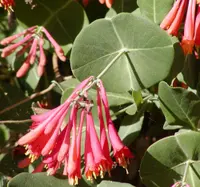
Coral honeysuckle (Lonicera sempervirens) is a semi-evergreen, twining vine valued for its tubular red to coral flowers and attractive blue-green foliage. It typically climbs on trellises, fences, or arbors, creating a vertical accent rather than forming a dense screen.

This species is native to the southeastern United States, where it grows in open woodlands, thickets, and along forest edges. It is generally easier to grow than many invasive honeysuckles because it is less aggressive and more manageable in gardens.

It tolerates a range of garden soils, prefers sun to light shade, and benefits from consistent but not excessive moisture. Understanding these basic needs helps gardeners care for Coral honeysuckle successfully in many climates.

Main Plant Requirements

Care Difficulty

Easy Care

Light Preference

Full Sun

Water Requirements

Moderate Water

Temperature Preference

Cold Hardy

Hardiness Zone

4–9

Soil Texture

Sandy, Loamy, Clay

Soil pH

Acidic (5.5–6.5), Slightly acidic (6.5–7.0)

Soil Drainage

Moist but well-drained

Fertilization

Minimal (feed rarely)

Get Personalized Care Plan

Scan your plant to receive care tips personalized for your specific plant

Available on iOS and Android

How to Care for the Coral honeysuckle

This vine blooms best with strong sun but will tolerate some shade in warm climates.

  • Provide 6–8 hours of direct sun daily; in hot southern regions, favor morning sun with light afternoon shade to reduce leaf scorch.
  • Plant Coral honeysuckle where it receives unshaded light from above or a south- or west-facing exposure, avoiding dense overhead tree canopies.
  • In cooler seasons, maximize light by avoiding north-facing walls; sparse flowering, lanky growth, and pale leaves indicate insufficient sunlight.

This species prefers evenly moist, well-drained soil once established, not constant saturation.

  • Check soil before watering; for garden-grown plants, let the top 3–5 cm dry, then water deeply so moisture reaches 15–20 cm down.
  • In the first growing season, water whenever new growth droops slightly and soil feels dry at finger depth; reduce frequency once Lonicera sempervirens is well rooted.
  • Yellowing soft leaves, dieback at stem bases, or soggy soil signal overwatering and poor drainage, while crisp leaf edges and widespread wilting suggest underwatering.

This hardy climber tolerates a wide temperature range but flowers best in moderate warmth.

  • Active growth and flowering are strongest around 65–80°F (18–27°C); buds may form in cooler spring but open more rapidly in this range.
  • Mature plants generally survive winter down to about -10°F to -20°F (-23 to -29°C) with root protection, though top growth can die back in severe cold.
  • Heat-tolerant up to about 90–95°F (32–35°C) if soil moisture is adequate; prolonged extreme heat with dry soil can cause leaf scorch and reduced flowering.

This vine handles a wide humidity range and usually does not need special humidity management outdoors.

  • Plants grow well at 30–60% humidity and tolerate drier summer air in most gardens.
  • Leaves may brown at edges or curl slightly in very hot, dry, windy spots; provide some wind protection if this persists.
  • In exceptionally dry, exposed locations, light mulching and occasional overhead misting during heatwaves can reduce stress.

Lonicera sempervirens prefers moderately fertile, well-structured soil that drains freely yet retains some moisture.

  • Use a loamy or sandy loam base with 20–30% compost to supply organic matter and support root development.
  • Ensure drainage by avoiding compacted sites and, if needed, incorporating coarse sand or fine bark to open the soil structure.
  • Aim for slightly acidic to neutral pH (6.0–7.0); excessively alkaline or saline soils can limit nutrient uptake and vigor.
  • Avoid heavy, waterlogged clays; improve them by double-digging, adding organic matter, and raising the planting area slightly above grade.

This species is suitable for container growing when the pot is sized and stabilized for a vigorous climber.

  • Choose a deep, heavy container (at least 40–50 cm tall) to anchor the plant and counterbalance top growth on a support.
  • Position a strong trellis or obelisk inside the pot so wind forces transfer to the container without flexing the root zone.
  • Use a slightly gritty mix and raise the pot on feet or bricks so drainage holes stay clear and water clears quickly after rain or watering.

This native vine usually needs minimal feeding, especially when planted in decent garden soil.

  • Apply a light layer of compost around Coral honeysuckle in early spring to support growth and flowering.
  • In poorer soils, use a balanced slow-release fertilizer (around 10-10-10) once in spring.
  • Avoid high-nitrogen products that drive leafy growth at the expense of flowers.
  • Skip feeding in fall and winter, and always follow label rates at the lowest recommended strength.

Thoughtful pruning keeps Lonicera sempervirens flowering well and controlled on its support.

  • Do main pruning just after peak flowering in late spring or early summer.
  • Remove dead, damaged, or crossing stems first using clean bypass pruners.
  • Thin out a few older woody stems at the base to encourage vigorous new shoots.
  • Shorten overly long vines to maintain shape and direct growth along trellises or fences.

This honeysuckle is most often grown in the ground, where transplanting is only occasionally needed.

  • Transplant in early spring or early fall when growth is slower and temperatures are mild.
  • Look for signs such as roots circling the pot, slow growth, or soil drying out very fast in containers.
  • Move into a slightly larger container or ground hole, keeping the root ball intact and at the same depth.
  • Water thoroughly after planting, shade from harsh sun for a few days, and keep soil evenly moist to limit transplant shock.

New plants are commonly produced from cuttings or layering rather than seed for reliable traits.

  • Take 10–15 cm softwood cuttings in late spring to early summer and remove lower leaves.
  • Insert cuttings into a sterile, moist, well-draining mix and maintain high humidity with bright, indirect light.
  • Use simple layering by pinning a flexible stem to the soil, covering a section with soil until roots form.
  • Seeds can be sown after a cold period, but germination is slower and offspring more variable.

This vine is generally cold hardy in much of its range and needs only modest winter attention outdoors.

  • Tolerates typical winter frost in USDA zones where it is commonly grown once established.
  • Apply a 5–8 cm mulch layer around the root zone in late fall, keeping mulch off the stems.
  • In very cold areas or exposed sites, wrap the base with burlap to limit freeze–thaw stress.
  • Move container-grown plants into a sheltered, unheated space where roots stay above about 25–30°F.

Care Tips

Early vine training

Install a sturdy trellis, fence, or wire system before planting, then loosely tie new shoots with soft garden ties every 20–30 cm to direct growth and prevent tangled, woody masses that are difficult to manage later.

Encourage basal shoots

After flowering in late spring, lightly thin out 1–2 of the oldest stems at the base to stimulate fresh shoots from the crown, which keeps the vine floriferous and reduces bare, woody sections near the ground.

Wildlife-friendly spacing

Position the plant at least 30–45 cm away from solid walls or fences and allow some open air space around the base to improve airflow, reduce mildew risk, and make flowers easier for hummingbirds and pollinators to access.

Targeted pest scouting

From spring through midsummer, inspect stems and leaf undersides weekly for aphids and scale, and if detected early, wash them off with a strong water spray or use a horticultural soap before populations become established.

Winter structure check

In late winter, check and tighten trellis fixings, replace any rusted wires, and gently re-tie heavy stems so the vine is well supported and less likely to suffer wind damage or stem breakage in the upcoming growing season.

Common Pests and Diseases

Aphids

These insects cluster on tender shoots and flower buds, sucking sap and causing curling, distortion, and sticky honeydew that can lead to sooty mold.

Solution

Prune and discard heavily infested shoot tips, then wash vines with a strong but controlled stream of water every few days; if needed, use insecticidal soap or a neem oil spray, ensuring thorough coverage of shoot tips and the undersides of leaves while avoiding open blooms to protect pollinators.

Honeysuckle leaf blight

This disease causes irregular brown lesions on leaves, which can coalesce and lead to premature leaf drop, especially in humid or crowded conditions.

Solution

Remove and dispose of infected leaves and fallen debris, then improve air circulation by thinning dense growth; during prolonged wet periods, a copper-based fungicide labeled for ornamental vines can be applied preventively, following label directions carefully.

Powdery mildew

This disease appears as white to gray powdery patches on leaves and young stems, which can cause leaf distortion and reduced vigor in shaded or poorly ventilated sites.

Solution

Increase sunlight and airflow by pruning congested stems and avoiding overhead watering, then treat persistent cases with sulfur or potassium bicarbonate fungicides labeled for ornamentals, applied at the first sign of mildew and repeated as directed.

Scale insects

These pests appear as small, dome-shaped or oval bumps on stems and older wood, feeding on sap and causing yellowing, reduced growth, and honeydew deposits.

Solution

Gently scrape off or prune out heavily infested stems, then apply horticultural oil during the dormant season or on cool, overcast days in the growing season to smother remaining scale, making sure to thoroughly coat all woody surfaces.

Spider mites

This pest thrives in hot, dry conditions and causes fine stippling, bronzing, and eventual leaf drop, often with thin webbing on the undersides of leaves.

Solution

Increase humidity around the vine and regularly hose down foliage, focusing on the undersides of leaves; for persistent infestations, use insecticidal soap or horticultural oil at labeled rates, repeating applications as needed while monitoring closely as part of overall Lonicera sempervirens care.

Interesting Facts

Native hummingbird magnet

This species is one of the few honeysuckles native to the eastern United States that strongly attracts hummingbirds, which are well adapted to its long, tubular red flowers.

Non‑invasive honeysuckle

Unlike several introduced honeysuckles, this vine does not usually form aggressive, invasive thickets and is often recommended as a native alternative in habitat restoration projects.

Evergreen in mild climates

In warmer parts of its range, this species can remain semi-evergreen to evergreen, keeping much of its foliage through winter rather than dying back completely.

Botan icon

Did you know?

The tubular flowers of this species show a classic example of ornithophily, or bird pollination syndrome, with red coloration, minimal scent, and nectar positioned deep in the corolla tube to match hummingbird bill length.

FAQs about Coral honeysuckle

Poor flowering usually comes from too little sun, heavy pruning at the wrong time, or excess nitrogen fertilizer. Avoid cutting off older flowering stems in late winter, and keep feeding balanced and light to support bud formation.

Grow Healthy Plants with Botan Care

Keep your plants happy and healthy with plant identification, disease detection, and easy care guidance.

Botan plant care app — identify plants on mobile

Explore More Plants