Rhaphidophora korthalsii Care

Rhaphidophora korthalsii

About Rhaphidophora korthalsii

Rhaphidophora korthalsii is a tropical climbing aroid native to rainforests in Southeast Asia. It naturally shingling climbs tree trunks, with juvenile leaves pressed flat against the bark. As it matures, the leaves become larger and may develop a looser, more climbing habit, forming an attractive vertical display indoors when given a suitable support. This species is valued for its distinctive foliage and structured growth, but it can be moderately demanding without stable warmth and humidity. It prefers bright, filtered light, evenly moist but not waterlogged soil, and good air flow, so understanding how to care for Rhaphidophora korthalsii helps keep it healthy long term.

Main Plant Requirements

Care Difficulty

Moderate Care

Light Preference

Bright Indirect Light

Water Requirements

Moderate Water

Temperature Preference

Tropical / Frost Sensitive

Hardiness Zone

11–13

Soil Texture

Loamy, Peaty, Organic-rich

Soil pH

Acidic (5.5–6.5), Slightly acidic (6.5–7.0)

Soil Drainage

Moist but well-drained

Fertilization

Light (every 4–6 weeks)

Get Personalized Care Plan

Scan your plant to receive care tips personalized for your specific plant

Available on iOS and Android

How to Care for the Rhaphidophora korthalsii

This climbing aroid prefers bright, filtered light that mimics forest understory conditions.

  • Provide 6–8 hours of bright, indirect light each day, such as dappled shade under taller plants or a sheer-curtained east or north window.
  • Tolerates partial shade with 3–4 hours of diffuse light, but growth slows and leaves may stay smaller; increase light gradually if stems stretch or leaves space out.
  • Protect from strong midday and afternoon sun to avoid leaf scorch; in summer, shift slightly deeper into shade, in winter move closer to the brightest exposure for stable Rhaphidophora korthalsii indoor care.

Watering should keep the root zone evenly moist but never waterlogged.

  • Allow the top 2–4 cm of soil to dry before watering again; check by feeling the soil rather than following a strict calendar schedule.
  • Use a loose, fast-draining mix and let excess water drain away fully; consistently soggy soil causes yellowing leaves, mushy stems, and possible root rot.
  • In spring and summer, you may water more often as growth and evaporation increase; in fall and winter, extend drying time, watching for slight leaf curl or droop as a sign to water Rhaphidophora korthalsii.

This species prefers warm, stable temperatures similar to a lowland tropical forest.

  • Aim for 70–85°F (21–29°C) for active growth; short spikes up to 90°F (32°C) are tolerated if humidity and soil moisture are adequate.
  • Keep it above 60°F (16°C) whenever possible; below 55°F (13°C) growth slows, and prolonged exposure near this level can cause yellowing or dark, soft patches on leaves.
  • Protect from frost at all times, as freezing damages foliage and stems; avoid cold drafts near open windows in winter and buffer the plant from heat sources that create hot, dry pockets.

This species benefits from moderately high, stable humidity for best foliage and growth.

  • Aim for 50–70% humidity, with consistent levels around the plant rather than sharp daily swings.
  • It tolerates short periods of 35–40% air, but leaf edges may brown and new leaves may emerge smaller.
  • Increase humidity with a nearby humidifier, grouped plants, or a pebble tray, and avoid placing it near heating or AC vents.

Use a loose, airy mix that drains quickly yet holds some moisture around the roots.

  • Choose a chunky, organic-rich base such as peat- or coco-based potting mix amended with orchid bark and perlite.
  • Target a slightly acidic to neutral pH around 6.0–7.0, which favors nutrient availability and healthy root function.
  • Ensure very fast drainage; water should run through in seconds and the mix should feel springy, not compacted or sticky.
  • Avoid heavy garden soil, high clay content, or fine mixes that stay soggy, which encourages root rot in Rhaphidophora korthalsii.

This species is well suited to container culture when the pot supports its climbing habit and moisture needs.

  • Select a stable, relatively heavy pot or cachepot that will not tip once the plant begins to climb a support.
  • Provide a tall moss pole or slab anchored firmly in the pot so the roots can grip and distribute the plant’s weight.
  • Use a pot wide enough to accommodate horizontal root spread, preventing the root ball from becoming tightly crowded against the walls.

Nutrient inputs support steady growth for Rhaphidophora korthalsii in containers, especially during the active season.

  • Use a balanced liquid fertilizer (such as 10-10-10 or 20-20-20) diluted to 1/4–1/2 strength.
  • Feed every 4–6 weeks in spring and summer, after watering, to avoid root burn.
  • Pause or reduce feeding to 1 light application in late fall and none in midwinter.
  • Alternatively, apply a thin layer of compost or a slow-release fertilizer at the start of the growing season.

Thoughtful pruning keeps Rhaphidophora korthalsii compact, healthy, and better attached to its support.

  • Carry out structural pruning in late winter or early spring before strong new growth starts.
  • Remove dead, yellowing, or damaged leaves and thin crowded stems to improve airflow and light penetration.
  • Trim excessively long vines just above a node to control size and encourage branching.
  • Use clean, sharp scissors or pruners disinfected with alcohol to limit disease spread.

Container-grown plants benefit from occasional repotting to maintain root health and stable support for climbing.

  • Repot every 2–3 years, or when roots circle the pot, emerge from drainage holes, or growth slows noticeably.
  • Choose spring or early summer so Rhaphidophora korthalsii can recover quickly in warm, bright conditions.
  • Move to a pot 2–5 cm wider with fresh, well-drained aroid mix, keeping the root ball intact as much as possible.
  • Water thoroughly after repotting, keep out of direct sun for 3–5 days, and maintain moderate humidity to reduce stress.

Vegetative propagation is commonly used to increase Rhaphidophora korthalsii plants that match the parent.

  • Take stem cuttings in late spring or early summer, each with at least 1 node and a healthy leaf.
  • Root cuttings in water or a sterile, moist mix, keeping temperatures around 70–80°F and humidity above 60%.
  • Position nodes just under the surface and keep bright, indirect light without direct midday sun.
  • After roots reach 3–5 cm, pot into a small container and maintain even moisture while new growth establishes.

Winter care focuses on avoiding cold damage and maintaining stable indoor conditions for this tropical climber.

  • Rhaphidophora korthalsii is frost sensitive and should be kept above 55°F, ideally 65–80°F.
  • In cold regions, grow in containers and move indoors before night temperatures drop below 55°F.
  • Place away from drafts, heaters, and cold windows, keeping light bright but indirect.
  • Allow the top layer of soil to dry slightly more, and avoid heavy winter fertilization to limit weak growth.

Care Tips

Vertical slab support

Mount the plant early onto a tall, rough support such as cork bark, tree fern board, or a heavily textured moss pole so new roots can grip firmly and leaves quickly transition from shingling to larger, more mature foliage.

Secure juvenile vines

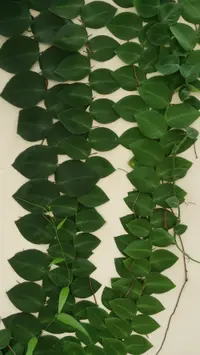
In the juvenile shingling phase, pin or tie stems flat to the support using soft garden ties or plant clips every 5–10 cm to prevent sagging and encourage tight, even attachment.

Root contact moisture

Keep the support material slightly moist where aerial roots touch it by misting the pole or slab directly, rather than the foliage, which helps roots anchor faster without creating prolonged leaf wetness.

Periodic support cleaning

Inspect the backing surface every few months and gently remove algae, salt crust, or decaying moss so roots are not suffocated and can keep attaching to fresh, aerated material.

Low-stress propagation

For a backup plant, air-layer a healthy section still attached to the main vine by wrapping damp sphagnum around a node on the support and only cutting it off once strong new roots are visible, which reduces stress when growing Rhaphidophora korthalsii.

Common Pests and Diseases

Spider mites

This pest often appears on plants grown in warm, dry indoor air and causes fine stippling, dull leaves, and webbing on the undersides. Symptoms include slowed growth and leaf yellowing, especially on climbing sections far from regular inspection.

Solution

Increase humidity around the plant, then hose or shower the foliage thoroughly, focusing on leaf undersides. Follow with 2–3 rounds of insecticidal soap or neem oil at 5–7 day intervals, and prune heavily infested leaves to limit reinfestation as part of ongoing Rhaphidophora korthalsii care instructions.

Scale insects

These insects attach along veins and stems as small dome-shaped bumps and extract sap, leading to sticky honeydew, sooty mold, and gradual decline of new leaves. Symptoms include poor climbing vigor and yellow patches along the main vine.

Solution

Manually remove visible scale with a cotton swab dipped in isopropyl alcohol, then wash the plant with lukewarm water. Repeat alcohol spot-treatments weekly and use a light horticultural oil spray to coat stems and leaf midribs, checking especially near nodes and climbing supports.

Mealybugs

This pest forms white, cottony clusters at leaf axils, midribs, and aerial root nodes, where it feeds on sap and weakens new growth. Symptoms include distorted young leaves, sticky residue, and slowed vertical or shingling growth on support surfaces.

Solution

Isolate the plant, then wipe affected areas with alcohol-dampened cotton pads to remove visible colonies. Rinse foliage well and apply insecticidal soap to all leaf surfaces and crevices every 7–10 days until no new clusters appear, inspecting the backing board, pole, or wall where the plant climbs.

Bacterial leaf spot

This disease causes water-soaked, translucent patches that turn brown with yellow halos, often starting on older, lower leaves where moisture lingers. Symptoms include irregular lesions that may coalesce and cause partial leaf collapse along the shingling surface.

Solution

Remove and discard affected leaves, sterilizing pruning tools between cuts, then reduce overhead watering and avoid water sitting on foliage. Improve air movement around the climbing surface, allow the top layer of the mix to dry slightly between waterings, and avoid crowding the plant with other foliage to limit spread.

Anthracnose

This disease produces tan to dark brown lesions along leaf edges and tips, sometimes following the veins, and is favored by high humidity with poor air circulation on dense, overlapping leaves. Symptoms include scorched-looking margins and premature leaf drop along the climbing stem.

Solution

Prune out affected leaves and dispose of them, then ensure better spacing and airflow around the plant, especially on vertical supports. Keep leaves drier by watering at the soil level, and if conditions stay humid, apply a labeled copper or bio-fungicide according to directions, repeating at intervals until new growth is clean.

Interesting Facts

Shingle-style climbing

In its juvenile phase, this species grows tightly pressed against tree trunks or boards, with each leaf overlapping the previous one in a flattened shingle pattern that maximizes light capture in shaded forest understories.

Distinct juvenile and adult leaves

Juvenile leaves are small, entire, and closely appressed to surfaces, while adult leaves become larger, thicker, and more spreading as the plant transitions away from the shingling growth form when it reaches brighter, more exposed positions.

Native to Southeast Asian forests

This aroid is naturally distributed in lowland to hill rainforests of Southeast Asia, where it grows as an epiphytic or hemi-epiphytic climber on tree trunks in warm, humid, low-light environments, which informs many practical Rhaphidophora korthalsii care instructions.

FAQs about Rhaphidophora korthalsii

This species is a natural climber. It anchors itself with aerial roots and grows upward along trees, moss poles, or other supports. Without something to climb, stems may sprawl, leaves stay smaller, and the plant looks less architectural.

Grow Healthy Plants with Botan Care

Keep your plants happy and healthy with plant identification, disease detection, and easy care guidance.

Botan plant care app — identify plants on mobile

Explore More Plants