blue glory vine Care (Thunbergia battiscombei)

blue glory vine

About blue glory vine

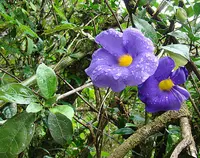
Blue glory vine, Thunbergia battiscombei, is a fast-growing, twining climber valued for its vivid violet-blue, trumpet-shaped flowers and lush green foliage. It is typically grown as an ornamental vine on trellises, fences, or pergolas, where it forms a dense, flowering screen.

This species originates from tropical East Africa, so it favors warm conditions and does best in bright light with regular moisture and well-drained soil. Its vigorous growth and long blooming season make it appealing, but it needs consistent support and pruning, which slightly increases maintenance needs.

Gardeners who want to care for blue glory vine should provide stable warmth and protection from frost, which are the main factors that affect its ease of cultivation in cooler climates.

Main Plant Requirements

Care Difficulty

Moderate Care

Light Preference

Full Sun

Water Requirements

Regular Water

Temperature Preference

Tropical / Frost Sensitive

Hardiness Zone

10–11

Soil Texture

Sandy, Loamy, Organic-rich

Soil pH

Acidic (5.5–6.5), Slightly acidic (6.5–7.0)

Soil Drainage

Moist but well-drained

Fertilization

Moderate (every 2–4 weeks)

Get Personalized Care Plan

Scan your plant to receive care tips personalized for your specific plant

Available on iOS and Android

How to Care for the blue glory vine

Thunbergia battiscombei thrives in bright, direct light but benefits from some protection during the hottest hours.

  • Provide 6–8 hours of sun daily, ideally with morning sun and light afternoon shade, especially in hot summer climates.
  • Allow light, dappled or filtered shade in mid to late afternoon to prevent leaf scorch and faded flowers on blue glory vine.
  • In cooler seasons, choose the sunniest site available; in very hot regions, use a structure or nearby plants to cast partial shade after 2–3 pm.

Thunbergia battiscombei prefers consistently moist but not waterlogged soil throughout the growing season.

  • Water when the top 3–5 cm of soil feel dry, soaking the root zone deeply so moisture reaches 15–20 cm down.
  • Use well-drained soil or a sloped bed; yellowing, soft leaves suggest overwatering, while dull, wilting foliage and crisp edges indicate underwatering.
  • In spring and summer, expect more frequent watering during hot or windy periods; in cooler or rainy weather, extend intervals and always check soil before watering.

This vine grows best in warm conditions and is sensitive to cold and frost.

  • Aim for 65–85°F (18–29°C) for active growth, with strongest flowering toward the warmer end of this range.
  • Protect the plant whenever temperatures approach 40°F (4°C); growth usually stops and damage occurs if exposed near or below 32°F (0°C).
  • In very hot spells above 90°F (32°C), provide extra shade and soil moisture, as prolonged heat stress can reduce flowering and scorch foliage.

This vine prefers moderate humidity but adapts to most home conditions if watering is consistent.

  • Aim for 40–60% humidity, with slightly higher levels in heated, very dry homes.
  • Tolerates brief dry air, but blue glory vine may show crisp leaf edges and stalled growth when air stays too dry.
  • Increase humidity by grouping plants, placing trays with water and pebbles nearby, or lightly misting foliage on hot, dry days.

Thunbergia battiscombei grows best in loose, fertile, sharply drained soil that stays slightly moist but not wet.

  • Use a loamy mix made from roughly 50% peat or coco coir, 30% compost, and 20% perlite or coarse sand for structure and drainage.
  • Ensure the mix drains within a few seconds after watering; water should not pool on the surface or sit in the saucer.
  • Keep pH slightly acidic to neutral, about 6.0–7.0, which supports nutrient uptake and steady flowering.
  • Avoid heavy clay, compacted ground, or peat-only mixes that hold water around the roots and encourage rot.

This species is well suited to container growing when given enough depth and support for its climbing habit.

  • Choose a heavy or wide-based pot to counterbalance the vine’s top growth and prevent tipping in wind.
  • Select a container at least 30 cm deep so roots can anchor firmly and support vigorous vertical stems.
  • Use a tall trellis or obelisk fixed firmly inside the pot so climbing stems do not pull the container over.

This vigorous vine responds well to moderate feeding during warm, active growth.

  • Use a balanced liquid fertilizer (such as 10-10-10 or 20-20-20) at 1/2 strength every 2–4 weeks in spring and summer.
  • Alternatively, apply a slow-release balanced fertilizer or a thin layer of compost at the start of the growing season.
  • Skip feeding in winter or any dormant period, especially for indoor plants or those in low light.
  • Ensure soil is moist before applying fertilizer to reduce root burn and flush with plain water occasionally to prevent salt buildup.

Thoughtful pruning keeps Thunbergia battiscombei blooming well and within bounds.

  • Prune in late winter or early spring before vigorous new growth starts.
  • Remove dead, weak, damaged, or congested stems to improve airflow and light penetration.
  • Shorten long, wandering vines to shape the plant and encourage bushier growth with more flowering shoots.
  • Use clean, sharp hand pruners, cutting just above a leaf node to promote healthy regrowth.

Container-grown plants and young vines benefit from occasional repotting or careful transplanting.

  • Look for roots circling the pot, pushing through drainage holes, or noticeably slowed growth as signs it needs a larger container.
  • Plan repotting or outdoor transplanting for spring, when consistent warmth supports new root growth.
  • Move up only 1 pot size, set the root ball at the same depth, and use a free-draining, rich mix to limit stress.
  • Water thoroughly after moving, shade from intense sun for a few days, and keep soil evenly moist while roots re-establish.

New plants are most often produced from softwood or semi-ripe cuttings taken in warm months.

  • In late spring to summer, take 8–10 cm stem cuttings with 2–3 nodes from non-flowering shoots.
  • Remove lower leaves, optionally dip in rooting hormone, and place in moist, free-draining medium such as perlite and peat or coco coir.
  • Maintain high humidity, bright indirect light, and temperatures around 70–80°F until roots form in a few weeks.
  • Seeds can also be sown in warm conditions, but cuttings give faster, more predictable Thunbergia battiscombei plant care results.

This vine is frost-tender and needs protection in regions with cold winters.

  • In USDA zones colder than 9–10, grow Thunbergia battiscombei in containers and move indoors before frost.
  • Provide a bright, cool indoor location (around 55–65°F) and reduce watering while growth slows.
  • In mild climates, mulch the root zone with 5–8 cm of organic material to buffer temperature swings and conserve moisture.

Care Tips

Provide strong support

Install a sturdy trellis or wire mesh at planting time and loosely tie new shoots with soft ties so the vine can climb vertically without stems kinking or tearing in wind.

Pinch for branching

Pinch out the soft tips of young shoots once they reach 20–30 cm to encourage side branches, which increases flowering and creates a fuller, denser vine.

Refresh older vines

Every 2–3 years, remove a few of the oldest, woodiest stems right down at the base to stimulate fresh, vigorous growth from lower buds.

Seasonal container rotation

If grown in a pot, rotate the container 90° every 1–2 weeks during the growing season so growth and flowering stay evenly distributed around the support structure when growing blue glory vine.

Prevent spider mites

In hot, dry weather, check the undersides of leaves weekly for fine webbing and stippling, and if seen, wash foliage with a firm but gentle spray of water and follow up with a horticultural soap treatment according to label directions.

Common Pests and Diseases

Spider mites

This pest often appears in hot, dry conditions and can cause fine mottling, dull foliage, and fine webbing on the undersides of leaves and between stems.

Solution

Rinse vines thoroughly with a strong but gentle stream of water, focusing on leaf undersides, then increase humidity and airflow; if populations remain, apply insecticidal soap or a neem oil spray every 5–7 days until new growth looks clean.

Aphids

These insects cluster on young shoots, buds, and the backs of leaves, sucking sap and causing distorted, sticky growth with possible sooty mold on the honeydew they excrete.

Solution

Pinch off heavily infested shoot tips, then hose down the plant to remove colonies; follow with insecticidal soap or a light horticultural oil, repeating weekly until new shoots expand normally, especially during active growing blue glory vine periods outdoors.

Whiteflies

This pest forms small white clouds of insects when the plant is disturbed and feeds on leaf sap, leading to yellowing, leaf drop, and sticky residue that may support sooty mold.

Solution

Hang yellow sticky traps near the vine to monitor and reduce adults, regularly vacuum or shake off flying adults outdoors, then treat leaf undersides with insecticidal soap or neem oil in several applications to break the life cycle.

Powdery mildew

This disease shows as white, powdery patches on upper leaf surfaces, often starting on shaded or crowded parts of the vine, and can lead to leaf yellowing and premature drop.

Solution

Prune to open the plant for better air movement, avoid overhead watering or wet foliage in the evening, and treat affected areas with a sulfur-based fungicide or potassium bicarbonate spray, repeating as directed until new leaves emerge clean.

Leaf spot

Symptoms include small brown or purplish spots that may enlarge and merge, sometimes with yellow halos, mostly in warm, humid, or poorly ventilated conditions.

Solution

Remove and dispose of affected leaves, keep the canopy thinned to improve airflow, and water at soil level; if spotting continues to spread, apply a copper-based fungicide according to label directions and avoid splashing water on foliage.

Interesting Facts

Deep indigo corollas

This species is noted for its unusually rich indigo to violet-blue flowers with a darker throat, a color range that is relatively uncommon among vining members of the Acanthaceae family.

Woody scrambling habit

Unlike some softer annual thunbergias, it develops semi-woody stems and a strongly scrambling or twining growth form, allowing it to form dense vertical screens when given support.

East African origin

The species is native to East Africa, where it grows in warm, frost-free regions, often climbing through shrubs and small trees at forest margins and along disturbed edges.

Botan icon

Did you know?

Horticulturally, this plant has become a parent in ornamental breeding and selection, with its distinctive deep blue flower color used to create or influence several garden cultivars valued in subtropical and warm-temperate landscapes.

FAQs about blue glory vine

Lack of flowers usually comes from insufficient light, heavy nitrogen fertilization, or pruning at the wrong time that removes flower buds. Ensure strong support, moderate feeding, and avoid cutting vigorous stems just before the main blooming season.

Grow Healthy Plants with Botan Care

Keep your plants happy and healthy with plant identification, disease detection, and easy care guidance.

Botan plant care app — identify plants on mobile

Explore More Plants