


Choose correct mount
Mount plants on cork, hardwood, or tree-fern slabs rather than soft, rotting wood so roots anchor firmly and air can move freely around the pseudobulbs.

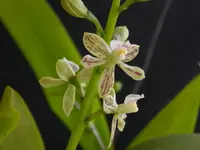
Prosthechea vespa is a small to medium epiphytic orchid, usually growing on trees with slender pseudobulbs and narrow leaves. It produces clusters of star-shaped, often speckled flowers with a distinctive lip. Native to tropical regions of Central and South America, it comes from warm, humid forests with good air movement. This background makes it moderately demanding in cultivation, especially regarding humidity and ventilation. It suits growers who already have some orchid experience and can provide stable indoor conditions. Those learning how to care for Prosthechea vespa should focus on providing bright filtered light, regular moisture with quick drainage, and avoiding stagnant, heavy potting mixes.

Care Difficulty
Moderate Care

Light Preference
Bright Indirect Light

Water Requirements
Moderate Water

Temperature Preference
Tropical / Frost Sensitive

Hardiness Zone
11–12

Soil Texture
Peaty, Organic-rich, Loamy

Soil pH
Acidic (5.5–6.5)

Soil Drainage
Well-drained

Fertilization
Moderate (every 2–4 weeks)
Scan your plant to receive care tips personalized for your specific plant
Available on iOS and Android
This orchid prefers bright, filtered light that mimics lightly shaded forest canopies.
Watering should keep roots moist but never stagnant or waterlogged.
This species grows best in intermediate to warm conditions with mild night drops.
This orchid prefers moderately high, stable humidity to maintain healthy pseudobulbs and foliage.
This epiphytic orchid needs a very airy, fast-draining medium rather than conventional soil.
This species is well suited to container culture in baskets or pots with open, airy sides.
During active growth, Prosthechea vespa benefits from light, consistent feeding suited to epiphytic orchids.
Pruning Prosthechea vespa focuses on hygiene and guiding new growth rather than shaping.
This orchid prefers slightly tight conditions and should be repotted only when the medium breaks down or roots are crowded.
Propagation of Prosthechea vespa is typically done by division of mature clumps rather than from seed at home.
This tropical orchid is not frost tolerant and needs sheltered winter conditions in most climates.

Plant Health Check
Not sure what's wrong with your plant? Check your plant's health inside the app.
The flowers have a mottled brown and yellow pattern that resembles a wasp, which is reflected in the species name vespa, Latin for wasp, and is thought to play a role in attracting specific insect visitors.
The flowers typically release more noticeable fragrance in the evening and night, a trait linked to pollination by nocturnal or crepuscular insects in its native habitats.
This species develops spindle-shaped pseudobulbs that store water and nutrients, allowing it to tolerate short dry periods common in its epiphytic forest environments.

This species often grows as an epiphyte on tree trunks and large branches in tropical American forests, anchoring itself with roots on bark rather than in soil, which allows it to occupy canopy niches with brighter light and good air movement.
Lack of flowering usually comes from insufficient light, too-warm winter nights, or skipping a slight dry rest after growth finishes. Cooler, drier conditions for several weeks, plus balanced fertilizer during growth, support reliable blooming and Prosthechea vespa care instructions.
Keep your plants happy and healthy with plant identification, disease detection, and easy care guidance.

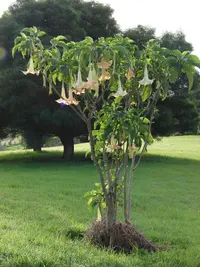
angel's-trumpet
Brugmansia × candida
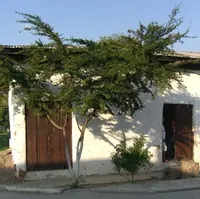
Surinamese stickpea
Calliandra surinamensis
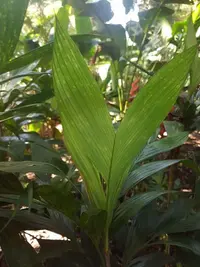
Geonoma elegans
Geonoma elegans
Peperomia urvilleana var. fijiana
Peperomia urvilleana var. fijiana
Argentine evening primrose
Oenothera mollissima
Spathiphyllum blandum
Spathiphyllum blandum
piggy-back plant
Tolmiea menziesii
Chacruna
Psychotria viridis