Rhizome Containment
Install a 20–30 cm deep root barrier or plant in a bottomless container sunk into the ground to keep spreading rhizomes confined to the desired area.

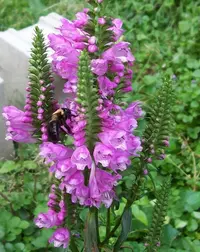
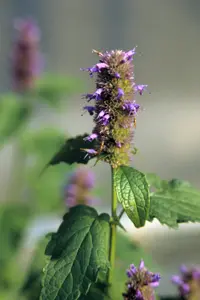
Obedient plant, Physostegia virginiana, is a hardy herbaceous perennial in the mint family, known for its upright spikes of tubular, snapdragon-like flowers. The name “obedient” comes from the way individual flowers temporarily stay in place when gently moved on the stem.
This plant forms clumps and can spread by rhizomes, often creating dense patches in garden beds or naturalized areas. It is native to North America, typically found in moist meadows, stream edges, and open woodland clearings.
It adapts well to full sun and evenly moist, well-drained soil, which makes it fairly straightforward to care for obedient plant in many temperate gardens.

Care Difficulty
Easy Care

Light Preference
Full Sun

Water Requirements
Regular Water

Temperature Preference
Cold Hardy

Hardiness Zone
3–9

Soil Texture
Sandy, Loamy, Clay

Soil pH
Acidic (5.5–6.5), Slightly acidic (6.5–7.0)

Soil Drainage
Moist but well-drained

Fertilization
Minimal (feed rarely)
Scan your plant to receive care tips personalized for your specific plant
Available on iOS and Android
This perennial prefers full sun but tolerates some light shade, especially in hotter regions.
This species likes evenly moist soil but does not perform well in waterlogged conditions.
This hardy perennial tolerates a wide temperature range once established.
Humidity is not a major factor for Physostegia virginiana, which thrives in typical outdoor conditions.
Physostegia virginiana prefers moist, well-drained, fertile soil that stays evenly damp without becoming waterlogged.
This species can be grown in containers outdoors if the pot is large and stable enough for its spreading habit.
Physostegia virginiana is a low-maintenance perennial that benefits from modest feeding in nutrient-poor soils.
Pruning Physostegia virginiana helps manage spread, support flowering, and maintain a tidy clump.
This species is usually grown in garden beds, so care focuses on dividing and transplanting clumps rather than frequent repotting.
Physostegia virginiana is commonly propagated by division, but it also grows from cuttings or seeds under suitable conditions.
This hardy perennial tolerates typical winters across much of the US and usually needs minimal winter care.

Plant Health Check
Not sure what's wrong with your plant? Check your plant's health inside the app.
Each individual floret can be gently pushed to a new angle along the stem and it will temporarily stay in that position, which is why the plant is commonly called obedient plant.
This species spreads via underground rhizomes that can quickly form dense colonies in moist, fertile soil, allowing it to outcompete less vigorous neighbors in garden beds and along stream banks.
Its tubular, 2-lipped flowers bloom in late summer to early fall and are especially attractive to bumblebees, long-tongued bees, and hummingbirds at a time when many other native perennials are past peak.

The natural range of this species extends across much of eastern and central North America, where it typically occurs in moist prairies, stream margins, and wet meadows, making it an indicator of seasonally wet but sunny habitats in several regional plant community classifications.
Poor flowering often comes from too much shade, nutrient-poor or very dry soil, or overcrowded clumps. Divide older plants every 3–4 years, maintain moderate soil moisture, and avoid high-nitrogen fertilizer that encourages leaves over flowers.
Keep your plants happy and healthy with plant identification, disease detection, and easy care guidance.