Support Sprawling Stems
Use low, unobtrusive wire hoops or small rocks to gently support and spread the trailing stems so flower clusters are held off the soil surface, which improves airflow and reduces rot of the circular seed pods.

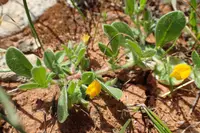
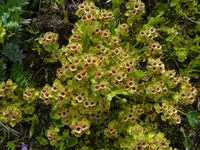
Anthyllis circinnata, commonly called disc trefoil, is a small, low-growing perennial in the pea family. It forms compact clumps with finely divided, gray-green foliage and rounded flower heads.
This species is native to dry, rocky habitats in parts of southern Europe and the Mediterranean region. It is adapted to poor, well-drained soils and often grows in full sun.
Its drought tolerance and modest size make it suitable for rock gardens, sunny borders, and naturalistic plantings. Once established, it is generally undemanding, but good drainage is essential.
Gardeners who want to learn how to care for Disc Trefoil should focus on providing strong light, relatively dry conditions, and a lean, gritty soil mix.

Care Difficulty
Moderate Care

Light Preference
Full Sun

Water Requirements
Low Water

Temperature Preference
Warm Climate

Hardiness Zone
8–10

Soil Texture
Sandy, Loamy, Rocky

Soil pH
Slightly acidic (6.5–7.0), Neutral (7.0)

Soil Drainage
Well-drained

Fertilization
Minimal (feed rarely)
Scan your plant to receive care tips personalized for your specific plant
Available on iOS and Android
This Mediterranean subshrub prefers strong light and thrives in open, sunny sites.
This species prefers dry to slightly moist soil and is sensitive to prolonged wetness.
This plant is adapted to warm, dry climates with mild winters.
This Mediterranean subshrub handles dry air well, so humidity is rarely a concern for Disc Trefoil in typical homes.
This species prefers mineral, fast-draining soil that mimics dry, rocky habitats.
This species is suitable for container growing in sunny, dry positions.
Anthyllis circinnata usually needs minimal feeding, especially in lean, well-drained soils where it naturally thrives.
Anthyllis circinnata benefits from light, targeted pruning to maintain shape and flowering performance.
This species is more often grown in the ground than in pots, so focus on careful transplanting rather than frequent repotting.
Anthyllis circinnata is commonly propagated by seed, with cuttings used where clonal uniformity is important.
Anthyllis circinnata is relatively cold tolerant in mild climates and often needs only modest winter care.

Plant Health Check
Not sure what's wrong with your plant? Check your plant's health inside the app.
After flowering, its infructescences form tight, coiled clusters of pods that look like small disks or spirals, which is the reason for the common name disc trefoil.
This species is naturally restricted to dry, rocky, calcareous habitats, often on limestone slopes and screes, where many less specialized plants cannot survive.
Leaves and pods are covered with fine, silky hairs that help reduce water loss and protect tissues from intense sunlight and dry Mediterranean winds.

The species shows a marked Mediterranean distribution, occurring in scattered, often isolated populations that can act as important microhabitats for specialized insects, including solitary bees that collect its pollen early in the season.
This species forms small, low clumps and slowly widens from the crown rather than running. It is not considered aggressive and usually stays within its planting area if given sun and well-drained, lean soil.
Keep your plants happy and healthy with plant identification, disease detection, and easy care guidance.