


Mounting strategy
Mount plants on cork or tree fern with a thin pad of sphagnum only around the roots, leaving the rhizome exposed so new growths can attach and dry quickly after watering.

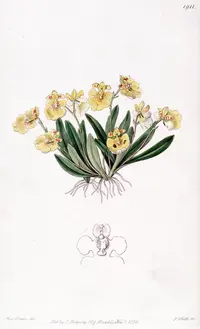
Erycina crista-galli is a miniature epiphytic orchid that typically grows on tree branches rather than in soil. It forms small, delicate clumps with slender stems and fine foliage. The plant produces bright yellow, often speckled flowers that appear in loose sprays and give a light, airy look.
This species occurs naturally in parts of Central and South America, usually in warm, humid forests with good air movement. It can be moderately demanding because it dislikes stale air, heavy potting mixes, and long dry periods. Those who learn how to care for Erycina crista-galli usually keep it in bright, filtered light with even moisture and a very free-draining orchid substrate.

Care Difficulty
Hard Care

Light Preference
Bright Indirect Light

Water Requirements
Keep Soil Moist

Temperature Preference
Tropical / Frost Sensitive

Hardiness Zone
Unknown

Soil Texture
Sandy, Loamy, Organic-rich

Soil pH
Acidic (5.5–6.5)

Soil Drainage
Moist but well-drained

Fertilization
Moderate (every 2–4 weeks)
Scan your plant to receive care tips personalized for your specific plant
Available on iOS and Android
This small epiphytic orchid prefers bright, gentle light that mimics dappled forest shade.
This orchid needs evenly moist but never waterlogged roots, with brief drying between waterings.
This species prefers intermediate to warm conditions with stable temperatures and good airflow.
This cloud-forest miniature orchid needs consistently high humidity to grow well indoors.
This epiphytic orchid grows best in a very airy, fast-draining medium rather than traditional potting soil.
This species is well suited to container growing, especially in small orchid pots or baskets.
This orchid benefits from light, consistent feeding during active growth but is sensitive to excess salts.
Pruning needs for this miniature orchid are minimal and focus on hygiene rather than shaping.
This species prefers stable conditions and only occasional repotting when the medium breaks down or roots overcrowd the container.
Propagation is possible but modest in scale, usually done by careful division of mature clumps.
This orchid is frost-sensitive and needs sheltered conditions when temperatures drop.

Plant Health Check
Not sure what's wrong with your plant? Check your plant's health inside the app.
This orchid naturally grows on thin twigs and small branches in tropical American forests, forming tiny clumps that can flower while only a few centimeters tall.
Individual plants produce branched inflorescences with many small yellow-brown flowers, creating a loose, airy spray rather than a single large bloom.
It belongs to the Oncidiinae subtribe, sharing close evolutionary relationships with genera like Oncidium and Tolumnia, which is reflected in its fine, branched flower spikes and small pseudobulbs.
Lack of flowers often relates to insufficient light intensity, inadequate seasonal temperature drop, or depleted nutrients. Check that the plant experienced a cooler, slightly drier rest period, has enough bright light, and receives balanced, dilute orchid fertilizer during active growth.
Keep your plants happy and healthy with plant identification, disease detection, and easy care guidance.

Asterogyne martiana
Asterogyne martiana
 POPULAR
Bird of paradise plant
Strelitzia reginae
purple Joe-Pye weed
Eutrochium purpureum
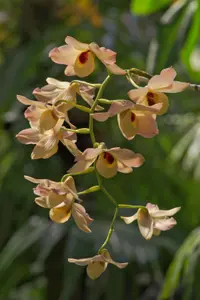
Musky-smelling Dendrobium
Dendrobium moschatum
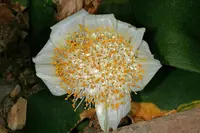
Dwarf Bloodlily
Haemanthus deformis
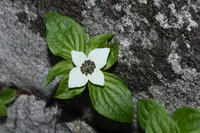
western cordilleran bunchberry
Cornus unalaschkensis
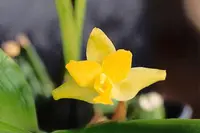
Lycaste cruenta
Lycaste cruenta

Begonia brevirimosa
Begonia brevirimosa