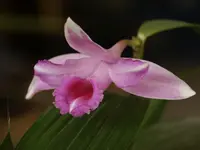
common rattlesnake orchid Care (Coelogyne imbricata)

Also known as: necklace orchid
common rattlesnake orchid

About common rattlesnake orchid

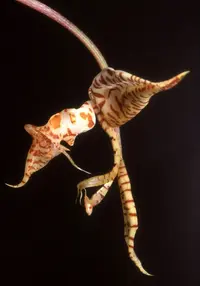
The common rattlesnake orchid, Coelogyne imbricata, is an epiphytic orchid that often grows on trees or rocks in humid, tropical forests of Southeast Asia. It forms chains of closely packed pseudobulbs with arching, narrow leaves and dangling flower spikes.

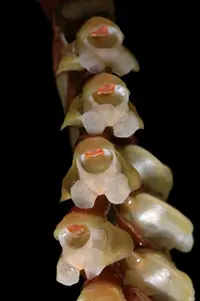
The flowers are usually pale, with a textured lip and a slightly nodding habit that gives the plant a distinctive, layered look. It prefers stable, mild conditions with good air movement, making it better suited to experienced growers.

Understanding how to care for common rattlesnake orchid starts with providing constant moisture around the roots, bright filtered light, and a loose, airy orchid substrate that never stays waterlogged.

Main Plant Requirements

Care Difficulty

Hard Care

Light Preference

Bright Indirect Light

Water Requirements

Keep Soil Moist

Temperature Preference

Tropical / Frost Sensitive

Hardiness Zone

12–13

Soil Texture

Sandy, Loamy, Organic-rich

Soil pH

Acidic (5.5–6.5)

Soil Drainage

Moist but well-drained

Fertilization

Moderate (every 2–4 weeks)

Get Personalized Care Plan

Scan your plant to receive care tips personalized for your specific plant

Available on iOS and Android

How to Care for the common rattlesnake orchid

This orchid prefers bright, filtered light that mimics a forest canopy.

  • Provide 6–8 hours of bright, indirect light each day, such as dappled shade or light under 30–50% shade cloth.
  • Allow gentle morning sun but protect from strong midday and afternoon sun, which can cause yellowing, scorching, or leaf drop on the common rattlesnake orchid.
  • In summer, shift plants to slightly shadier positions; in winter, move them where they receive brighter filtered light to compensate for shorter days.

Watering should keep the medium evenly moist but never saturated.

  • Water when the top 2–3 cm of the bark or moss feels just barely dry, letting excess drain fully to avoid stagnant moisture around the roots.
  • Reduce watering in cooler months when growth slows, but do not allow the medium to dry out completely for more than 1–2 days.
  • Watch for limp, wrinkled pseudobulbs and dry leaf tips as signs of underwatering, and for blackened roots or a sour smell as signals of overwatering.

This species prefers intermediate to warm temperatures with stable conditions year-round.

  • Aim for day temperatures of 70–80°F (21–27°C) and night temperatures of 60–65°F (16–18°C) for steady growth and flowering.
  • Protect plants from cold below 50°F (10°C), as prolonged exposure near this level can slow growth and higher frost risk can cause tissue damage.
  • During hot spells above 85°F (29°C), increase shade and air movement, and avoid placing plants near heat sources or reflective surfaces that amplify heat.

This epiphytic orchid benefits from high, stable humidity to maintain healthy growth.

  • Aim for 60–80% humidity; use a hygrometer to monitor levels near the plant.
  • Tolerates brief dips to 40–50%, but prolonged dry air causes shriveling pseudobulbs and crisp leaf tips.
  • Place on a pebble tray, group with other plants, or use a small humidifier instead of misting to raise humidity safely.

This species prefers a loose, airy medium that mimics its natural epiphytic habitat rather than dense garden soil.

  • Use a mix of medium orchid bark, fine bark, and perlite, with a small amount of sphagnum moss for moisture retention.
  • Ensure extremely fast drainage so water runs through in seconds, leaving roots moist but never waterlogged.
  • A slightly acidic to neutral pH around 5.5–6.5 supports nutrient uptake and root health.
  • Avoid heavy, compact, or peat-only mixes that stay wet, reduce aeration, and promote root rot in Coelogyne imbricata.

This orchid is well suited to container culture when the pot supports its creeping growth habit.

  • Choose a wide, shallow pot or basket to allow rhizomes to spread horizontally rather than a deep, narrow container.
  • Use a slatted wooden basket or ventilated orchid pot to increase side airflow and prevent stagnant moisture around roots.
  • Add some weight (stones or a heavier outer cachepot) if the top growth makes the container unstable or prone to tipping over.

This epiphytic orchid benefits from light, consistent feeding during active growth for steady flowering.

  • Use a balanced orchid fertilizer (around 20-20-20) diluted to 1/4–1/2 strength in low-mineral water.
  • Feed every 2–3 weeks in spring and summer while new pseudobulbs and roots are developing.
  • Reduce feeding to once a month at very weak strength in fall and stop during the coolest, slow-growth period.
  • Rinse the medium with plain water every 3–4 feedings to limit salt buildup around the roots when caring for common rattlesnake orchid.

Coelogyne imbricata needs minimal pruning, focused mainly on hygiene and flower management.

  • Trim spent flower spikes at the base once the entire inflorescence has faded to direct energy back to pseudobulbs.
  • Remove dead, shriveled, or clearly diseased leaves and pseudobulbs with sterilized scissors or pruning shears.
  • Cut away badly damaged, yellowed foliage, leaving some healthy tissue to maintain photosynthesis.
  • Avoid heavy thinning of green canes or bulbs, as this reduces future flowering and weakens the clump structure.

This orchid prefers to stay slightly tight in its pot or basket and resents frequent disturbance.

  • Repot every 2–3 years, or when roots circle the container, medium decomposes, or growth becomes noticeably slow.
  • Choose late winter to early spring, just before new root tips emerge, for lowest shock and quickest recovery.
  • Use a shallow, well-ventilated pot or basket with chunky bark-based orchid mix to keep roots aerated.
  • Gently tease apart the root mass, trim dead roots, set the rhizome at the surface, then keep shaded and slightly drier for 1–2 weeks.

Coelogyne imbricata is most commonly propagated by division of mature clumps rather than from seed at home.

  • Divide in late winter or early spring when repotting, before strong new root growth begins.
  • Use a sterilized knife or pruning shears to cut the rhizome into sections with at least 3–4 healthy pseudobulbs each.
  • Dust cuts with fungicidal powder or ground cinnamon, then pot each division in fresh, airy orchid mix.
  • Maintain high humidity, bright filtered light, and slightly reduced watering until new roots and growths appear.

This warmth-loving orchid is not frost hardy and needs careful winter management in temperate climates.

  • Keep temperatures around 60–75°F in winter; avoid exposure below 50°F to prevent tissue damage.
  • Grow in containers so plants can be moved indoors or into a heated greenhouse before the first frost.
  • Maintain bright, indirect light and good air movement while slightly reducing watering and holding off most fertilizer.
  • Use a loose, airy medium rather than heavy mulch so cool, wet conditions do not suffocate roots during shorter days.

Care Tips

Mounted culture setup

Use a cork slab or hardwood mount with a thin layer of long-fiber sphagnum around the roots, then secure the rhizome with soft orchid ties so the plant can creep and form its natural imbricated growth pattern.

Horizontal rhizome space

Choose a wide, shallow basket or pot and position the leading rhizome toward one side, leaving clear horizontal space so the plant can advance and produce successive pseudobulbs without crowding.

High-airflow placement

Position the plant where an oscillating fan provides gentle constant air movement, which keeps the fine roots oxygenated and greatly reduces the risk of bacterial rot in this close-sheathed species.

Targeted pest inspection

Inspect the overlapping sheaths and the bases of pseudobulbs with a flashlight every 1–2 weeks, since scale and mealybugs often hide under the tight bracts and are easier to control if found early when caring for common rattlesnake orchid.

Moisture-responsive mounting

If grown mounted, keep a secondary moisture reservoir by hanging the mount above a slatted tray with damp LECA or gravel, which slows drying just enough to extend time between waterings without leaving the roots waterlogged.

Common Pests and Diseases

Scale insects

This pest feeds on sap and often hides under leaf sheaths and along pseudobulbs, causing yellowing, shriveling, and sticky honeydew. Symptoms include weakened growth and sooty mold growing on the sugary exudate.

Solution

Isolate the plant, then manually remove visible scale with a cotton swab dipped in isopropyl alcohol and gently peel old, loose sheaths where insects hide. Follow with 2–3 applications of a horticultural oil or insecticidal soap at 7–10 day intervals, and improve air movement and light to support recovery as part of general Coelogyne imbricata care instructions.

Mealybugs

This pest appears as white, cottony clusters in leaf axils, on roots, and between tightly packed pseudobulbs, leading to stunted growth and yellowing foliage. Honeydew and sooty mold may develop in severe infestations.

Solution

Remove loose sheaths and physically wipe off mealybugs with a cotton swab dipped in isopropyl alcohol, taking care to reach crevices between pseudobulbs. Repeat treatment weekly and use insecticidal soap on all plant surfaces and bench areas, while reducing excess fertilizer and avoiding overly warm, stagnant conditions that favor rapid population growth.

Spider mites

These insects thrive in warm, dry indoor air and can cause fine stippling on leaves, pale patches, and eventual leaf drop, especially on thinner foliage. Symptoms include fine webbing on the underside of leaves and between pseudobulbs.

Solution

Increase humidity to above 50%, rinse foliage thoroughly under lukewarm water, and wipe leaf undersides to physically remove mites and webs. In persistent cases, use a miticide or insecticidal soap labeled for mites, applying 2–3 times at 5–7 day intervals and improving airflow to prevent reinfestation.

Bacterial soft rot

This disease causes rapidly spreading, foul-smelling, water-soaked lesions on pseudobulbs and leaf bases, which can collapse into mushy tissue. Symptoms include a sour odor and wet, brown to black areas that enlarge quickly in warm, humid, low-airflow conditions.

Solution

Immediately cut out all affected tissue with a sterile blade, dust cuts with powdered sulfur or cinnamon, and discard severely infected plants to prevent spread. Reduce watering, keep water off the foliage and crown, increase air circulation around the plant, and disinfect benches, tools, and pots with a 10% bleach solution.

Leaf spot fungi

This disease appears as small yellow, brown, or black spots on leaves that may enlarge, coalesce, and cause premature leaf drop, especially in cool, humid, crowded conditions. Symptoms include spots with darker borders and occasional yellow halos along older leaves.

Solution

Remove and discard affected leaves, avoid wetting foliage, and water early in the day so plants dry quickly. Improve spacing and airflow, then apply a broad-spectrum fungicide suitable for orchids according to label directions if spotting continues despite cultural corrections.

Interesting Facts

Mossy trunk specialist

This species is primarily an epiphyte that anchors itself on mossy tree trunks and large branches in humid forests, rather than growing in soil, relying on its roots and overlapping pseudobulbs for support and moisture capture.

Overlapping pseudobulb chains

Its name refers to the distinctly imbricate, or overlapping, arrangement of pseudobulbs that form tight chains, helping the plant spread along a substrate while stabilizing it in exposed canopy positions.

Fragrant funnel-shaped flowers

It produces pale, funnel-shaped flowers with a more richly colored and marked lip, and these blossoms are often pleasantly fragrant, which is thought to help attract specific pollinating insects under forest canopy light conditions.

FAQs about common rattlesnake orchid

Lack of flowering usually comes from insufficient light, overly warm nights, or skipping a slightly drier, cooler rest after growth finishes. Old, depleted potting mix and cramped roots also reduce bloom production on this species.

Grow Healthy Plants with Botan Care

Keep your plants happy and healthy with plant identification, disease detection, and easy care guidance.


Botan plant care app — identify plants on mobile

Explore More Plants