


Stake Tall Canes
Install thin bamboo stakes and loosely tie older canes with soft ties to keep the clump upright and prevent flower spikes from kinking at the base.

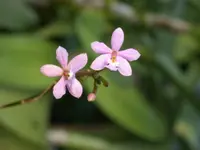
Epidendrum ibaguense, often called reed-stem epidendrum, is a tropical epiphytic orchid that forms tall, cane-like stems topped with clusters of bright flowers. Blooms come in vivid orange, pink, red, or purple tones and can appear repeatedly on mature plants, giving a long-lasting display.
This species is native to northern South America and the Caribbean, where it grows in warm, bright, airy habitats. Its sturdy growth, frequent flowering, and tolerance of a range of household conditions make it one of the easier orchids for beginners learning how to care for Epidendrum ibaguense. It prefers bright indirect light, good air circulation, and an open, fast-draining orchid mix.

Care Difficulty
Moderate Care

Light Preference
Partial Sun

Water Requirements
Regular Water

Temperature Preference
Tropical / Frost Sensitive

Hardiness Zone
10–12

Soil Texture
Sandy, Loamy, Organic-rich

Soil pH
Acidic (5.5–6.5), Slightly acidic (6.5–7.0)

Soil Drainage
Moist but well-drained

Fertilization
Moderate (every 2–4 weeks)
Scan your plant to receive care tips personalized for your specific plant
Available on iOS and Android
This orchid thrives in bright, warm conditions that mimic open, subtropical habitats.
Watering should keep the root zone moist but never stagnant.
Stable, warm conditions support vigorous growth and reliable flowering.
This orchid prefers moderately moist air but usually adapts well to typical home humidity.
This species grows best in a loose, airy substrate that mimics an epiphytic orchid environment.
This orchid is well suited to container growing when the pot supports its upright, cane-like growth.
Light but consistent feeding supports steady growth and flowering for Epidendrum ibaguense in active seasons.
Thoughtful pruning keeps Epidendrum ibaguense tidy and encourages better flowering over time.
Container-grown Epidendrum ibaguense benefits from periodic repotting to refresh its airy orchid mix and support root health.
Division and keikis are the most practical methods for increasing Epidendrum ibaguense plants at home.
This subtropical orchid needs protection from freezing conditions, especially in cool climates.

Plant Health Check
Not sure what's wrong with your plant? Check your plant's health inside the app.
This species forms tall, thin, cane-like stems with leaves along most of their length, more reminiscent of a reed or bamboo than the thick pseudobulbs typical of many orchids.
Flowering stems can stay active for many months, successively producing new star-shaped flowers in terminal clusters rather than opening all flowers at once.
In the wild it often grows in exposed, windy coastal habitats in northern South America, tolerating higher light and more variable conditions than many rainforest orchids, which is useful to know when planning Epidendrum ibaguense indoor care.

This orchid commonly forms natural hybrids with closely related Epidendrum species where their ranges overlap, creating swarms of intermediate plants that make species identification in the field unusually challenging for botanists.
Lack of blooms usually comes from insufficient light, too little fertilizer, or no slight temperature drop at night. Ensure bright conditions, regular balanced feeding, and a modest day–night temperature difference to trigger flower spikes.
Keep your plants happy and healthy with plant identification, disease detection, and easy care guidance.

Variegated Cast Iron Plant
Aspidistra elatior 'Variegata'
Bulbophyllum nutans
Bulbophyllum nutans
 POPULAR
Centipede tongavine
Epipremnum pinnatum
fairy aprons
Utricularia dichotoma
Philodendron pastazanum
Philodendron pastazanum
Brazil raintree
Brunfelsia pauciflora
-200x133.webp)
Riddell's dozedaisy
Aphanostephus riddellii
Mexican heather
Cuphea hyssopifolia