Mark Dormant Clumps
Place discreet labels or stones where the plant grows before foliage dies back, so you avoid disturbing or damaging the tubers during summer border work or replanting.

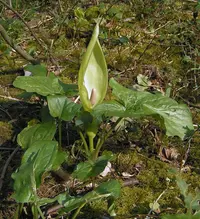
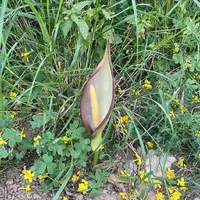
Snakeshead, Arum maculatum, is a small woodland perennial native to much of Europe, including parts of the UK. It grows from an underground tuber and appears early in spring. Its arrow-shaped leaves often show dark spots, and the plant produces a pale hood-like spathe around a central spike, followed later by a dense cluster of bright red berries. In nature, it thrives in dappled shade, moist but well-drained soil, and humus-rich woodland ground. These same traits make it fairly straightforward to grow in shaded garden areas, as long as the soil does not dry out completely. Understanding these natural conditions helps guide how to care for Snakeshead in temperate gardens.

Care Difficulty
Moderate Care

Light Preference
Partial Shade

Water Requirements
Moderate Water

Temperature Preference
Cold Hardy

Hardiness Zone
4–9

Soil Texture
Loamy, Silty, Organic-rich

Soil pH
Acidic (5.5–6.5), Slightly acidic (6.5–7.0)

Soil Drainage
Moist but well-drained

Fertilization
Minimal (feed rarely)
Scan your plant to receive care tips personalized for your specific plant
Available on iOS and Android
Arum maculatum prefers dappled woodland-style light rather than direct, intense sun.
This woodland perennial prefers consistently moist, but not saturated, soil during its active season.
This species is adapted to cool to mild climates with a marked seasonal cycle.
This woodland species handles typical home humidity but benefits from slightly moist air in heated rooms.
This plant prefers cool, humus-rich, moist but well-drained soil that mimics a deciduous woodland floor.
This species can be grown in containers if the potting setup keeps the tubers cool, moist, and well drained.
Arum maculatum grows well in humus-rich soil and usually needs only light feeding.
Arum maculatum requires minimal pruning, mainly for tidiness and plant health.
This woodland species is usually grown in the ground and is moved only when clumps become crowded or poorly placed.
Arum maculatum is most commonly propagated by division of its underground corms rather than by seed.
Arum maculatum is cold hardy in much of the US and usually requires little specific winter care once established.

Plant Health Check
Not sure what's wrong with your plant? Check your plant's health inside the app.
The inflorescence temporarily traps small flies attracted by a dung-like scent inside the floral chamber, releasing them only after they have picked up or deposited pollen to ensure cross-pollination.
During flowering, the spadix can produce noticeable heat through increased respiration, which helps spread its odor and may make the plant more attractive to cold-sensitive pollinating insects.
The spring leaves often have dark purple to almost black spots, which give rise to the species name maculatum, meaning spotted, and help distinguish it from many similar woodland plants.

Historical records show that the starchy tubers of this species, once thoroughly processed to remove toxic calcium oxalate crystals, were used in parts of Europe to produce a refined starch called Portland sago for laundry and textile finishing.
Lack of flowers usually comes from insufficient light, poor soil fertility, or bulbs planted too deep. Disturbance or recent division can also delay flowering. Allow foliage to die back naturally so bulbs recharge for the next season.
Keep your plants happy and healthy with plant identification, disease detection, and easy care guidance.