Clematis Care (Clematis 'Nelly Moser')

Clematis

About Clematis

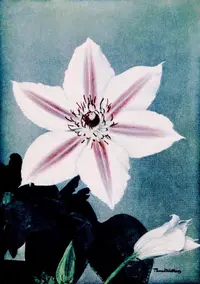
Clematis 'Nelly Moser' is a deciduous climbing vine grown mainly for its large, pale pink flowers with deep rose stripes. It typically grows on trellises, fences, or pergolas, attaching by leaf stalks rather than tendrils.

The original species comes from woodland and scrub areas in Europe and Asia, and this cultivar has been selected for reliable garden performance. Flowers appear in late spring to early summer and again more lightly later in the season.

This clematis prefers cool, shaded roots with its stems and flowers reaching into bright, indirect light. Well-drained, fertile soil and consistent moisture make it easier to care for Clematis without setbacks.

Main Plant Requirements

Care Difficulty

Moderate Care

Light Preference

Partial Sun

Water Requirements

Regular Water

Temperature Preference

Cold Hardy

Hardiness Zone

4–9

Soil Texture

Loamy, Sandy, Organic-rich

Soil pH

Acidic (5.5–6.5), Slightly acidic (6.5–7.0)

Soil Drainage

Moist but well-drained

Fertilization

Light (every 4–6 weeks)

Get Personalized Care Plan

Scan your plant to receive care tips personalized for your specific plant

Available on iOS and Android

How to Care for the Clematis

This vine prefers bright conditions with gentle, not harsh, sun exposure for best flowering.

  • Provide 4–6 hours of sun daily, ideally morning sun with light or dappled shade in the afternoon to prevent petal bleaching of Clematis.
  • Plant where the base and roots are shaded by mulch or low plants, while the top growth climbs into brighter light.
  • In hot summers, protect from intense sun between 12–4 pm; in cooler climates, it tolerates more direct light but may need support to reach it.

This plant needs steady moisture at the roots without staying soggy.

  • Water when the top 3–5 cm of soil feel dry, soaking the root zone deeply so moisture reaches 20–30 cm down.
  • Use well-drained soil; add organic matter so water moves through but still holds moisture, and avoid standing water around the crown.
  • In hot, dry periods, increase checks for dryness and watch for wilting leaves (too dry) or yellowing, soft stems and sour smell (overwatering).

This climber is cold hardy but flowers and grows best in moderate temperatures.

  • Optimal growth occurs around 60–75°F (16–24°C), with strong root development and good flowering in these conditions.
  • Established plants tolerate winter lows near 0°F (-18°C) in the ground, but young plants benefit from mulch to protect roots from deep freezes.
  • In summer, it handles up to about 85–90°F (29–32°C) if soil stays cool and moist; mulch and light afternoon shade reduce heat stress and wilting.

Humidity is rarely a limiting factor for Clematis 'Nelly Moser' grown outdoors in typical garden conditions.

Clematis 'Nelly Moser' prefers deep, moisture-retentive but well-drained soil that supports extensive root growth.

  • Use a loamy soil rich in organic matter, such as garden loam amended with compost or well-rotted manure, to support steady moisture and nutrient availability.
  • Aim for a slightly alkaline to neutral pH around 6.8–7.5; in acidic soils, blend in garden lime according to label directions to raise pH gradually.
  • Improve drainage and aeration by incorporating coarse sand or fine grit plus pine bark chips, especially in heavy clay locations.
  • Avoid compacted, waterlogged, or very shallow soils, which promote root rot and poor flowering, and never plant into pure sand or unamended heavy clay.

This clematis is suitable for large, stable containers outdoors when root space and anchoring are carefully managed.

  • Choose a tall, heavy container at least 40–50 cm deep to keep roots cool and stable while reducing the risk of tipping in wind.
  • Line the pot base with a shallow layer of coarse gravel above drainage holes to prevent mix loss while maintaining fast outflow of excess water.
  • Position a sturdy trellis or support directly in the container and secure it to the pot so the vine’s weight does not destabilize the planting.

Nutrient-rich but not overfed soil supports strong flowering and growth in Clematis 'Nelly Moser'.

  • Use a balanced slow-release fertilizer (around 10-10-10) or well-rotted compost in early spring as new growth starts.
  • Feed again in mid-summer with a diluted balanced liquid fertilizer at half strength after flowering flushes.
  • Apply fertilizer to moist soil, keeping granules or solution away from direct stem contact to avoid burn.
  • Stop feeding in late summer; do not fertilize during winter dormancy to prevent weak, frost-sensitive growth.

Thoughtful pruning maintains flowering performance and structure in Clematis 'Nelly Moser'.

  • Prune in late winter or very early spring before strong growth, as this cultivar flowers on old and some new wood.
  • Remove dead, damaged, or weak stems first using clean, sharp bypass pruners to limit disease entry.
  • Lightly thin crowded shoots near the base to improve air flow and reduce fungal issues while keeping the plant framework.
  • After main flowering, lightly shorten overly long stems to control size without removing most next year’s flower buds.

Long-term performance improves when this clematis is transplanted carefully and infrequently.

  • Look for roots circling the pot drainage holes, water running straight through, or declining growth as signs a container plant needs more space.
  • Plan transplanting for early spring or early fall, aiming for 2–3 year intervals at most to limit root disturbance.
  • Slide the rootball out gently, keep roots as intact as possible, and set at the same depth with the crown just below soil level.
  • Water thoroughly after planting, then shade the base for a few weeks and keep soil evenly moist to reduce transplant shock.

Clematis 'Nelly Moser' is most reliably propagated vegetatively rather than from seed.

  • Take softwood or semi-ripe stem cuttings in late spring to midsummer, using non-flowering shoots 7–10 cm long.
  • Remove lower leaves, dip the cut end in rooting hormone, and insert into a free-draining mix kept at 65–75°F with high humidity.
  • Simple layering is effective; bend a flexible stem to soil level, lightly wound the underside, pin it down, and cover with soil.
  • Leave layered sections in place until strong new roots form, then sever from the parent and pot on gently.

Mature plants are generally cold hardy but benefit from some root-zone protection in winter.

  • Apply a 5–8 cm mulch of compost or bark around the base in late fall, keeping it slightly away from the stems.
  • In very cold or exposed sites, loosely tie stems to supports to prevent wind damage and breakage.
  • For container-grown plants, move pots to a sheltered, unheated but frost-sheltered spot, and avoid waterlogged soil during freezes.

Care Tips

Shade The Base

Place a low-growing perennial or a flat stone at the root zone to shade the crown and keep roots cool, which reduces stress and supports steadier flowering when growing Clematis.

Secure Flexible Stems

Use soft ties or garden twine to gently fasten new shoots to a trellis or wires early in the season so stems are supported before they harden and become more prone to cracking in strong wind.

Prevent Clematis Wilt

Remove and destroy any suddenly collapsing stems at the first sign of wilting, then cut back to healthy tissue and disinfect pruners with 70% isopropyl alcohol between cuts to slow disease spread.

Mulch With Clearance

Apply a 5–8 cm layer of organic mulch around, but not touching, the main stem to conserve moisture and stabilize soil temperature while reducing the risk of stem rot at the crown.

Layer For Backup

Pin a flexible, low stem into a shallow trench of moist soil and cover it lightly so it can root in place, creating a backup plant in case the original vine is damaged by wilt or winter dieback.

Common Pests and Diseases

Clematis wilt

This disease causes sudden blackening and collapse of stems, often just as flower buds are forming. Symptoms include a sharp boundary between healthy green tissue and dark, shriveled sections on young shoots.

Solution

Cut affected stems back into healthy green tissue, disinfecting pruning tools between cuts, and dispose of all infected material in the trash. Maintain even soil moisture, avoid mechanical damage to stems at soil level, and plant the crown 5–8 cm deeper than the original soil line to encourage strong replacement shoots, which is a key part of Clematis 'Nelly Moser' care instructions.

Powdery mildew

This disease appears as white or grayish powdery patches on leaves, stems, and sometimes flower buds, often in warm, dry conditions with poor air movement. Symptoms include distorted, yellowing foliage and reduced flowering if severe.

Solution

Remove heavily affected leaves and improve air circulation by thinning congested growth and avoiding crowding with other plants. Water at soil level, keep foliage dry where possible, and if needed apply a sulfur or potassium bicarbonate fungicide labeled for ornamental vines according to the product directions.

Clematis slime flux

This disease is characterized by oozing, foul-smelling sap from cracks or pruning wounds on stems, often following physical damage or stress. Symptoms include wilting sections of vine above the wound and browning of internal stem tissue.

Solution

Cut out affected stem sections back to sound, clean tissue and dispose of prunings. Prevent further issues by avoiding trunk injuries, pruning during dry weather, and keeping plants vigorous with consistent watering and mulching to reduce stress.

Aphids

These insects cluster on soft shoot tips, buds, and the undersides of young leaves, sucking sap and excreting sticky honeydew. Symptoms include curled or distorted new growth and a shiny or sooty coating on leaves.

Solution

Spray colonies off with a strong stream of water and pinch off heavily infested shoot tips if practical. For ongoing problems, use insecticidal soap or a horticultural oil labeled for ornamental plants, thoroughly coating the undersides of leaves and repeating as needed according to label directions.

Caterpillars

These insects chew irregular holes in leaves and sometimes damage flower buds, often working from the edges inward. Symptoms include skeletonized foliage, frass (droppings), and occasional webbing on the vine.

Solution

Hand-pick caterpillars where feasible and prune out small, heavily damaged sections. For persistent infestations, apply a biological product containing Bacillus thuringiensis (Bt) in the evening, targeting young larvae and following label instructions to avoid harming beneficial insects.

Interesting Facts

Color-shifting flowers

The large star-shaped flowers open a rich rose-pink with a deeper central bar, then noticeably fade to pale pink or nearly white in strong sun or as they age, which is why the plant often looks bicolored over its long bloom period.

Two-season blooming habit

This cultivar belongs to early large-flowered Group 2 clematis, producing its main flush of flowers on old wood in late spring and a lighter, second flush on new shoots in late summer if pruning is done correctly.

Shade-tolerant display

Unlike many pale-flowered clematis, its sepals keep their distinctive central stripe best in part shade, so the plant is often recommended for east-facing walls or lightly shaded gardens when growing Clematis.

Botan icon

Did you know?

Clematis 'Nelly Moser', raised in France in the late 19th century and introduced around 1897, is one of the oldest large-flowered clematis cultivars still in wide cultivation today and has served as a parent for several later hybrids due to its reliable flowering and distinctive striped blooms.

FAQs about Clematis

Poor flowering often comes from pruning at the wrong time, excessive shade, heavy nitrogen fertiliser, or stress from recent planting or root disturbance. Flower buds form on old and new wood, so avoid hard pruning in late winter.

Grow Healthy Plants with Botan Care

Keep your plants happy and healthy with plant identification, disease detection, and easy care guidance.

Botan plant care app — identify plants on mobile

Explore More Plants