Bulbophyllum phalaenopsis Care

Bulbophyllum phalaenopsis

About Bulbophyllum phalaenopsis

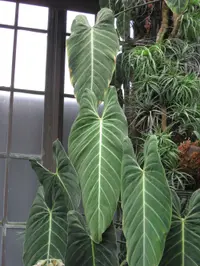
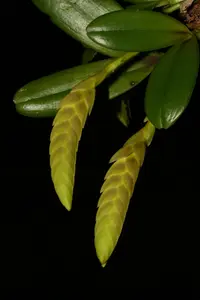
Bulbophyllum phalaenopsis is a warm-growing epiphytic orchid, known for its very large, textured leaves and unusual, foul-scented flower clusters. It often forms broad fans of foliage from a creeping rhizome, giving it a dramatic, tropical look.

This species is native to lowland rainforests of New Guinea, where it grows on trees in hot, humid, shaded conditions with constant air movement. Its need for high humidity, warmth, and excellent air circulation makes it more suitable for experienced growers or controlled environments such as orchid cabinets.

Those learning how to care for Bulbophyllum phalaenopsis should know it prefers stable warmth, bright but filtered light, and evenly moist, airy media rather than traditional potting soil.

Main Plant Requirements

Care Difficulty

Hard Care

Light Preference

Bright Indirect Light

Water Requirements

Keep Soil Moist

Temperature Preference

Tropical / Frost Sensitive

Hardiness Zone

Unknown

Soil Texture

Peaty, Organic-rich, Loamy

Soil pH

Acidic (5.5–6.5), Slightly acidic (6.5–7.0)

Soil Drainage

Moist but well-drained

Fertilization

Light (every 4–6 weeks)

Get Personalized Care Plan

Scan your plant to receive care tips personalized for your specific plant

Available on iOS and Android

How to Care for the Bulbophyllum phalaenopsis

This species prefers bright, filtered conditions that mimic shaded rainforest canopy light.

  • Provide 8–12 hours of bright, indirect light per day, such as dappled shade under 30–50% shade cloth or beneath a bright, sheer-curtained window.
  • Allow only gentle early morning sun; avoid strong midday and afternoon sun, which can scorch leaves and cause purple or yellow patches.
  • If new growth is thin, dark, and flowering is poor, increase light slightly; in summer, move a step deeper into shade, in winter a step closer to the light source.

This orchid requires consistently moist but fast-draining conditions around its roots and rhizomes.

  • Water when the surface of the medium feels just barely starting to dry but is still slightly cool and damp below, avoiding complete drying of the root zone.
  • Use a very open, airy mix and let excess water drain away fully; soft, blackened roots or a sour smell indicate overwatering and poor aeration.
  • In warm, active growth, expect to water more frequently; in cooler months, reduce slightly while still preventing the thick leaves and pseudobulbs from wrinkling.

This warm-growing species needs stable, frost-free conditions throughout the year.

  • Aim for 75–85°F (24–29°C) by day and 68–72°F (20–22°C) at night for best growth and flowering.
  • Protect from cold; growth slows below about 65°F (18°C) and the plant should not be exposed to temperatures under 55°F (13°C).
  • In hot spells above 90°F (32°C), increase airflow and humidity to prevent heat stress, and avoid placing the plant near hot, reflective surfaces.

This orchid needs high, stable humidity to maintain healthy foliage and roots.

  • Aim for 70–90% humidity, using a humidifier or enclosed growing space for reliable control.
  • Dry air causes limp, wrinkled leaves and stalled root growth; prolonged low humidity can invite spider mites.
  • Increase humidity with trays of wet gravel under, but not touching, the pot and by clustering plants together.

Bulbophyllum phalaenopsis grows best mounted or in a very loose, airy orchid mix instead of regular potting soil.

  • Use a coarse mix of large bark, sphagnum moss, and a little perlite or charcoal to keep structure open.
  • Ensure extremely fast drainage; water must flow through in seconds and the mix should never become dense or muddy.
  • Keep pH slightly acidic to neutral, roughly 5.5–7.0, which suits most orchid bark-based substrates.
  • Avoid fine peat, heavy compost, or garden soil, which hold water around roots and reduce oxygen, leading to rot.

This species is suitable for container growing when mounted or potted in very shallow, well-ventilated containers.

  • Choose a wide, shallow basket or slotted orchid pot that lets roots spread horizontally and air move freely.
  • Use rigid containers or secure hangers to support the plant’s large leaves, which can make pots swing or tip.
  • Line open baskets lightly with coarse sphagnum only at the sides to retain some moisture without blocking airflow.

This orchid benefits from light, consistent feeding that supports leafy growth without stressing its sensitive roots.

  • Use a balanced liquid fertilizer (around 20-20-20) at 1/4–1/2 strength, suitable for epiphytic orchids, when watering.
  • Feed Bulbophyllum phalaenopsis every 2–3 weeks during the warm, active growing season while it is producing leaves and roots.
  • Rinse the medium with plain water once a month to limit salt buildup that can burn fine roots.
  • Cut feeding to once every 4–6 weeks in winter, maintaining the same dilution or slightly weaker if growth slows.

Pruning needs are minimal and focus on hygiene and maintaining airflow around the plant.

  • Remove dead or yellowed leaves and spent flower spikes at the base using clean, sharp scissors or pruning snips.
  • Trim only clearly rotted or dried pseudobulbs, leaving firm ones to store water and nutrients for future growth.
  • Carry out most pruning just after flowering, when new growths are visible but still small.
  • Light thinning of crowded, tangled growth can improve air circulation and reduce fungal problems without altering the natural form of Bulbophyllum phalaenopsis.

This species prefers stable conditions and should only be disturbed when clear signs indicate the need for a new mount or pot.

  • Check for crowded roots climbing out of the basket or pot, sour smell, or very slow growth as signs that repotting is needed.
  • Plan to repot every 2–3 years, ideally in late winter to early spring, just as new roots begin to emerge.
  • Use a shallow basket or pot with very open drainage and a fresh, airy mix such as medium bark with sphagnum around new roots.
  • Gently remove old medium, keep healthy roots intact, secure the plant firmly, then keep humidity high and light slightly reduced for 1–2 weeks to limit stress.

Propagation is usually done by careful division rather than by seed, which is specialist work in a lab setting.

  • Divide clumps of Bulbophyllum phalaenopsis in late winter or early spring when new roots start to appear.
  • Use a sterile, sharp blade to separate sections with at least 3–4 healthy pseudobulbs and several living roots.
  • Replant divisions in a fine, airy orchid mix or on a mount, securing rhizomes firmly so new roots can attach.
  • Keep divisions in high humidity, gentle air movement, and moderate light until strong new growth confirms establishment.

This tropical orchid is not frost tolerant and must be kept warm and sheltered over winter in most climates.

  • Maintain indoor or greenhouse temperatures around 60–80°F in winter, avoiding drops below 55°F.
  • Move outdoor containers inside before night temperatures fall below 60°F, choosing a bright, draft-free spot.
  • Keep humidity at 60–80% with trays or a humidifier, but ensure light air movement to prevent fungal issues around Bulbophyllum phalaenopsis.
  • Water slightly less often in winter, allowing the medium to approach dryness while not remaining dry for extended periods.

Care Tips

Use open mounts

Mount the plant on cork, hardwood, or large-grade slab with very loose sphagnum only around the roots so air can move freely and the long leaves can hang naturally without breaking or trapping moisture.

Control odor exposure

Place the plant where strong air movement can quickly disperse the flower odor, such as near an exhaust fan or open window, so you can enjoy the foliage while limiting the scent indoors.

Targeted air circulation

Aim a small, oscillating fan to pass air across and slightly below the plant, not directly at it, to keep roots and pseudobulbs dry enough to resist rot while maintaining high ambient humidity.

Check root anchoring

Inspect mounts or baskets every 6–12 months and add fresh ties or clips only around the rhizome, not tightly on roots, so the heavy leaves and pseudobulbs remain firmly secured as they enlarge.

Prevent fungal stress

During prolonged cool, cloudy periods, reduce misting on the foliage, increase air movement, and remove any dead flower spikes or sheaths promptly to lower fungal pressure when caring for Bulbophyllum phalaenopsis.

Common Pests and Diseases

Spider mites

This pest thrives in the warm, stagnant air often used for Bulbophyllum phalaenopsis and can quickly damage the thin, leathery leaves. Symptoms include fine webbing, dull or stippled foliage, and leaf edge collapse in severe cases.

Solution

Increase humidity while also improving air movement around the plant, then rinse leaves thoroughly with a strong but gentle stream of lukewarm water, including the underside. Follow with 2–3 rounds of horticultural soap or a neem-based spray at 5–7 day intervals, and avoid letting the plant dry out excessively between waterings.

Soft scale

These insects hide along leaf bases, rhizomes, and pseudobulbs, feeding on sap and excreting sticky honeydew that encourages sooty mold. Symptoms include sticky surfaces, yellowing areas around feeding sites, and small dome-shaped bumps that do not brush off easily.

Solution

Isolate the plant, then physically remove scale with a cotton swab dipped in isopropyl alcohol, focusing on crevices around pseudobulbs and leaf sheaths. Repeat inspections weekly and apply horticultural oil or insecticidal soap to all plant surfaces and mount or basket parts, ensuring coverage of protected cracks where scale shelter.

Bacterial brown rot

This disease is favored by the constant high humidity and poor air circulation often used when growing Bulbophyllum phalaenopsis. Symptoms include rapidly spreading, soft, water-soaked patches on leaves or pseudobulbs that turn brown and emit a foul odor.

Solution

Immediately remove and discard all affected tissue with sterile tools, cutting well into healthy tissue and disinfecting blades between cuts. Reduce overhead misting, increase airflow, allow the medium or mount to dry slightly between waterings, and avoid water standing in leaf bases; in severe or recurrent cases, consider a labeled bactericide for orchids.

Fungal leaf spots

This disease develops readily on persistently wet foliage and in crowded collections where air movement is low. Symptoms include small dark or yellow spots that may enlarge, coalesce, and cause patches of dead tissue on the broad leaves.

Solution

Trim out badly affected leaves or spots with sterile scissors, then improve spacing and airflow so leaves dry within a few hours after watering. Avoid wetting the foliage late in the day, water at the base or from below when possible, and apply a suitable broad-spectrum fungicide labeled for orchids if new spots continue to appear.

Mealybugs

These insects prefer sheltered zones such as the base of pseudobulbs and in the roots or mounting material, where they suck sap and weaken the plant. Symptoms include white cottony clusters, distorted new growth, sticky honeydew, and slow decline despite adequate cultural conditions.

Solution

Remove visible mealybugs with a cotton swab dipped in isopropyl alcohol, then soak or thoroughly drench the mount, basket, and root zone with insecticidal soap or a systemic insecticide labeled for orchids. Inspect weekly for several cycles of new growth and consider repotting or remounting to discard heavily infested organic material, which supports more reliable Bulbophyllum phalaenopsis care instructions over time.

Interesting Facts

Largest Bulbophyllum leaves

This species develops unusually large, paddle-like leaves for the genus, often over 60 cm long, which help capture low, diffused light in its native shady rainforest habitat in New Guinea.

Carrion-mimicking flowers

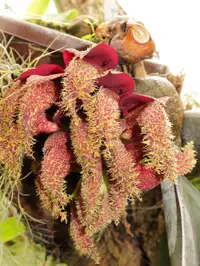
Its maroon, fleshy flowers emit a strong odor of rotting meat and visually mimic decaying flesh, an adaptation that attracts carrion-loving flies as pollinators.

Warm lowland epiphyte

The plant naturally grows as an epiphyte on tree trunks in hot, humid lowland forests, relying on tree bark and trapped organic debris rather than soil for anchorage and nutrients.

Botan icon

Did you know?

This orchid produces unusually large, leathery floral bracts and sepals that drape around the inflorescence, giving a bat-like or winged appearance that is striking even within a genus already known for bizarre floral forms.

FAQs about Bulbophyllum phalaenopsis

Lack of blooms usually comes from insufficient light, too little warmth, or no slight day–night temperature drop. Old, depleted potting media or a plant that was recently divided can also delay flowering until it re-establishes strong roots and pseudobulbs.

Grow Healthy Plants with Botan Care

Keep your plants happy and healthy with plant identification, disease detection, and easy care guidance.

Botan plant care app — identify plants on mobile

Explore More Plants