Bulbophyllum occultum Care

Bulbophyllum occultum

About Bulbophyllum occultum

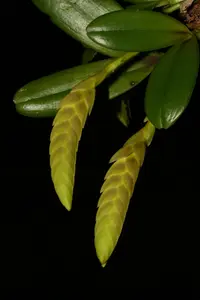
Bulbophyllum occultum is a miniature epiphytic orchid that typically grows on tree trunks and branches, forming small clumps with slender rhizomes and tiny pseudobulbs. Its flowers are usually small, intricate, and short-lived, often appreciated by collectors who enjoy unusual orchids rather than large, showy blooms.

This species is thought to originate from humid tropical forests, where it experiences constant moisture, warm temperatures, and moving air. It can be moderately challenging, as it dislikes drying out completely yet also needs excellent drainage and high humidity. For those who understand how to care for Bulbophyllum occultum, it can become a reliable, compact orchid for specialized indoor or greenhouse setups.


Main Plant Requirements

Care Difficulty

Hard Care

Light Preference

Bright Indirect Light

Water Requirements

Keep Soil Moist

Temperature Preference

Tropical / Frost Sensitive

Hardiness Zone

12–13

Soil Texture

Peaty, Organic-rich, Loamy

Soil pH

Acidic (5.5–6.5)

Soil Drainage

Moist but well-drained

Fertilization

Light (every 4–6 weeks)

Get Personalized Care Plan

Scan your plant to receive care tips personalized for your specific plant

Available on iOS and Android

How to Care for the Bulbophyllum occultum

This orchid prefers soft, filtered light that mimics bright forest shade.

  • Provide 8–12 hours of bright, indirect light daily, such as dappled shade under taller plants or a shaded greenhouse bench.
  • Allow brief early morning sun, but protect Bulbophyllum occultum from strong midday and afternoon sun that can scorch leaves and cause yellow, leathery patches.
  • In winter, compensate for shorter days with brighter but still filtered light, while in summer increase shading to avoid overheating and light stress.

This species prefers constant, light moisture around its roots without staying waterlogged.

  • Water when the surface and exposed roots feel just barely starting to dry, usually every 1–3 days in warm, active growth conditions.
  • Ensure excellent drainage with open, airy orchid media so water runs through quickly, reducing the risk of root rot, mushy pseudobulbs, and sour smells from stagnation.
  • In cooler months reduce frequency slightly, watching for wrinkled pseudobulbs or limp leaves as signs of underwatering and black, soft roots as signs of overwatering.

This orchid performs best in consistently warm, stable conditions with no frost exposure.

  • Aim for 68–80°F (20–27°C) by day and 60–68°F (16–20°C) at night for steady growth and flowering.
  • Avoid temperatures below 55°F (13°C), as cold can stunt growth and damage roots; protect from drafts and sudden night temperature drops.
  • In hot periods up to 86°F (30°C), increase air movement and humidity to prevent heat stress, and avoid placing the plant near heat sources or reflective hot surfaces.

This orchid needs sustained high humidity to grow well indoors.

  • Aim for 70–85% humidity, using a hygrometer to monitor levels around Bulbophyllum occultum.
  • Dry air below 60% leads to shriveled pseudobulbs, dull leaves, and buds aborting before opening.
  • Increase humidity with a nearby humidifier, covered humidity tray, and grouping plants, while keeping air gently moving to prevent fungal problems.

This epiphytic orchid requires a very airy, fast-draining, organic-based medium rather than standard potting soil.

  • Use a loose mix of medium bark, fine bark, and sphagnum moss with some perlite to hold moisture but keep plenty of air spaces.
  • Ensure rapid drainage so roots never sit in stagnant water, as Bulbophyllum occultum is prone to rot in dense or compact media.
  • Aim for slightly acidic conditions around pH 5.5–6.5, which suits most orchid bark-based substrates.
  • Avoid garden soil, peat-heavy mixes, or any blend that compacts when wet; replace or refresh components if they start to break down and hold water too long.

This species is very suitable for container culture, especially in shallow orchid pots or baskets.

  • Choose shallow, wide containers to accommodate spreading rhizomes and prevent crowded pseudobulbs in deep, unused media.
  • Use slotted or net pots that allow side ventilation so roots can dry quickly after watering while still accessing high humidity.
  • Stabilize lightweight pots with a heavier outer cachepot or decorative stones if the foliage mass makes the container prone to tipping.

Feeding should be light but consistent to support flowering without burning the fine roots of Bulbophyllum occultum.

  • Use a balanced orchid fertilizer (around 20-20-20) diluted to 1⁄4–1⁄2 strength in low-mineral water.
  • Apply every 2–3 weeks during active growth in spring and summer, skipping if roots look stressed or shriveled.
  • Reduce feeding to once every 4–6 weeks in fall and winter, or pause if growth is very slow.
  • Avoid compost or slow-release pellets in the pot; they break down unevenly and can damage roots in tight orchid media.

Pruning needs are minimal and mostly hygienic, focusing on maintaining healthy, unobstructed growth in Bulbophyllum occultum.

  • Best timing is after a flowering flush, when new growths are visible and easy to avoid.
  • Remove dead, yellowed, or rotting leaves and spent flower spikes with small, sharp, sterilized scissors.
  • Thin out clearly dead pseudobulbs to improve air movement, but keep any that are green or firm.
  • Pruning maintains plant health and airflow rather than shaping; avoid cutting healthy rhizomes that connect bulbs.

Repotting is occasional and should be done carefully to avoid damaging the fine roots and rhizomes.

  • Repot every 2–3 years, or when roots circle the pot, medium decomposes, or growth creeps over the container edge.
  • Choose late winter to early spring, just before strong new root growth, to shorten recovery time.
  • Gently remove old, decayed medium, keeping the rhizome intact; trim only dead, mushy roots with sterile tools.
  • Set the plant on fresh, airy orchid mix, secure it firmly, water lightly, and keep humidity high until new roots anchor.

Propagation of Bulbophyllum occultum is done mainly by careful division rather than seed in home settings.

  • Plan divisions in late winter or early spring, just before active growth begins.
  • Divide the rhizome so each section carries at least 3–4 healthy pseudobulbs and visible new growth points.
  • Use sterilized cutting tools and dust fresh cuts lightly with powdered sulfur or cinnamon to limit rot.
  • Place divisions in small pots with fresh orchid mix, provide high humidity, gentle airflow, and bright shade until established.

This orchid is frost-tender and needs warm, sheltered conditions through winter.

  • Keep indoor or in a heated greenhouse when outdoor temperatures drop below 55°F, as frost can kill foliage and roots.
  • Maintain 60–70°F with high humidity and bright, indirect light for stable winter health.
  • Water less often in winter, letting the medium approach dryness but never remain dry for long.
  • Avoid cold drafts and uninsulated windowsills; use a humidity tray rather than misting in very cool rooms.

Care Tips

Mounting strategy

Fix the plant on a small, moisture-retentive mount like cork or tree fern with a thin pad of long-fiber sphagnum so roots dry quickly but do not stay bare, and orient the rhizome so new growth has room to creep across the surface without hitting the edge.

Microclimate shielding

Place the plant behind a taller orchid or a lattice screen to break air currents and reduce leaf desiccation while still allowing strong air movement around the mount or pot.

Targeted hydration checks

Pinch the mount or top 0.5–1 cm of medium between two fingers; if it feels cool but not wet, lightly mist the root zone instead of doing a full soak to avoid overhydration of fine roots.

Flower spike protection

Once buds appear, keep the plant slightly away from strong fan drafts and avoid touching the developing spikes, as vibration and sudden drying often cause bud blast in this genus.

Preventing rot pockets

When tying the plant, use the minimum amount of sphagnum and avoid packing moss tightly around the pseudobulbs, leaving small air gaps so water cannot collect in crowns and cause localized rot while caring for Bulbophyllum occultum.

Common Pests and Diseases

Spider mites

This pest thrives on Bulbophyllum in warm, dry, still air, causing stippling, dull leaves, and fine webbing on the undersides. Symptoms include slowed growth and eventual leaf yellowing if populations are high.

Solution

Increase humidity and air movement, then rinse foliage thoroughly under lukewarm water, focusing on leaf undersides and between pseudobulbs. For persistent infestations, use repeated applications of insecticidal soap or neem oil, ensuring full coverage but avoiding spraying in direct sun or on heat-stressed plants.

Scale insects

These insects attach tightly to pseudobulbs, leaf bases, and rhizomes, appearing as small brown or off-white bumps. Symptoms include sticky honeydew, sooty mold on nearby surfaces, and gradual decline in vigor.

Solution

Manually remove visible scale with a cotton swab dipped in isopropyl alcohol, taking care around tight growths and under leaf sheaths. Follow up with several rounds of horticultural oil or insecticidal soap at 7–10 day intervals, and isolate the plant until new growth appears clean as part of Bulbophyllum occultum care instructions.

Mealybugs

These insects hide in crevices between pseudobulbs and under leaf sheaths, leaving white cottony masses. Symptoms include distorted new growth, sticky residue, and general weakening of the plant.

Solution

Inspect all tight spaces around pseudobulbs, then remove visible mealybugs with alcohol-dipped cotton swabs and gently wash the plant. Repeat treatments with insecticidal soap or neem oil, and reduce excess nitrogen fertilization, which can promote soft, mealybug-prone growth.

Bacterial soft rot

This disease causes rapidly spreading, foul-smelling wet lesions in pseudobulbs and the rhizome, often starting where water sits or tissue is damaged. Symptoms include collapsed, mushy bulbs and a strong odor.

Solution

Immediately cut away all affected tissue with a sterile tool, discarding it far from other orchids, and dust cuts with a dry fungicide or powdered cinnamon as a mild desiccant. Improve air movement, reduce overhead watering, and avoid water sitting in leaf axils or around fresh wounds to prevent recurrence.

Fungal leaf spots

This disease develops as small yellow, brown, or black spots on leaves that may enlarge or merge under cool, humid, stagnant conditions. Symptoms include cosmetic damage at first, but severe cases can reduce photosynthesis and weaken the plant over time.

Solution

Remove and discard badly spotted leaves, then improve spacing and airflow around the plant, watering early in the day so foliage dries quickly. If new spots continue to appear, apply a broad-spectrum orchid-safe fungicide according to label directions and keep leaves dry during treatment periods.

Interesting Facts

Miniature epiphytic habit

This species is a very small epiphyte that naturally anchors to tree bark rather than soil, forming compact clumps of tiny pseudobulbs and leaves close to the substrate.

Shy, downward flowers

Its small flowers are typically held beneath the leaves and slightly nodding, which makes them easy to overlook in the wild and contributes to the species name occultum, meaning hidden or concealed.

Specialist forest niche

It is associated with humid, shaded forest habitats in Southeast Asia, where it benefits from stable moisture, high air humidity, and filtered light within the forest canopy.

FAQs about Bulbophyllum occultum

Lack of flowering usually comes from insufficient light, overly warm nights, or irregular fertilizer. This species often needs a cooler, slightly drier rest after growth to trigger spikes, plus stable humidity and good air movement.

Grow Healthy Plants with Botan Care

Keep your plants happy and healthy with plant identification, disease detection, and easy care guidance.

Botan plant care app — identify plants on mobile

Explore More Plants