Neoregelia farinosa Care

Neoregelia farinosa

About Neoregelia farinosa

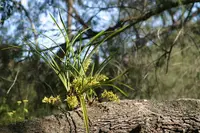
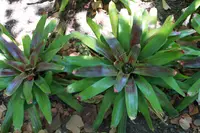
Neoregelia farinosa is a compact bromeliad known for its rosette of stiff, often spiny-edged leaves that can flush with bright color toward the center. It usually grows as an epiphyte, anchoring to tree branches in the tropical regions of Brazil, where it collects water in its central cup. The plant’s slow growth, modest size, and ability to tolerate some indoor conditions make it relatively approachable for hobbyists. Understanding how to care for Neoregelia farinosa mainly comes down to providing bright, indirect light, good air movement, and a free-draining medium that never stays waterlogged.

Main Plant Requirements

Care Difficulty

Moderate Care

Light Preference

Partial Shade

Water Requirements

Moderate Water

Temperature Preference

Tropical / Frost Sensitive

Hardiness Zone

10–12

Soil Texture

Sandy, Loamy, Organic-rich

Soil pH

Acidic (5.5–6.5)

Soil Drainage

Moist but well-drained

Fertilization

Light (every 4–6 weeks)

Get Personalized Care Plan

Scan your plant to receive care tips personalized for your specific plant

Available on iOS and Android

How to Care for the Neoregelia farinosa

This bromeliad prefers bright, indirect light that mimics dappled tropical sun.

  • Provide 4–6 hours of bright, filtered light daily, such as morning sun with light shade or sheer curtain protection by midday.
  • Tolerates partial shade, but very low light fades color and reduces tank and pup formation; shift gradually to brighter spots if foliage turns uniformly dark green.
  • Protect from harsh midday or late-afternoon sun, which can scorch leaves or bleach centers, especially in summer or in very reflective outdoor positions.

Watering focuses on keeping the central cup filled while avoiding waterlogged roots.

  • Keep the leaf tank 1/2–3/4 full with fresh water and flush it every 1–2 weeks to remove debris and prevent stagnation.
  • Allow the top 2–3 cm of any potting mix to dry before watering the root zone; ensure fast drainage so excess water runs out quickly.
  • In cooler months reduce watering frequency and cup refills; pale, curling leaves suggest underwatering, while a sour smell, mushy base, or algae in the cup suggests overwatering or poor hygiene.

This species prefers warm, stable temperatures similar to a humid subtropical climate.

  • Aim for 65–80°F (18–27°C) for active growth; short spikes up to 85°F (29°C) are tolerated if shade and humidity are adequate.
  • Avoid temperatures below 55°F (13°C); brief dips to 40–45°F (4–7°C) may be survived but can cause leaf spotting and stress.
  • Protect from frost and cold winds outdoors, and from hot, dry drafts; in heat waves above 90°F (32°C), increase shade and airflow to limit leaf scorch and cup stagnation.

This bromeliad prefers moderately humid air but copes with typical indoor conditions if not kept too dry.

  • Aim for 50–70% humidity to keep rosettes firm and foliage color stable.
  • Tolerates brief drops near 35–40%, but prolonged very dry air causes leaf tip browning and curled edges.
  • Increase humidity with a nearby pebble tray or grouped plants rather than misting directly into the central cup.

Neoregelia farinosa grows best in a very airy, fast-draining, organic-rich mix similar to orchid or epiphyte substrates.

  • Use a loose mix of roughly equal parts fine orchid bark, chunky perlite or pumice, and peat or coco coir for moisture retention without clogging pores.
  • Ensure rapid drainage; water should run through in seconds and the mix should feel springy, not compact or sticky.
  • Keep pH slightly acidic to neutral (about 5.5–7.0), which supports nutrient uptake while limiting salt buildup in the cup and roots.
  • Avoid dense garden soil, pure peat, or heavy compost that stays wet, as these encourage crown and root rot in the shallow root system.

This species is well suited to container growing due to its compact rosette and shallow roots.

  • Choose a wide, low pot that allows the rosette to sit above the rim so the central cup does not trap overflowed water from the mix.
  • Select a stable, heavier container if the plant offsets heavily, to prevent tipping as the cluster spreads sideways.
  • Use a pot with multiple small drainage holes to let water exit quickly while keeping the airy mix from washing out.

Feeding supports compact growth and good leaf color in Neoregelia farinosa grown in containers.

  • Use a balanced liquid fertilizer at 1/4 strength, labeled for bromeliads or houseplants, applied to the root zone rather than the central cup.
  • Feed every 4–6 weeks during spring and summer when growth is active.
  • Avoid high-nitrogen products, which can weaken color and make leaves soft.
  • Stop feeding in fall and winter, when shorter days and cooler temperatures slow growth.

Pruning focuses on hygiene and managing offsets rather than reshaping this bromeliad.

  • In late winter or early spring, remove brown or damaged leaves at the base with clean, sharp scissors or pruners.
  • Cut back spent flower rosettes once they fade, encouraging energy to shift into offsets (pups).
  • Thin overcrowded pups to maintain airflow and an attractive clump shape.
  • Disinfect tools before and after pruning to reduce disease spread.

Repotting is infrequent and mainly done to refresh mix or give space to offsets rather than to enlarge the root system.

  • Plan to repot every 2–3 years, or when roots circle the pot or the plant becomes top-heavy and unstable.
  • Best timing is in spring, before strong warm-season growth, so the plant recovers quickly.
  • Use a shallow, wide pot with a very free-draining mix, such as orchid bark, coarse perlite, and a small amount of peat or coco coir.
  • Handle the root ball gently, keep the central cup upright, and water lightly for the first week to limit stress.

Propagation is commonly done by removing and replanting offsets rather than by seed.

  • Wait until pups reach about 1/3–1/2 the size of the mother plant, usually in late spring or summer.
  • Gently twist or cut pups away at the base with sterile pruners, keeping a small piece of stem attached.
  • Plant offsets in a coarse, airy bromeliad or orchid-type mix and keep them just barely moist.
  • Provide bright, filtered light, warm temperatures (70–80°F), and high humidity to support rooting.

Winter care for this tropical bromeliad focuses on preventing frost damage and avoiding rot in cool, dark conditions.

  • Treat it as frost-sensitive; aim to keep temperatures above 50°F, especially at night.
  • Move container plants indoors or into a greenhouse before the first light frost is forecast.
  • Provide bright indirect light indoors and reduce watering, keeping the potting mix only slightly moist.
  • Keep the central cup less full in cool conditions to lower the risk of cold-related rot.

Care Tips

Tank water hygiene

Empty the central cup completely every 1–2 weeks, rinse with room-temperature water, and refill lightly to reduce mosquito larvae, algae, and rot-causing bacteria while still keeping the rosette functional.

Support pups early

Once offsets reach about 1/3 the size of the parent, stake or wedge them gently with inert materials like cork or orchid bark so they grow upright and do not snap under their own weight.

Detach pups correctly

When pups are at least 1/2–2/3 the size of the mother, cut them off with a sterile, sharp blade as close to the base as possible, dust the cut with sulfur or cinnamon, and allow 1–2 days to callus before potting.

Use open mounts

In bright, humid environments, mount the plant on cork or hardwood with sphagnum only around the roots, then mist the root area frequently so the plant dries quickly yet remains hydrated, which mimics its natural epiphytic habit.

Rotate for color

Rotate the plant 1/4 turn every 1–2 weeks so all sides receive similar light exposure, which promotes even rosette symmetry and more uniform leaf coloration when growing Neoregelia farinosa.

Common Pests and Diseases

Scale insects

This pest feeds on leaf bases and the central cup, weakening the plant and causing yellowing or stunted growth. Symptoms include small brown or tan bumps, sticky honeydew, and sooty mold on leaves.

Solution

Remove heavily infested leaves if possible and wipe remaining foliage with a cotton pad dipped in diluted isopropyl alcohol, focusing on leaf bases and hidden crevices. Rinse the tank and leaves with lukewarm water, then use a labeled horticultural oil or insecticidal soap in repeated treatments, keeping the plant in bright, airy conditions as part of Neoregelia farinosa care instructions.

Mealybugs

These insects hide in leaf axils and around the rosette center, sucking sap and causing wilted, deformed, or yellowing leaves. Symptoms include white cottony masses and sticky residue on nearby surfaces.

Solution

Flush the rosette and leaf bases with a firm stream of water, then spot-treat visible clusters with cotton swabs dipped in diluted alcohol. Follow up with insecticidal soap or a systemic insecticide labeled for bromeliads and isolate the plant until new growth appears clean.

Mosquito larvae

This pest develops inside the water held in the central tank, especially when water is stagnant and organic debris accumulates. Symptoms include visible wriggling larvae in the cup and an increase in adult mosquitoes around the plant.

Solution

Empty and rinse the central cup at least weekly, scrubbing gently to remove debris and eggs, then refill with fresh water just below the leaf bases. In outdoor or greenhouse settings, apply a biological larvicide containing Bacillus thuringiensis israelensis (Bti) as directed, and avoid letting fallen leaves or fertilizer residues build up in the tank.

Bacterial leaf spot

This disease often starts at water-holding leaf bases, producing water-soaked spots that turn brown with yellow halos. Symptoms include a sour smell and rapidly expanding lesions, especially in warm, stagnant, high-humidity conditions.

Solution

Remove and discard affected leaves and avoid splashing water onto foliage from plant to plant. Improve air movement, keep the central cup water fresh, and if the problem progresses use a copper-based bactericide labeled for ornamental foliage, following all label precautions for bromeliads.

Fungal crown rot

This disease affects the central rosette and cup when water stays stagnant and temperatures are cool, leading to mushy, collapsing leaf bases. Symptoms include a foul odor, browning at the plant center, and easy leaf pull-out.

Solution

At early stages, cut away all soft, rotting tissue and keep the plant in a warmer, well-ventilated spot with the cup kept only lightly filled or temporarily dry. Discard severely affected plants to protect nearby bromeliads, and avoid overwatering the potting mix while using a very free-draining, airy substrate to grow Neoregelia farinosa.

Interesting Facts

Powdery leaf coating

The leaves often have a fine, farinose (powder-like) bloom that inspired the species name farinosa, referring to the slightly dusty or mealy appearance on parts of the leaf surface.

Color from light stress

This species develops its strongest red and purple tones when exposed to higher light levels, a response linked to increased production of protective pigments called anthocyanins that shield leaf tissues from excess sunlight.

Tank micro‑ecosystem

Its rosette forms a water-holding tank where debris and insects decompose, releasing nutrients that the plant absorbs through specialized leaf tissues rather than relying heavily on its roots.

FAQs about Neoregelia farinosa

This bromeliad adapts to both, but performs best outdoors in warm, frost-free climates with bright shade and good air movement. In cooler regions, Neoregelia farinosa indoor care under strong indirect light provides more stable conditions and longer ornamental value.

Grow Healthy Plants with Botan Care

Keep your plants happy and healthy with plant identification, disease detection, and easy care guidance.

Botan plant care app — identify plants on mobile

Explore More Plants