Krimson Princess Hoya Care (Hoya carnosa 'Rubra')

Also known as: Wax Plant
Krimson Princess Hoya

About Krimson Princess Hoya

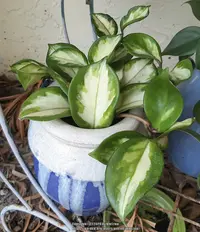
Hoya carnosa 'Rubra', often called Krimson Princess hoya, is a slow-growing tropical vine prized for its variegated pink, cream, and green leaves. It is an epiphytic plant, meaning it naturally grows on trees rather than in heavy soil.

In cultivation it usually grows as a trailing or climbing houseplant, developing thick, waxy foliage and, in mature plants, clusters of star-shaped, fragrant flowers. Native to Southeast Asia and surrounding regions, it adapts well to indoor conditions when light and watering are balanced.

Its succulent-like leaves store water, which makes it tolerant of short dry spells and generally easier to manage for beginners learning how to care for Krimson Princess Hoya.

Main Plant Requirements

Care Difficulty

Easy Care

Light Preference

Bright Indirect Light

Water Requirements

Low Water

Temperature Preference

Tropical / Frost Sensitive

Hardiness Zone

10–12

Soil Texture

Sandy, Loamy, Organic-rich

Soil pH

Acidic (5.5–6.5), Slightly acidic (6.5–7.0)

Soil Drainage

Well-drained

Fertilization

Light (every 4–6 weeks)

Get Personalized Care Plan

Scan your plant to receive care tips personalized for your specific plant

Available on iOS and Android

How to Care for the Krimson Princess Hoya

This variegated hoya prefers bright, indirect light to maintain healthy growth and leaf color.

  • Provide 6–8 hours of bright, filtered light each day, such as near an east- or west-facing window with sheer curtains.
  • Tolerates light shade, but low light reduces variegation and flowering; Krimson Princess Hoya may develop mostly green leaves in dim corners.
  • Avoid harsh midday sun, especially behind hot glass; direct afternoon sun can scorch leaves, causing pale patches or crispy edges, particularly in summer.

This succulent-leaved hoya prefers thorough but infrequent watering that allows the soil to dry slightly between waterings.

  • Water once the top 2–4 cm of soil feels dry, letting water run through freely, then discard any excess from saucers or cachepots.
  • In spring and summer, expect to water more often as growth and evaporation increase; in fall and winter, extend the drying period noticeably.
  • Watch leaves and stems for cues: yellowing, mushy leaves suggest overwatering and poor drainage, while thin, wrinkled leaves indicate the plant stayed dry too long.

This hoya grows best in stable, warm conditions without sudden temperature swings.

  • Aim for 65–80°F (18–27°C) for active growth; brief highs up to 85°F (29°C) are tolerated if humidity and airflow are adequate.
  • Avoid temperatures below 55°F (13°C); exposure near 40–45°F (4–7°C) can cause leaf drop and lasting damage even without visible frost.
  • Protect from drafts, heater blasts, and cold window glass in winter, and in hot summers provide shade and ventilation to prevent heat stress above 85°F (29°C).

This plant handles typical indoor humidity but benefits from slightly elevated levels.

  • Aim for 40–60% humidity; stable levels help maintain leaf variegation on Krimson Princess Hoya.
  • It tolerates short periods of dry air, but very low humidity can slow growth and reduce flowering.
  • Watch for curling, thin leaves or stalled vines as signs of humidity stress, and increase humidity with a nearby tray of water and pebbles or a room humidifier.

Hoya carnosa 'Rubra' prefers a loose, airy mix that drains rapidly yet retains slight moisture around the roots.

  • Use a mix of roughly 40% fine bark, 30% perlite or pumice, and 30% peat or coco coir for structure and moisture balance.
  • Target a slightly acidic to neutral pH around 6.0–7.0 to support nutrient availability without stressing roots.
  • Ensure the mix feels chunky and never compacts; add extra perlite or bark if water takes more than a few seconds to drain through.
  • Avoid heavy garden soil or mixes dominated by fine peat that stay wet and suffocate roots, which encourages rot.

This species is very suitable for container growing, including hanging baskets and pots with supports.

  • Choose a pot just 2–4 cm wider than the root ball so the mix dries evenly between waterings.
  • Use heavier ceramic or clay containers for trailing or climbing vines to reduce tipping risk as the plant gains mass.
  • Pair the container with a trellis or hoop placed firmly into the pot to distribute the weight of vines and reduce strain on the root zone.

Balanced feeding supports compact growth and flowering in Hoya carnosa 'Rubra'.

  • Use a balanced liquid fertilizer (such as 10-10-10 or 20-20-20) at 1/4–1/2 strength during active growth in spring–summer.
  • Apply every 4–6 weeks to moist soil; avoid feeding very dry or waterlogged roots.
  • Pause or reduce feeding to 1 light dose in late fall–winter when growth slows.
  • Optionally use a slow-release fertilizer in spring, or a thin layer of mature compost mixed into the topsoil.

Thoughtful pruning keeps Hoya carnosa 'Rubra' manageable and supports flowering over time.

  • Best time is late winter to early spring, before strong new growth starts.
  • Remove dead, yellowing, or damaged leaves and tangled or crossing vines with clean, sharp scissors or pruners.
  • Shorten overly long, leggy stems to shape the plant and encourage branching near the base.
  • Do not cut off old flower spurs; clusters often form repeatedly on the same short stalks.

This hoya prefers slightly snug pots and only needs periodic repotting.

  • Repot every 2–3 years or when roots circle the pot, emerge from drainage holes, or growth slows despite good care.
  • Choose late spring as the best time, when active growth helps the plant recover from root disturbance.
  • Move to a pot only 2–5 cm wider, using a fast-draining mix suited to epiphytes, such as chunky peat-free indoor mix with perlite and bark.
  • Water lightly after repotting, keep in bright but indirect light, and avoid heavy fertilizing for 3–4 weeks to limit root stress.

New plants of Hoya carnosa 'Rubra' are most often produced from stem cuttings.

  • Take 7–12 cm stem cuttings in late spring–summer with 2–3 nodes and at least 1–2 leaves.
  • Remove lower leaves and place the cut end in moist, airy substrate or water; keep nodes just below the surface or waterline.
  • Maintain bright, indirect light, high humidity, and temperatures around 70–80°F for reliable rooting.
  • After roots reach about 3–5 cm, pot into a small, well-drained mix and keep slightly on the dry side between waterings.

This hoya is frost-sensitive and needs mild, protected conditions in winter.

  • For outdoor containers in cool climates, move plants indoors before temperatures drop near 50°F.
  • Indoors, provide bright, indirect light and keep temperatures around 60–75°F.
  • Water sparingly in winter, allowing the top substrate to dry more deeply between waterings.
  • Avoid cold drafts and keep the pot off very cold windowsills to safeguard roots and foliage.

Care Tips

Support For Vines

Provide a small trellis, hoop, or horizontal wire and loosely tie vines with soft plant ties so the plant can photosynthesize efficiently along its entire length and develop stronger, fuller growth.

Encourage Flowering

Once the plant is mature, avoid moving or rotating it during the active growing season so that developing peduncles (flower spurs) are not disturbed, which helps preserve future bloom sites.

Do Not Remove Spent Spurs

After flowers fade, leave the small stalks (peduncles) in place instead of trimming them, since the plant often reblooms from the same structures year after year.

Seasonal Rest Period

In winter, give the plant a slight rest by reducing fertilizer and avoiding repotting, which supports more reliable flowering during the following warm season when growing Krimson Princess Hoya.

Targeted Pest Monitoring

Inspect leaf nodes, undersides of leaves, and along the stems every few weeks for early signs of mealybugs or scale, and treat promptly with a cotton swab dipped in isopropyl alcohol before infestations spread.

Common Pests and Diseases

Mealybugs

This pest often hides in leaf axils, along stems, and under leaves, feeding on sap and causing distorted, sticky foliage. Symptoms include white, cottony clusters and sometimes sooty mold developing on the honeydew they excrete.

Solution

Isolate the plant, then dab visible insects with cotton swabs dipped in 70% isopropyl alcohol and wipe leaf nodes thoroughly. Follow with a gentle shower of lukewarm water and repeat treatments weekly; for persistent infestations, use a labeled insecticidal soap or neem oil, ensuring thorough coverage of crevices along the vines.

Spider mites

These insects favor the relatively dry, warm conditions often used for Krimson Princess Hoya indoor care and can cause fine webbing, stippled leaves, and a dull, dusty appearance. Symptoms include tiny yellow specks and gradual leaf drop if populations build up.

Solution

Increase humidity around the plant and rinse both leaf surfaces under a gentle shower, focusing on the undersides where mites cluster. Use repeated applications of insecticidal soap or horticultural oil every 5–7 days, making sure to treat nearby plants and clean surrounding surfaces to remove residual mites and eggs.

Soft scale

This pest appears as small, smooth, brown or tan bumps along stems and leaf midribs and feeds continuously on plant sap. Symptoms include sticky honeydew, leaf yellowing, and reduced growth over time.

Solution

Manually remove scale by gently scraping or wiping with an alcohol-moistened cloth, paying close attention to woody stems and older vines. After physical removal, apply horticultural oil or insecticidal soap to all plant surfaces and repeat at 7–10 day intervals until no new scale insects appear.

Sooty mold

This disease develops as black, soot-like fungal growth on leaves and stems that have accumulated honeydew from pests such as mealybugs or scale. Symptoms include dark, dirty-looking foliage that may interfere with photosynthesis and reduce vigor.

Solution

Address the underlying sap-sucking pest population first, then gently wipe or rinse affected leaves with lukewarm water and a small amount of mild, fragrance-free soap. Improve air circulation and light levels so surfaces dry more quickly, which reduces new fungal growth and helps leaves recover.

Edema

This disorder occurs when roots take up water faster than leaves can transpire, which can happen in cool, low-light indoor conditions with overly wet soil. Symptoms include corky, blister-like spots or rough patches on leaves, especially on older growth.

Solution

Allow the potting mix to dry more between waterings, ensuring the container drains freely and no water remains in saucers. Provide brighter indirect light and stable temperatures, and remove only severely affected leaves; new growth typically forms with fewer or no edema spots once watering is corrected.

Interesting Facts

Natural chimeric variegation

Its pink, cream, and green patterns come from a stable chimeric mutation in the leaf tissue, meaning different cell layers carry different genetic instructions for chlorophyll production.

Color shifts with light

Young leaves often emerge bright pink and then mature to cream and green, and this color expression varies with light intensity, making each plant’s pattern slightly different over time.

Selected from common wax plant

This cultivar originated as a variegated sport of the standard Hoya carnosa, selected and propagated for its distinct cream-centered leaves with green margins, which is the reverse of the related cultivar Hoya carnosa 'Krimson Queen'.

Botan icon

Did you know?

In older horticultural literature and trade, this plant has often been listed under the name Hoya carnosa 'Krimson Princess', so many long-time growers know it primarily by that commercial name rather than the botanical-style epithet 'Rubra'.

FAQs about Krimson Princess Hoya

Lack of flowering is usually linked to a plant that is still immature, has been recently repotted, or experienced stress. Avoid removing old flower spurs, and keep conditions stable over time so it can store enough energy.

Grow Healthy Plants with Botan Care

Keep your plants happy and healthy with plant identification, disease detection, and easy care guidance.

Botan plant care app — identify plants on mobile

Explore More Plants