Watermelon Peperomia Care (Peperomia argyraea)

Watermelon Peperomia

About Watermelon Peperomia

Watermelon peperomia, Peperomia argyraea, is a compact tropical houseplant grown mainly for its patterned foliage. It is a true peperomia, not related to edible watermelons.

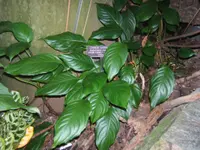
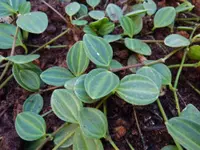
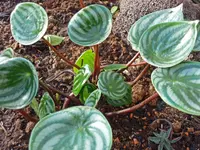
The plant forms a low, clumping rosette of thick, oval leaves with silver stripes and reddish stems. It stays small and is suitable for shelves, desks, and small spaces.

In nature it occurs in tropical South America, often in shaded, humid forest habitats. These origins explain its preference for bright, indirect light, moderate moisture, and airy potting mixes.

Its slow growth, sturdy leaves, and modest size make it relatively easy to manage. Learning how to care for Watermelon Peperomia mostly involves avoiding overwatering and strong direct sun.

Main Plant Requirements

Care Difficulty

Easy Care

Light Preference

Bright Indirect Light

Water Requirements

Moderate Water

Temperature Preference

Tropical / Frost Sensitive

Hardiness Zone

11–12

Soil Texture

Loamy, Peaty, Organic-rich

Soil pH

Acidic (5.5–6.5), Slightly acidic (6.5–7.0)

Soil Drainage

Well-drained

Fertilization

Light (every 4–6 weeks)

Get Personalized Care Plan

Scan your plant to receive care tips personalized for your specific plant

Available on iOS and Android

How to Care for the Watermelon Peperomia

This plant prefers bright, indirect light that mimics a lightly shaded forest floor.

  • Provide 6–8 hours of bright, filtered light each day, such as near an east- or north-facing window for typical Watermelon Peperomia indoor care.
  • Tolerates light shade, but long-term low light causes stretched stems and faded leaf patterning; move closer to a bright window if growth looks sparse.
  • Protect from harsh midday and afternoon sun, which can cause silver areas to dull and leaf scorch, especially in summer; sheer curtains help diffuse light.

This species stores some moisture in its leaves, so it prefers slightly dry soil between waterings.

  • Water only when the top 2–4 cm of soil feels dry, then water thoroughly so excess drains away from the root zone.
  • In spring and summer, expect to water more often as growth is faster; in fall and winter, extend the drying period to reduce rot risk for Peperomia argyraea.
  • Watch leaves for cues: soft, yellowing, and translucent foliage suggests overwatering, while thin, drooping, or cupped leaves often indicate underwatering.

This plant grows best in stable, warm conditions without sudden temperature swings.

  • Keep day temperatures around 65–80°F (18–27°C) for steady growth, with only a small drop at night.
  • Avoid exposure below 55°F (13°C); brief dips may slow growth, but near-freezing or frost will cause leaf and stem damage.
  • In hot periods above 85°F (29°C), protect from direct sun, increase air movement, and check soil more often so it does not stay soggy in warm conditions.

This species prefers moderate household humidity but reacts if air stays very dry.

  • Aim for 40–60% humidity; it tolerates brief dips lower but prolonged air under 30% can stress Watermelon Peperomia.
  • Crisping leaf edges, curling, and stalled growth often indicate humidity stress combined with underwatering.
  • Increase humidity by grouping plants, placing pots on a pebble tray with water below the pot base, or using a small room humidifier.

This plant needs a loose, airy, fast-draining mix that still holds moderate moisture.

  • Use a base of peat or coco coir with added perlite and fine orchid bark to create a chunky, organic-rich structure.
  • Target slightly acidic to neutral pH around 6.0–7.0, which supports balanced nutrient availability for Peperomia argyraea.
  • Ensure the mix drains freely so water does not pool; soggy, compacted soil quickly leads to root rot in this shallow-rooted species.
  • Improve aeration by increasing coarse components like perlite or pumice if water remains in the pot longer than 3–4 days.

This species is very suitable for container growing due to its compact, shallow root system.

  • Choose a wide, relatively shallow pot so roots can spread horizontally without leaving large unused soil volume that stays wet.
  • Select a breathable material like terracotta if the existing environment is humid, as it allows faster evaporation and reduces waterlogging risk.
  • Stabilize lightweight containers with decorative stones or a heavier cachepot, since the broad foliage can make the plant top-heavy when the pot is dry.

This compact plant benefits from modest feeding to support foliage growth without overloading the roots.

  • Use a balanced liquid fertilizer (around 10-10-10 or 20-20-20) diluted to 25–50% strength for Watermelon Peperomia.
  • Feed every 4–6 weeks during spring and summer when growth is active.
  • Skip or reduce feeding to 1 light application in fall and winter, if growth slows noticeably.
  • Avoid rich compost or heavy slow-release pellets that can keep the potting mix too salty for fine roots.

Pruning Peperomia argyraea is mainly cosmetic, helping maintain a compact, tidy form.

  • Best time to prune is in spring or early summer, when the plant is actively growing.
  • Use clean, sharp scissors to remove dead, yellowing, or damaged leaves at the base.
  • Thin out leggy or crowded stems to encourage bushier growth and better light penetration.
  • Pinch soft tips lightly if stems start stretching, but avoid removing large amounts at once.

This species prefers slightly snug pots and only needs repotting when clearly root-bound.

  • Look for roots circling the pot, pushing through drain holes, or noticeably slowed growth as signs to repot.
  • Plan to repot every 2–3 years in spring, moving to a pot just 2–3 cm wider with drainage holes.
  • Gently loosen the outer roots, place in fresh airy mix, and keep the original planting depth the same.
  • Water lightly after repotting and keep in bright, indirect light for 7–10 days to limit transplant stress.

Peperomia argyraea is commonly propagated from cuttings taken during the warm growing season.

  • Take healthy stem cuttings with 2–3 leaves in spring or early summer, cutting just below a node.
  • Insert cut ends into a moist, well-draining mix and keep humidity high with a vented cover.
  • Place cuttings in bright, indirect light at 70–80°F to encourage root formation.
  • Leaf cuttings in shallow mix also root well, provided the cut edge stays just above soggy conditions.

This tropical plant is frost-sensitive and needs stable indoor conditions during winter in most climates.

  • Keep indoor temperatures around 65–75°F and avoid drafts from doors, windows, or heating vents.
  • Move container plants indoors before outdoor temperatures drop near 50°F.
  • Allow the top of the potting mix to dry slightly more between waterings, but do not let it stay bone dry.
  • Maintain moderate light with bright, indirect exposure, as low light and cold combined stress the plant.

Care Tips

Rotate For Symmetry

Turn the pot 90° every 2–3 weeks so the petioles do not stretch in a single direction and the plant maintains a compact, radial rosette form.

Support Heavy Petioles

If leaves start to flop at the edges of the pot, tuck petioles gently over the rim or use low, unobtrusive hoop supports to prevent mechanical damage where the stems meet the crown.

Refresh Surface Layer

Every 6–12 months, scrape off the top 1–2 cm of exhausted or algae-covered mix and replace it with fresh, airy substrate to reduce fungus gnat pressure and keep the crown area dry and clean.

Use Quarantine Routine

Always keep new plants in a separate area for 2–3 weeks and inspect the undersides of the leaves with a hand lens so that pests like mealybugs or spider mites do not spread to an established Watermelon Peperomia clump.

Crown Health Check

Inspect the central growing point monthly and remove any yellowing or mushy petioles cleanly at the base with sterilized scissors to keep airflow around the crown and reduce rot risk when caring for Watermelon Peperomia.

Common Pests and Diseases

Mealybugs

This pest appears as white, cottony clusters in leaf axils and along stems, often causing leaf yellowing and stunted growth. Symptoms include sticky honeydew on leaves and a decline in overall vigor.

Solution

Isolate the plant, then dab visible insects with cotton swabs dipped in 70% isopropyl alcohol and gently wipe leaf undersides and petioles. Repeat every 5–7 days until no new insects appear, and reduce excess nitrogen fertilization that can encourage soft, susceptible growth while maintaining good Watermelon Peperomia indoor care practices.

Spider mites

These insects are tiny and often hard to see, but they cause fine stippling on leaves, dulling the silvery pattern and sometimes leaving thin webbing between petioles. Symptoms include dry, rough leaf surfaces and gradual leaf drop under warm, dry indoor air.

Solution

Shower the plant with lukewarm water to wash off mites, then increase humidity slightly and avoid placing the plant in hot, dry drafts. For persistent infestations, apply a gentle insecticidal soap or horticultural oil to both sides of the leaves every 7–10 days until new growth appears clean.

Fungus gnat larvae

This pest develops in consistently wet soil and the larvae feed on fine roots, leading to slow growth, yellowing, and poor recovery after watering. Symptoms include small black flies hovering near the potting mix and a soil surface that stays wet for a long time.

Solution

Allow the top 2–3 cm of the potting mix to dry between waterings and improve drainage by using a well-aerated, peat- or coco-based mix with perlite. Use yellow sticky traps to reduce adult gnats and, if needed, apply a biological control such as Bacillus thuringiensis israelensis (a beneficial bacterium) according to label directions to target larvae in the soil.

Edema

This disorder occurs when roots absorb water faster than the leaves can release it, causing water-soaked blisters or corky, tan spots on the leaf surface. Symptoms include distorted or thickened patches, often on older leaves, while new leaves may appear normal if conditions improve.

Solution

Reduce watering frequency so the top layer of soil dries slightly before the next watering and avoid sudden swings from very dry to very wet. Provide bright, indirect light and stable temperatures, and ensure the pot has adequate drainage so excess water can leave the container quickly.

Bacterial leaf spot

This disease produces small, water-soaked translucent spots that may enlarge, turn dark, and sometimes develop yellow halos on the round leaves. Symptoms include irregular patches that can cause sections of the leaf to collapse, especially in plants kept with wet foliage and poor airflow.

Solution

Remove and discard affected leaves with sterilized scissors, then avoid overhead watering and keep foliage dry, especially at night. Improve air circulation around the plant, space it away from crowded groups, and if the problem progresses, discard heavily affected plants to prevent spread to other Peperomia argyraea plant care collections.

Interesting Facts

Leaf pattern mimicry

The silver and green banding on its leaves closely mimics the patterning of certain shade-dwelling tropical understory plants, which helps it blend into dappled light conditions in its native Brazilian habitat.

True succulent-like tissues

Although not a desert succulent, it stores water in its thick, fleshy leaves and petioles, an adaptation that allows it to tolerate short dry periods on the forest floor where moisture availability can fluctuate.

Compact understory growth

In the wild it grows as a low, ground-layer herb in humid tropical forests of Brazil, forming small clumps rather than climbing or trailing like many other aroids and foliage houseplants.

FAQs about Watermelon Peperomia

Brown leaf edges or tips usually come from low humidity, irregular watering, or fertilizer salts building up. Sudden dark patches may indicate sun scorch. Trim damaged parts, flush the pot, and stabilize watering and humidity for recovery.

Grow Healthy Plants with Botan Care

Keep your plants happy and healthy with plant identification, disease detection, and easy care guidance.

Botan plant care app — identify plants on mobile

Explore More Plants