Windfirm training
In windy sites, prune young branches lightly and stake the main stem for the first 1–2 years so the plant develops a sturdy framework and is less likely to snap during storms.

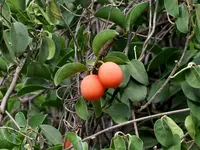
Tallow wood (Ximenia americana) is a small, often spiny shrub or small tree, usually with greyish bark and simple, narrow leaves. It produces small, fragrant white flowers followed by yellow to orange, plum-like fruits. Native to dry tropical and subtropical regions of Africa, the Americas, and parts of Asia, it typically grows in open woodland, savanna, and scrub. This species tolerates drought, poor soils, and strong sun, which can make it relatively resilient once established. However, slow growth and thorny branches mean it suits patient growers who can provide space. Understanding how to care for tallow wood starts with offering bright light, well-drained soil, and moderate watering in line with its dryland origins.

Care Difficulty
Moderate Care

Light Preference
Full Sun

Water Requirements
Low Water

Temperature Preference
Tropical / Frost Sensitive

Hardiness Zone
10–11

Soil Texture
Sandy, Loamy, Rocky

Soil pH
Acidic (5.5–6.5), Slightly acidic (6.5–7.0)

Soil Drainage
Well-drained

Fertilization
Minimal (feed rarely)
Scan your plant to receive care tips personalized for your specific plant
Available on iOS and Android
This drought-tolerant shrub prefers strong sun but adapts to slightly varied light in warm climates.
This species prefers infrequent, deep watering once established, with soil allowed to dry between soakings.
This warm-climate shrub thrives in consistently hot conditions and is not suited to cold regions without protection.
Humidity is a minor factor for Ximenia americana, which adapts well to typical indoor and outdoor air levels.
Ximenia americana prefers lean, well-drained, sandy soil that does not stay wet after irrigation or rain.
This species can be grown in containers if the pot and substrate are managed for fast drainage and root stability.
Ximenia americana is adapted to poor soils and needs only light feeding in cultivation.
Ximenia americana benefits from modest structural pruning to keep it manageable and healthy.
This species is usually grown in the ground, so focus on careful transplanting rather than frequent repotting.
Ximenia americana is most commonly propagated from seed, with cuttings used less often.
This warm-climate shrub is frost sensitive and needs protection in regions with cold winters.

Plant Health Check
Not sure what's wrong with your plant? Check your plant's health inside the app.
This species is a hemiparasite, meaning it performs photosynthesis but also taps into the roots of nearby plants to obtain additional water and minerals through specialized structures called haustoria.
The plant naturally occurs in both dry savannas and coastal thickets, showing high tolerance to drought and moderately saline soils, which makes it an important component of vegetation in seasonally harsh climates.
Its fruits and seeds are eaten by birds and mammals in its native range, and the dense, thorny branches offer shelter and nesting sites, making it a structurally important shrub in many dryland ecosystems.

The oily kernel inside the fruit has been traditionally pressed in several regions to obtain a non-drying oil used as a lubricant and in local skin and hair preparations, making the shrub a small-scale multipurpose oil plant in rural communities.
Container culture is possible, but pots must be deep, well-drained, and heavy enough to stabilize the root system. Use a gritty mix, prune lightly to control size, and repot when roots circle or crack the container.
Keep your plants happy and healthy with plant identification, disease detection, and easy care guidance.