


Choose host wood
Inoculate fresh, recently fallen hardwood branches infected with compatible Peniophora species, since this jelly fungus fruits best on moist, decaying host wood rather than on fully decomposed logs.

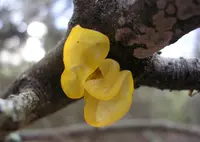
Witch's butter, Tremella mesenterica, is a jelly fungus rather than a traditional plant. It forms bright yellow, brain-like clusters with a soft, gelatinous texture. This fungus usually appears on dead or decaying hardwood branches, especially oak, in moist forests and shaded hedgerows. It often shows up after rain and can shrink when dry, then swell again when moisture returns.
Tremella mesenterica depends on other fungi living in the wood, which can make it unpredictable to cultivate. For those who wish to learn how to care for witch's butter, it generally favors cool, shady, humid conditions and consistently damp, decaying wood rather than garden soil.

Care Difficulty
Hard Care

Light Preference
Shade

Water Requirements
Keep Soil Moist

Temperature Preference
Cool Climate

Hardiness Zone
Unknown

Soil Texture
Loamy, Organic-rich

Soil pH
Acidic (5.5–6.5), Slightly acidic (6.5–7.0)

Soil Drainage
Moist but well-drained

Fertilization
Minimal (feed rarely)
Scan your plant to receive care tips personalized for your specific plant
Available on iOS and Android
This jelly fungus prefers shaded woodland light rather than direct, open sun.
This species relies on consistently moist, decaying wood rather than routine surface watering.
This fungus favors cool to mild conditions and declines in extended heat or hard frost.
This jelly fungus requires consistently high humidity to fruit and persist on wood.
This fungus does not use conventional soil but relies on decaying wood and surrounding organic matter.
This species is generally unsuitable for typical container growing because it depends on decaying wood rather than potting media.
Tremella mesenterica is a wood-decaying fungus that usually gains enough nutrients from its host and surrounding organic matter, so added fertilizer is rarely necessary.
Tremella mesenterica does not require conventional pruning, since its fruiting bodies are temporary fungal structures rather than persistent plant tissue.
This fungus is not managed through normal repotting; instead, growing Tremella mesenterica focuses on maintaining suitable host wood in a stable outdoor location.
Propagation of Tremella mesenterica is specialized and usually done by experienced growers rather than casual gardeners.
This species is naturally cold hardy across much of its range and generally needs no special winter care when established on outdoor wood.

Plant Health Check
Not sure what's wrong with your plant? Check your plant's health inside the app.
This species is a parasitic fungus that grows on the mycelium of crust fungi in the genus Peniophora rather than directly on dead wood, which is why it often appears as yellow jelly patches on fallen branches with an underlying crust.
Its bright yellow, gelatinous fruiting body can dry out and shrink into an orange, crusty mass during dry weather, then rehydrate and return to a jelly-like form after rain many times without being damaged.
In many temperate regions it fruits mainly in cool, wet seasons, including winter thaws, because its jelly-like tissues resist freezing damage better than many other fleshy fungi.

Genetic and microscopic studies show that the name Tremella mesenterica was once applied to several lookalike yellow jelly fungi, and modern mycologists have had to re-define this species more narrowly to separate it from closely related but distinct taxa.
This jelly fungus performs best outdoors on decaying wood in humid, shaded conditions. It does not adapt well to typical household environments, so witch's butter indoor care is generally unreliable and not recommended long term.
Keep your plants happy and healthy with plant identification, disease detection, and easy care guidance.

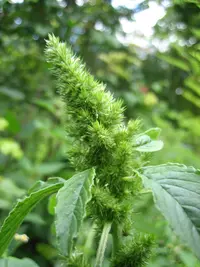
redroot amaranth
Amaranthus retroflexus

Golden Leaved Pineapple Sage
Salvia elegans Rockin' Golden Delicious
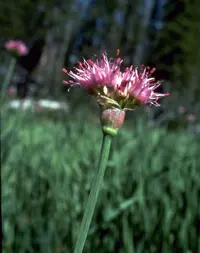
Pacific onion
Allium validum
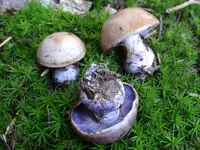
blushing webcap
Cortinarius cyanites
woollyjoint pricklypear
Opuntia tomentosa
Coriolopsis trogii
Coriolopsis trogii
couscous crust
Bulbillomyces farinosus
Poor Man's Licorice
Bulgaria inquinans