


Log selection
Use freshly cut, disease-free hardwood logs 10–20 cm in diameter, ideally from beech, oak, or similar dense species, as older, partially decomposed wood leads to weak colonization and poor fruiting.

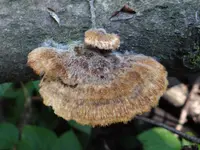
Coriolopsis trogii is a wood-decay fungus, not a leafy houseplant, typically forming tough, bracket-like fruiting bodies on dead or dying hardwood trees. It contributes to nutrient cycling by breaking down lignin and cellulose in wood.
The fruiting bodies are usually semicircular, thick, and leathery, with pale to brownish upper surfaces and a pore-covered underside. It is naturally found in temperate regions, often on fallen logs or stumps.
This species is not commonly grown in home settings, as it requires suitable woody substrate rather than potting soil. Those who care for Coriolopsis trogii mainly manage moisture and airflow to support healthy fungal growth.

Care Difficulty
Moderate Care

Light Preference
Partial Shade

Water Requirements
Keep Soil Moist

Temperature Preference
Warm Climate

Hardiness Zone
Unknown

Soil Texture
Loamy, Organic-rich

Soil pH
Slightly acidic (6.5–7.0)

Soil Drainage
Moist but well-drained

Fertilization
Minimal (feed rarely)
Scan your plant to receive care tips personalized for your specific plant
Available on iOS and Android
This bracket fungus prefers low to moderate light that mimics its natural woodland habitat.
Moisture management focuses on keeping the woody substrate consistently damp but not waterlogged.
Stable cool to mild temperatures support reliable fruiting and mycelial growth for Coriolopsis trogii.
Humidity is not a critical factor for Coriolopsis trogii, which naturally tolerates varying outdoor conditions.
This wood-decaying fungus grows on logs rather than in mineral soil, so conditions focus on substrate composition and aeration.
This species can be grown in containers only when the container holds inoculated logs or sawdust blocks rather than loose potting mix.
This wood-decay fungus usually grows on nutrient-rich logs and does not need additional fertilizer in typical cultivation.
Coriolopsis trogii requires no true pruning, but fruiting bodies and substrate can be tidied for hygiene and safety.
Cultivated Coriolopsis trogii is usually managed by renewing or shifting its woody substrate rather than classic repotting.
Propagation of this bracket fungus is done mainly by spores or by transferring active mycelium to new woody substrate.
Outdoor cultures on hardy logs tolerate normal temperate winters and usually need minimal specific winter care.

Plant Health Check
Not sure what's wrong with your plant? Check your plant's health inside the app.
This species is a thermotolerant white-rot basidiomycete that can grow and degrade wood efficiently at relatively high temperatures compared with many other wood-decay fungi, making it interesting for industrial applications.
It produces a powerful set of ligninolytic enzymes, including laccases and peroxidases, which can break down complex lignin in hardwoods and agricultural residues and are studied for potential use in biopulping and bioremediation.
Although primarily a wood-decay fungus found on logs and stumps, it has been developed as an edible cultivated mushroom in several countries, where controlled cultivation focuses on optimizing yield and enzyme production.

Research has shown that this species can decolorize and transform various synthetic dyes and industrial pollutants in laboratory conditions, which has led to its frequent use as a model organism in studies on fungal bioremediation of contaminated water and effluents.
This wood-decay fungus can be cultivated on logs or sterilized sawdust blocks placed in trays or bags, which function like containers. Provide stable moisture, shade, and good air exchange for reliable fruiting when growing Coriolopsis trogii.
Keep your plants happy and healthy with plant identification, disease detection, and easy care guidance.

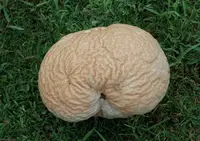
Brain puffball
Calvatia craniiformis
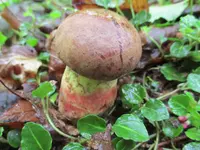
Butyriboletus brunneus
Butyriboletus brunneus
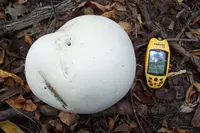
giant puffball
Calvatia gigantea
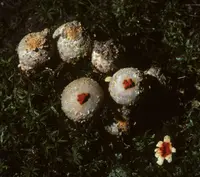
Calostoma ravenelii
Calostoma ravenelii
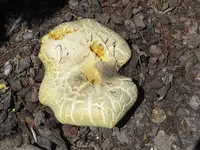
Golden Bolete
Buchwaldoboletus sphaerocephalus
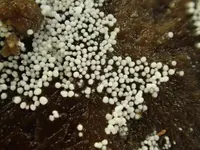
couscous crust
Bulbillomyces farinosus
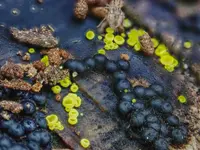
Sulphur Disco
Calycina claroflava
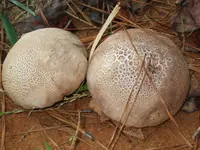
Purple-Spored Puffball
Calvatia cyathiformis