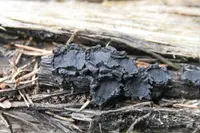
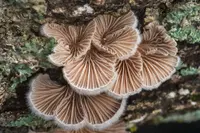
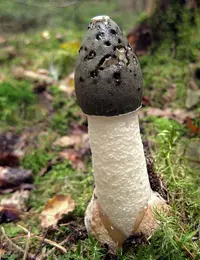
Golden Bolete Care (Buchwaldoboletus sphaerocephalus)

Golden Bolete

About Golden Bolete

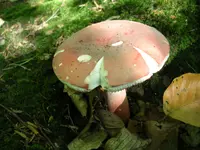
Golden bolete, Buchwaldoboletus sphaerocephalus, is a wild ectomycorrhizal fungus that forms a symbiotic relationship with tree roots, especially pines. It produces sturdy, yellow to ochre caps with thick, often slightly curved stems and a pore surface instead of gills.

This species typically occurs in warm, dry, sandy or disturbed forest soils across parts of Europe and some other temperate regions, often near conifers. It is not commonly cultivated and can be challenging to establish because it depends on compatible host trees and specific soil fungi communities.

Those trying to care for Golden Bolete should focus on stable woodland-like conditions with well-drained, slightly acidic soils and moderate, not excessive, moisture.

Main Plant Requirements

Care Difficulty

Hard Care

Light Preference

Partial Shade

Water Requirements

Keep Soil Moist

Temperature Preference

Warm Climate

Hardiness Zone

Unknown

Soil Texture

Loamy, Organic-rich, Peaty

Soil pH

Acidic (5.5–6.5)

Soil Drainage

Moist but well-drained

Fertilization

Minimal (feed rarely)

Get Personalized Care Plan

Scan your plant to receive care tips personalized for your specific plant

Available on iOS and Android

How to Care for the Golden Bolete

This ectomycorrhizal fungus prefers bright, filtered woodland light rather than direct, open sun.

  • Provide dappled or filtered light under trees, matching conditions of light woodland edges with about 2–4 hours of gentle morning sun and shade the rest of the day.
  • Avoid strong midday and afternoon sun, which can dry the substrate and scorch exposed fruiting bodies of Golden Bolete on hot days.
  • In summer, favor slightly shadier spots; in cooler spring and fall, a bit more morning sun helps maintain active mycelial growth.

This species needs consistently moist, well-drained soil around its host tree roots, not waterlogged ground.

  • Aim for soil that feels evenly moist 5–8 cm deep; surface can dry slightly between rains or irrigations, but deeper layers should not become dusty or hard.
  • Use well-drained, humus-rich soil; avoid standing water or compacted clay, which encourages rot and can suffocate the mycelium of Buchwaldoboletus sphaerocephalus.
  • During hot, dry spells, increase watering frequency, watching for shrinking or cracking soil as a sign of dryness and for sour smell or algae growth as signs of excess moisture.

This species fruits best in moderately warm conditions and is sensitive to both hard frost and extreme heat.

  • Optimal growth and fruiting usually occur around 60–75°F (16–24°C), with stable, mild conditions in the upper soil layer around host trees.
  • It tolerates brief drops to about 40°F (4°C) but hard frost below 32°F (0°C) can damage fruiting bodies and slow mycelial activity in the upper soil zone.
  • Sustained heat above 85°F (29°C), especially with dry soil, can halt fruiting; use mulch and shade to moderate soil temperatures during heat waves.

This fungus requires consistently high humidity to fruit well in cultivation.

  • Aim for 80–90% relative humidity around developing fruiting bodies, avoiding rapid daily swings.
  • Dry air causes caps to crack, edges to curl, and primordia to abort before maturing.
  • Use a humidified fruiting chamber, mist sidewalls rather than caps, and ensure constant fresh air exchange to limit mold.

This species grows best in loose, organic-rich, well-aerated substrate rather than compact mineral soil.

  • Use a mix based on hardwood sawdust or chips with 20–30% well-matured compost to provide structure and nutrients.
  • Ensure fast drainage by avoiding dense garden soil and by adding coarse wood chips or perlite to create air pockets.
  • Keep the substrate slightly acidic to neutral, around pH 5.5–7.0, to support stable mycelial growth.
  • Avoid waterlogged or heavily fertilized mixes, which restrict oxygen and favor competing molds over Buchwaldoboletus sphaerocephalus.

This species is moderately suitable for container cultivation when the substrate environment is carefully controlled.

  • Choose a wide, shallow tub or box to maximize surface area for fruiting while keeping the substrate depth around 10–20 cm.
  • Elevate the container on blocks or a rack so air can move underneath, helping excess moisture drain and preventing anaerobic zones.
  • If using plastic totes, drill small side holes just above substrate level to balance gas exchange without letting the surface dry out too fast.

This mycorrhizal fungus relies mainly on its tree host and soil organic matter, so fertilization is usually unnecessary for Golden Bolete.

Buchwaldoboletus sphaerocephalus does not require pruning because it is a mushroom-producing fungus, not a woody or leafy plant.

This fungus is rarely grown in containers; focus instead on establishing it in suitable soil near an appropriate host tree.

  • Transplant only mycelium-colonized substrate, not individual fruiting bodies, to reduce shock and increase establishment chances.
  • Work in cool, moist weather to limit desiccation of the mycelium and surrounding soil.
  • Move a generous plug of native soil with visible mycelial threads into a similar, undisturbed site.
  • Keep the new site evenly moist, not waterlogged, for several weeks after transplanting to support recovery.

Propagation of Buchwaldoboletus sphaerocephalus is specialized and generally left to experienced mycologists or professional growers.

This temperate woodland fungus is naturally cold hardy and normally needs no special winter care when growing in the ground.

Care Tips

Use host roots

Establish the fungus near compatible pine or spruce roots in a large, well-aerated container or outdoor bed, since this species relies on a mycorrhizal partnership with conifers rather than growing in sterile substrate alone.

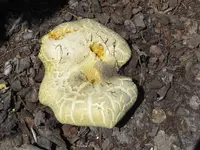
Manage wood substrate

Incorporate a modest amount of well-aged conifer wood chips or rotted stump material into the planting zone, renewing a thin surface layer every 1–2 years to mimic the fungus’s natural woody habitat without creating anaerobic, soggy pockets.

Minimal disturbance zone

Mark the fruiting area and avoid digging, raking, or compacting the soil there, as repeated disturbance can break the fine fungal mycelium and significantly reduce future fruiting.

Fruiting-season hygiene

During the main fruiting period, remove slugs by hand and quickly discard heavily infested or decaying mushrooms away from the site to limit spore loads of molds and reduce pest pressure on healthy fruiting bodies.

Seasonal moisture monitoring

In prolonged dry spells, check the soil 5–8 cm deep and apply a gentle, low-pressure soak in the evening when it feels dry at that depth, which supports the underground network critical for growing Golden Bolete without waterlogging the root zone.

Common Pests and Diseases

Fungus gnat larvae

This pest targets the moist, nutrient-rich substrate used for Buchwaldoboletus sphaerocephalus cultivation and can damage developing mycelium and young fruiting bodies. Symptoms include slow or uneven colonization, soft patches in the substrate, and small black adult gnats flying near trays or bags.

Solution

Reduce excess surface moisture, cover colonizing substrate with a breathable barrier (fine mesh or filter patch bags), and use yellow sticky traps to capture adults. Where larvae are present, apply a biological control such as Bacillus thuringiensis israelensis (BTi) according to label directions and discard heavily infested blocks to protect remaining cultures.

Mite infestation

These insects (technically arachnids) feed on mycelium and young pore surfaces, causing pitting, discoloration, and reduced or deformed fruiting bodies. Symptoms include a dusty or moving speck appearance on caps and stems, often with poor mushroom quality and contamination following the damage.

Solution

Quarantine and remove infested blocks, then thoroughly clean and vacuum the grow area, focusing on cracks and shelving. Use sticky barriers, maintain good hygiene around growing Golden Bolete, and, if needed, introduce predatory mites sourced for mushroom production while avoiding broad-spectrum chemical sprays that can harm the crop.

Green mold (Trichoderma)

This disease is caused by Trichoderma species that outcompete Buchwaldoboletus mycelium in substrate or casing, forming dense white patches that rapidly turn bright to dark green. Symptoms include stalled bolete mycelium, a strong earthy or slightly sweet odor, and visible green sporulation on the surface of bags or trays.

Solution

Immediately bag and remove contaminated blocks from the grow room to limit spore spread, then disinfect shelves and nearby surfaces with an appropriate sanitizer. Improve substrate pasteurization or sterilization, reduce handling during colonization, and maintain good air filtration and clean workflow to prevent reintroduction of spores.

Bacterial blotch

This disease develops on caps in humid, poorly ventilated conditions, leading to greasy yellow-brown spots, slimy patches, and sometimes a sour smell on the pore surface. Symptoms include localized water-soaked lesions that may coalesce and render fruiting bodies unmarketable.

Solution

Lower relative humidity slightly, increase fresh air exchange, and avoid overhead water droplets sitting on caps for long periods. Remove and discard heavily spotted fruiting bodies, clean surfaces with a mild disinfectant, and adjust misting patterns so the surface dries within a short time after each cycle.

Interesting Facts

Unusual substrate preference

This bolete frequently fruits on soil containing buried conifer wood or on heavily decayed conifer stumps, rather than on intact logs, which is atypical for many wood-associated boletes.

Brightly colored pores

Mature fruiting bodies show a striking yellow pore surface that may slowly develop olivaceous tones with age, providing a strong contrast to the often brown to ochre cap.

Blue-green bruising reaction

When the yellow pore surface is damaged, it can show a slow blue to blue‑green bruising reaction, a diagnostic feature used by field mycologists to help separate it from similar yellow‑pored boletes.

Botan icon

Did you know?

The species was originally described in the 19th century under a different genus and has been reclassified more than once as molecular studies and microscopic characters clarified its placement in the relatively small genus Buchwaldoboletus.

FAQs about Golden Bolete

This species is considered inedible or at least of very poor culinary value. Flesh is often bitter and can cause stomach upset. Identification errors with toxic boletes are also possible, so it should not be collected for eating.

Grow Healthy Plants with Botan Care

Keep your plants happy and healthy with plant identification, disease detection, and easy care guidance.

Botan plant care app — identify plants on mobile

Explore More Plants