Host selection
Plant or maintain this fungus only on non-valuable, declining hardwood hosts, as it is a wood-decay pathogen that can shorten the life of living shade trees.

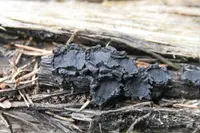
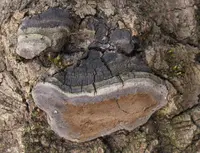
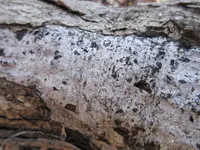
Biscogniauxia repanda is not a typical garden plant but a wood-inhabiting fungus that forms dark, crust-like patches on dead or declining branches and trunks. It is usually found on hardwood trees in temperate forests, particularly in regions with warm, humid conditions.
The fungus grows as a flat, spreading layer on bark rather than as a showy mushroom, so it is often overlooked. It functions mainly as a decomposer, breaking down weakened or dead wood.
For those studying or managing trees, understanding how to care for Biscogniauxia repanda is less important than recognizing it as a sign of underlying tree stress. It favors moist environments and hosts that are already compromised.

Care Difficulty
Moderate Care

Light Preference
Partial Shade

Water Requirements
Moderate Water

Temperature Preference
Warm Climate

Hardiness Zone
Unknown

Soil Texture
Loamy

Soil pH
Slightly acidic (6.5–7.0)

Soil Drainage
Well-drained

Fertilization
Minimal (feed rarely)
Scan your plant to receive care tips personalized for your specific plant
Available on iOS and Android
This wood-inhabiting fungus prefers stable, shaded light conditions rather than direct sun exposure.
Moist but not waterlogged conditions around the host wood favor healthy development of this fungus.
This species develops best in mild to warm climates without temperature extremes.
This wood-decay fungus on trees does not require managed air humidity in cultivation.
This wood-inhabiting fungus is not grown in soil, so typical soil preparation is not applicable.
This species is not suitable for container growing because it colonizes tree wood rather than forming a traditional root system.
This wood-decaying fungus lives on host trees and does not require direct fertilization as a stand-alone organism.
As a pathogenic fungus on woody hosts, Biscogniauxia repanda is not managed by pruning of the fungus itself but by careful management of the infected tree.
This species is not maintained as a potted ornamental, so management focuses on host tree establishment rather than repotting.
Propagation is rarely undertaken, as this is a wood-decay and canker-causing fungus rather than a cultivated ornamental or crop species.
This fungus lives on hardy woody hosts and generally needs no dedicated winter care as an independent organism.

Plant Health Check
Not sure what's wrong with your plant? Check your plant's health inside the app.
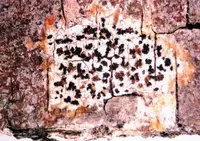
This species forms its black, cushion-like fruiting bodies (ascomata) in patches on dead or declining oak bark, often appearing as slightly raised, cracked crusts fused with the surface of the wood.
The mature stromata, which are the compact masses of fungal tissue bearing the reproductive structures, become very dark and carbonaceous in texture, giving affected bark a scorched or charcoal-like appearance.
It is considered a weak or opportunistic pathogen that frequently colonizes already stressed or dying branches of oak and other hardwoods, contributing to wood decay rather than initiating rapid tree death.
This species is a wood-decay fungus, not an ornamental garden plant. It is not listed as invasive, but it can spread locally on stressed or dead trees, especially in managed forests or orchards with weakened hosts.
Keep your plants happy and healthy with plant identification, disease detection, and easy care guidance.